Heat pump making a loud noise in Hailey, ID

One request and the search for a pro is handled.

I'm done searching

A loud noise from your heat pump usually points to one of a few things. A rattling or banging sound can mean a loose panel or a part working its way free inside the outdoor unit. A high-pitched squeal often means a worn bearing in the fan motor. Grinding tends to mean something is hitting a fan blade or the motor itself is failing. Winters in Blaine County put heat pumps through long stretches of hard running, and that wear adds up over the years, so parts that have loosened or worn down tend to show up as noise before they show up as a full breakdown. A buzzing sound right when the unit kicks on or off can point to an electrical issue, which is worth taking seriously rather than waiting out. None of this tells you exactly what is wrong on its own. What it does tell you is that the noise is the unit's way of flagging a specific, physical problem, one a contractor can trace by listening to it and opening the cabinet.

A smiling man in a dark green sweater sits at a wooden table with a light gray mug in a kitchen with white tile backsplash, pendant lights, and an adjoining living room visible.
A smiling man in a dark gray sweater stands indoors looking to the side, with a kitchen counter holding a ceramic mug and open wooden shelves behind him and a living area in the background.
A smiling man in a dark blue button-up shirt stands at a white kitchen island, with open shelving, a gas range, a potted plant and a window in the background.
A smiling man with dark wavy hair and a beard, wearing a dark green knit sweater, sits in an open-plan living room and kitchen with a brown sofa, large windows, and a counter holding a mug and a wooden bowl.

Why does a heat pump noise here need quick attention?

  • Winter nights average 14°F

    Winter nights average 14°F, so a heat pump that stops working from a worn part left too long leaves a house with little backup against the cold.

  • Heat runs September through June

    Heat runs September through June here, which means the system carrying that noise is working most of the year, not just a few months.

  • Cooling runs July through July

    Cooling runs in July alone, so the same unit making that noise now will need to switch over and handle the hottest month too.

NOAA nClimDiv 1991-2020

What That Noise Is Telling You

  • A bang or clank when the unit starts or stops often means the reversing valve shifting, but a repeating bang points to a loose compressor mount.
  • Rattling that comes and goes with the fan speed usually means a bent or loose fan blade hitting the cage around it.
  • A buzzing sound right when the unit kicks on can mean a failing contactor, the relay that sends power to the compressor.
  • Grinding or screeching that rises and falls with fan speed points to a fan motor bearing wearing out.
  • A hissing or bubbling noise can mean refrigerant escaping from a line, which also shows up as weaker heat or cooling.
  • A loud hum with no airflow at all usually means the compressor is trying to start against a stuck or seized part inside it.

Every sound your heat pump makes has a cause, and most of them trace back to one part. The outdoor unit switches between heating and cooling by way of a reversing valve, and that valve makes a bang or a clunk as it shifts. That sound once is normal. If it repeats every time the unit cycles, the compressor mount has likely worked loose, and the compressor is knocking against the cabinet. Inside the unit, a fan pulls air across the coil, and if a blade has bent or the fan has shifted on its shaft, it will clip the cage around it, which sounds like rattling that speeds up and slows down with the fan itself. The contactor is a small relay that closes to send power to the compressor, and when it starts failing, it buzzes right at startup instead of switching cleanly. A motor bearing wearing out sounds different again, more of a grind or a screech, and it rises and falls as the fan speeds up or slows down. Refrigerant leaving the system through a cracked line makes a hiss or a bubbling sound, and you will usually notice the house heating or cooling less well around the same time. A loud hum with no air moving at all is the compressor straining against something jammed inside it, and running it in that state wears it out fast. None of these fix themselves, and most get worse with time, not better.


A gray outdoor condenser unit on a concrete pad beside a house with horizontal lap siding, connected by conduit and lines to a wall-mounted disconnect box, with a shrub and gravel bed to the left.
This is what a heat pump sounds like when nothing's wrong: a steady hum from the fan, no rattle, no squeal.
An outdoor air conditioner condenser unit on a concrete pad beside a house with horizontal lap siding, with refrigerant lines and a gray electrical disconnect box on the wall, surrounded by bare dirt.
Years of dirt packed into the coil guard and fan grille strain the motor and often lead to the noises above.

Is the noise from your heat pump something to worry about?

Stand near the outdoor unit and listen. A bang when it cycles on or off, a rattle that rises and falls with the fan, a squeal that wasn't there last week, or a grinding sound from inside the cabinet all mean something is loose, worn, or rubbing where it shouldn't be. You might also notice the system running longer than usual, or the air coming out weaker than it should. Left alone, a loose part can work itself free and take the compressor or fan motor with it. With winter nights here averaging 14°F, a heat pump that quits on you leaves the house with little else to keep it warm.

A bearded man in a dark blue T-shirt sits on a gray couch, smiling and looking down to his left, with a bookshelf and a bright window behind him.
A bearded man in a plaid flannel shirt looks out a window at snow-covered conifer trees, with a steaming ceramic mug on the sill and wooden shelves holding dishes and a plant behind him.

Hand off the search today

A heat pump that's banging or squealing in Hailey doesn't wait for a convenient week to quit. With winter nights averaging 14°F and heat running September through June here, a noise that turns into a breakdown leaves a house with little to fall back on. Sorting that out yourself means searching for a contractor who works on heat pumps, calling around to see who can even look at it soon, explaining the sound over the phone two or three times, then weighing quotes against each other while the noise keeps going. Sending this request instead means that work isn't yours to do anymore. One contractor gets your situation, the noise, the unit, what you heard and when, and takes it from there. You stop carrying the job of finding someone and get back to the part that matters, getting the unit looked at before a worn part takes the whole system down on a cold night.

Why the sound carries outside

The outdoor unit sits exposed to wind, sun, and cold all year, and its cabinet is thin metal built to shed heat, not muffle sound. A loose screw or a fan blade out of true will vibrate against that panel and the noise travels across the yard. Indoors, a furnace or air handler is boxed inside a closet or basement and ducted, so the same kind of part wearing loose rarely makes it to your ears the same way. That's part of why a heat pump announces a problem sooner than other equipment in the house does.

What running dry all summer adds

Blaine County summers are hot and dry, and that dryness means less rain to rinse dust and pollen off the outdoor coil and fan grille between service visits. Dirt builds up on the blades and the guard around them, and a motor working against that buildup draws harder and runs rougher than one that's clean. That extra strain is a common reason a fan motor starts to squeal or grind months before it would in a wetter climate. A unit that sounded fine in spring can pick up a new noise by the end of a dry summer.

An outdoor air conditioner condenser unit with rust spots on its top grille sits on a concrete pad beside a house with light horizontal siding, with conduit lines and an electrical box on the wall and a mulch bed to the right.
Before you get your heat pump repair
A gray outdoor condenser unit on a concrete pad beside a light-colored lap-sided house, with a wall-mounted disconnect box, refrigerant lines, mulch bed and shrubs, and a concrete walkway in the foreground.
After you get your heat pump repair
A light gray outdoor heat pump unit mounted on a concrete pad beside a house with horizontal lap siding, with refrigerant lines and conduit running to a wall-mounted electrical box, gravel and a leafy shrub nearby.

Running the way it should

A healthy outdoor unit sits quiet on its pad, refrigerant lines and conduit running clean to the disconnect box. You hear a steady hum from the fan. No rattle, no squeal, nothing grinding underneath it.

An outdoor air conditioner condenser unit on a concrete pad beside a house with horizontal siding, with conduit, cables and an electrical box on the wall and mulch beds at either side.

Grime and a noise that wasn't there before

Dust and grime built up on the cabinet don't just look bad. Years of it packed into the coil guard and fan grille make the motor work harder, and that strain is often where a new rattle or squeal starts.

A wooden table with a closed laptop, a ceramic mug of dark coffee, and a glass vase of eucalyptus stems beside a window, with a dark green kitchen cabinet, wooden counter, potted herb, cutting boards and bowl blurred in the background.

What to do about the noise

A loud noise from your heat pump is a part telling you it's failing before it fails outright. A loose panel, a worn bearing, a bent fan blade, ice on the coil. Whatever it is, it won't fix itself, and with winter nights here averaging 14°F, waiting it out costs more than the sound.

Finding a contractor who works on heat pumps in Blaine County, checking that they're licensed, calling around for someone who can actually come out, explaining the noise over and over until someone understands what you're hearing. That's the part you can hand off. Send the form once and that search is no longer yours to run.

A living room corner with a beige upholstered armchair holding navy and striped cushions, a small round wooden side table with a carved bowl and a potted green plant, a framed landscape picture on a pale wall, built-in shelving, and a curtained window.
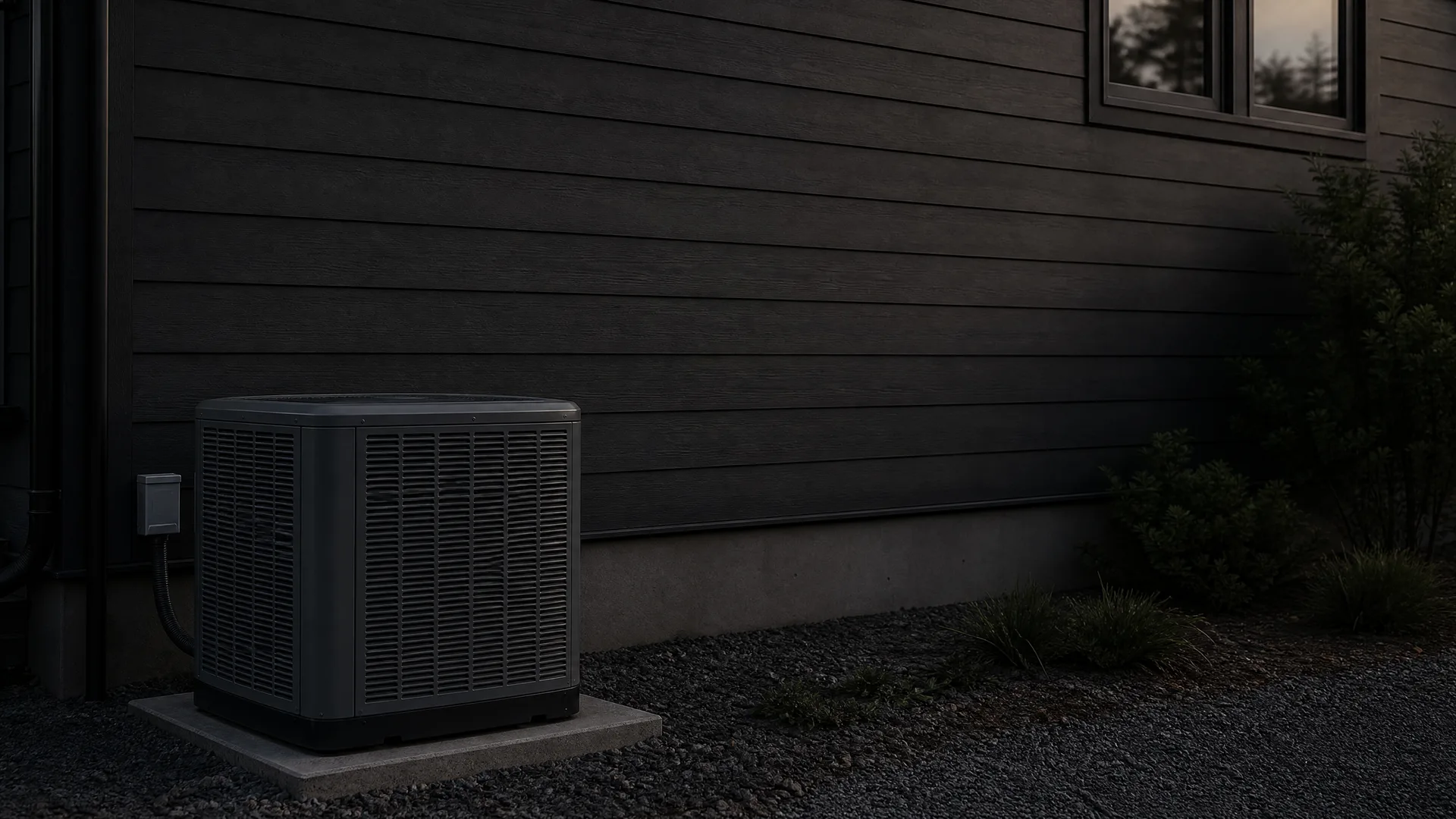
An outdoor condenser unit on a concrete pad beside a dark horizontal-lap-sided house, with gravel, shrubs and a small electrical disconnect box on the wall, in dim light.

Hand off the heat pump problem

Describe what your heat pump is doing once, in one form.

RepairHeat PumpBlaine County, ID
Step 1 of 2

What ZIP code is the job in?