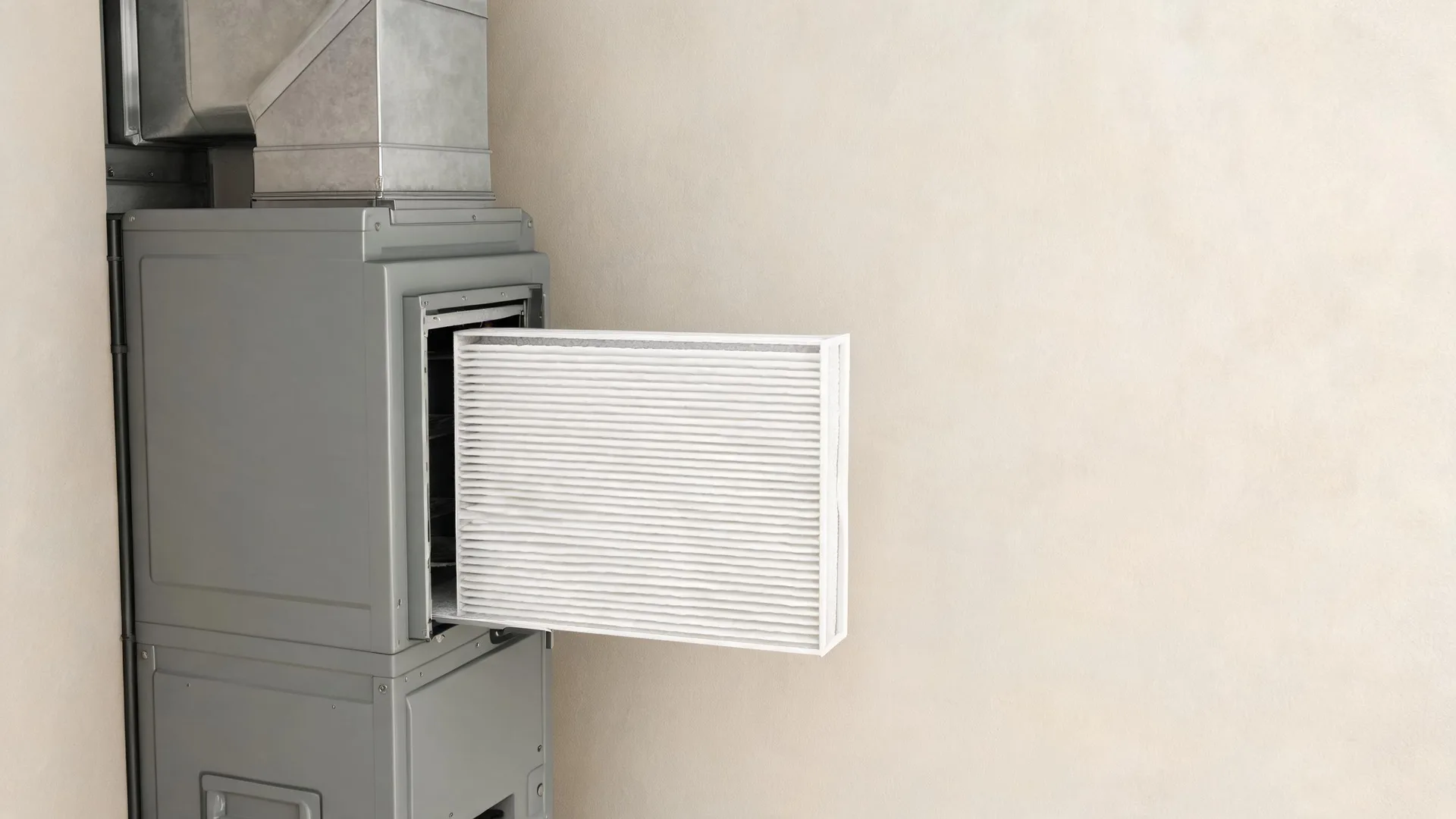
Ten months of heat
Furnaces in Elmore County run from September through June. Overnight lows averaging 21°F through December, January and February keep the burner cycling for most of the day and night.
Takes about a minute. No obligation.
Furnaces in Elmore County run from September through June. Overnight lows averaging 21°F through December, January and February keep the burner cycling for most of the day and night.
Ten months of heat a year puts more hours on a furnace's igniter and blower motor than a short winter does. Winter storms have hit the county 84 times in the last decade, and a weak part is more likely to give out right when the furnace is working hardest.
Gas heats 53.4% of homes in Elmore County, more than any other fuel.
A gas furnace needs its burner and venting checked every year, not just a new filter.




A check before the season starts catches a weak igniter or a tired blower motor while the furnace is still sitting idle. A technician can test the igniter's output and check the blower while there's no rush, no cold snap, nothing riding on it. That beats finding out either one is weak after the furnace has been running for weeks, with a storm moving in and the temperature already at 21°F overnight. Once the furnace is working through December, January and February, there's no good time to find a weak part.
If your furnace came with the house, it's likely still within its working life. A yearly check is what keeps it there, catching wear on the igniter or blower before it turns into a breakdown.
Find a contractorA furnace that never gets checked still runs, right up until the part that was already wearing out finally gives up. Dust builds on the burners and they stop lighting clean. The flame sensor gets a coating and starts telling the control board there's no flame when there is, so the furnace shuts itself down. The blower motor's bearings dry out and it has to work harder to push the same air, which wears it faster than it should. None of this announces itself. A furnace that's neglected doesn't usually break all at once, it just runs worse and worse until the day it doesn't run at all, and that day tends to be the coldest one.
A thorough tune-up pulls the burners and looks at the flame itself. It should burn steady and blue, each burner lighting at the same time as the others. A quick visit swaps the filter, glances at the thermostat, and calls it done without ever opening up the burner compartment.
Testing gas pressure, checking temperature rise across the heat exchanger, and measuring amp draw on the blower motor all take a meter and a few minutes each. A tech who skips straight to 'sounds fine' never took those readings, and without them there's no way to catch a part that's drifting toward failure before it quits.
A few signs are worth paying attention to before they turn into a no-heat call. A burner flame that's yellow or orange instead of steady blue means it's not burning clean. A furnace that short cycles, turning on and off every few minutes instead of running a full cycle, is telling you something is tripping it early. Rattling or a grinding sound from the blower usually means a bearing is going. A furnace that takes longer than it used to warm the house, or runs almost constantly without catching up, is already working harder than it should. Any of these on their own is worth a look. Waiting on more than one is how a simple fix turns into a cracked heat exchanger or a seized motor.
A full tune-up covers more ground than most homeowners expect. The technician checks the heat exchanger for cracks or corrosion, since a cracked exchanger can let combustion gas into the air the furnace is supposed to be heating. The igniter gets tested under load, not just looked at, because an igniter can glow and still fail to light the burners reliably. Gas pressure gets set to the manufacturer's spec, too low and the burners starve, too high and they run hotter than the heat exchanger is built for. The blower wheel gets inspected for dust buildup, which throws off airflow even when the motor itself is fine. Vent piping gets checked for a clear path outside, since a blocked vent is a safety issue, not a performance one.