September starts the run
Furnaces in Adams County come on in September and keep working through June. That is ten months of the year this machine carries the load.
Takes about a minute. No obligation.
Furnaces in Adams County come on in September and keep working through June. That is ten months of the year this machine carries the load.
August is the last quiet month before the furnace has to work. Getting it checked then means it starts the season already running the way it should.
Half the furnaces in Adams County sit in homes built since 1986.
A furnace that age still has a lot of life left, and a yearly check is what gets it there.




A furnace usually tells you before it quits outright. Listen for a boom when it lights, louder than a soft whump. That is gas building up before ignition catches, often a sign the burners need cleaning. Watch the flame too. It should burn blue and steady. Yellow or flickering means it is not burning clean. If the air coming out smells faintly like something warm and dusty for more than a few minutes after startup, that is normal, but if the smell lingers or turns sharp, shut it down and have it looked at. Short cycling, where it fires up and shuts off again before the house warms, usually points to a clogged filter or a failing sensor. None of these mean the furnace is done. They mean it is asking for a check before it has to stop working altogether.
It starts running hard in the first month of the season here. Book the check the month before.
Find a contractor
A furnace that never gets opened up keeps running, right up until the part that was already failing finally does. Dust builds up on the burners and they stop burning clean. The flame sensor gets a coating on it and starts misreading the flame, so the furnace shuts itself off as a safety measure. The igniter weakens a little more each season until one cold morning it does not glow hot enough to catch the gas. A dirty filter chokes the airflow, the heat exchanger runs hotter than it should, and that shortens its life. None of this happens the first winter a furnace goes unchecked. It happens over several, each one asking a little more of parts that never got cleaned or tested. A yearly check catches the weak igniter before it fails outright and cleans the sensor before it starts shutting the system down on its own.
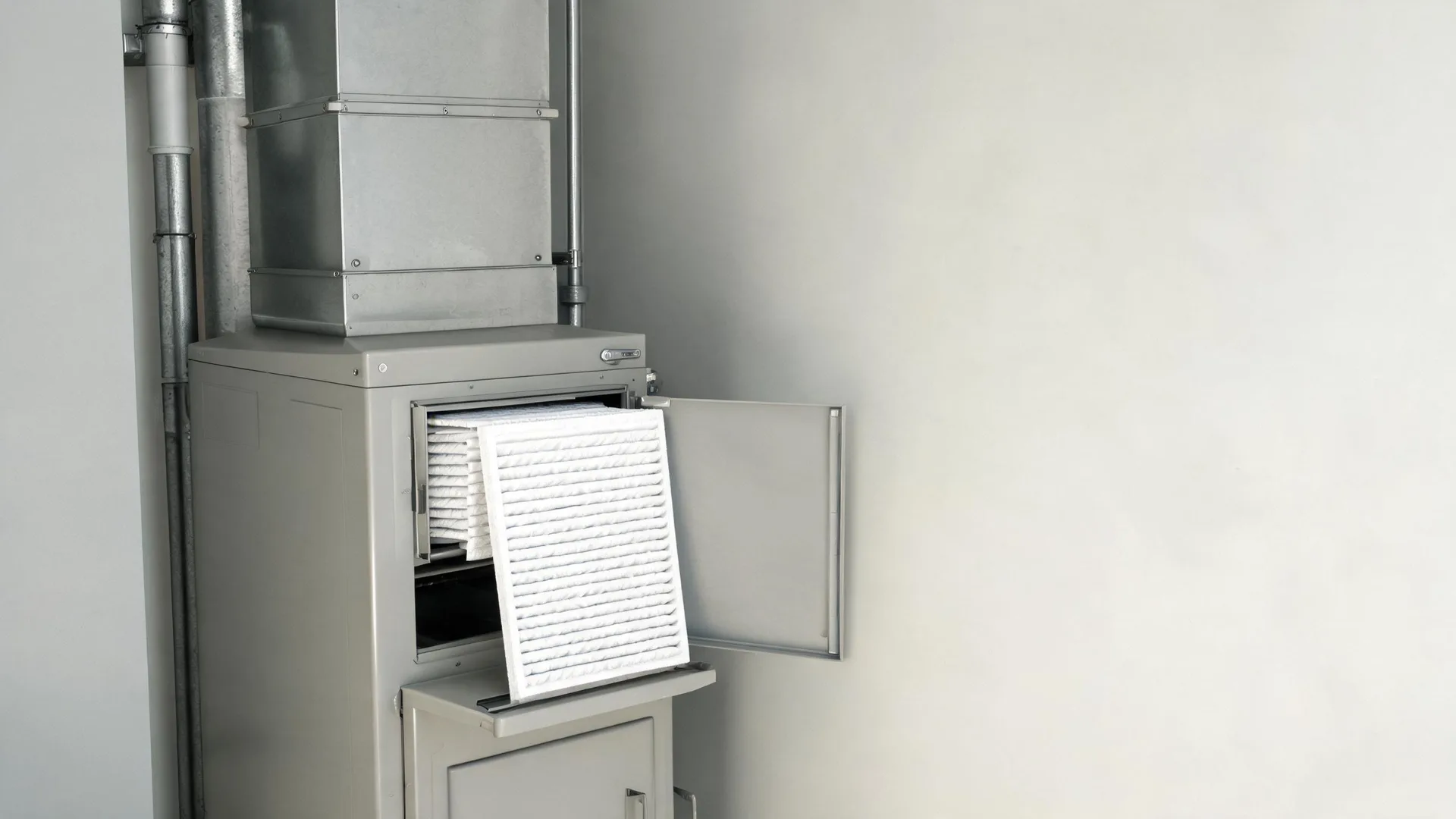
A dirty filter chokes how much air moves across the heat exchanger. Starved of airflow, the exchanger runs hotter than it was built to, and that heat has nowhere to go but back into the metal. Over time that is what cracks a heat exchanger. Swapping or washing the filter is the one part of this job a homeowner can do between checks.
A high-efficiency furnace pulls extra heat out of the exhaust and that process makes condensate, water that has to leave through a drain line. If that line clogs with algae or sludge, the furnace senses the backup and shuts itself down rather than let water go where it shouldn't. A furnace without this second heat exchanger has no such drain and nothing to check there.
A quick tune-up means someone swaps the filter, glances at the flame, and leaves. A thorough one means the burners come out and get cleaned, not just looked at. The flame sensor gets the coating scraped off it, not just an eyeball check, because that coating is what causes the nuisance shutoffs later. The igniter gets tested for resistance, not just checked for a glow, since a weak one can still light the furnace and fail later in the season. Someone should pull the cover off the inducer motor housing and check it's not coated in dust, and the condensate line, if the furnace has one, should actually get flushed, not just looked at. A short visit checks that the furnace runs today. A real one checks what's likely to go wrong before it does.
Tune-ups follow a sequence because that's the order trouble actually builds in a furnace. It starts outside, pulling the panels and checking the cabinet for rust or soot, since soot on the inside of the cabinet means something isn't burning clean. Inside, the gas valve and manifold pressure get checked against what the furnace was built to run. The blower wheel comes out from under the motor housing and gets cleaned, because a wheel caked with dust moves less air no matter how strong the motor is. Belts don't enter into it on most of these, since the blower motor drives the wheel direct. Electrical connections get snugged down, because a loose one heats up right at the connection and that's where wires fail. Last comes a full cycle, start to shutdown, watching that the furnace ignites once, runs steady, and shuts off clean rather than cycling again right away.