Furnace here runs from October through May, about eight months of the year. That's a long stretch, but it's steady, not extreme. Once a year is enough to keep it running through that stretch, as long as the timing is right. Get it looked at before October, ahead of the months it has to work hardest. Overnight lows average 25°F in December and January, and that's when you want to already know the furnace is caught up, not find out it isn't.
Furnace in Ada County starts its eight-month run every October.
Get the furnace checked in September, so it starts October caught up instead of behind.
Half the homes here were built in 1997 or later, young enough that regular upkeep still pays off
Half the homes here were built by 1997Heat runs October through MayWinter nights average 25°F
Most homes in Ada County heat with gas, 68.9% of them. A gas furnace brings a burner and a venting system into the picture, not just a blower and a filter. Maintenance on one means checking the burner flame, the igniter, and the flue, along with the safety controls that shut the furnace down if something's wrong. Electricity heats 27.5% of homes here, and those furnaces skip the gas and venting checks but still need the heating elements and airflow looked at. Either way, what's worth checking depends on what's actually burning or heating inside that furnace.
A furnace usually tells you something before it quits. The burner flame should burn steady and blue. If it's flickering yellow or orange, the burner isn't getting clean combustion and that needs a look. A furnace that cycles on and off more than it used to, short run after short run, is often struggling to satisfy the thermostat or overheating and shutting itself down early. Listen for a boom at startup, that's delayed ignition, unburned gas catching all at once instead of lighting clean. Rattling, squealing, or a grinding sound from the blower usually means a bearing or a loose part, not something that fixes itself. If the air coming out of the vents feels weaker than it used to, the blower wheel or the filter behind it is worth checking before the fan motor works harder than it should. A pilot or igniter that won't hold, or a furnace that needs several tries to light, points to a sensor or control going bad. None of these mean the furnace is done. They mean it's asking for a look before the part that's struggling fails outright.
What the flame can't tell you from across the room
A heat exchanger cracks from the inside, where normal flame checks don't reach. A tune-up includes pulling it apart enough to look for hairline cracks or rust-through, because a cracked exchanger can let combustion gas mix into the air the blower pushes through the house. There's no sound or smell that reliably warns you before a technician checks it directly.
What gets measured instead of guessed
Gas pressure to the burner and temperature rise across the heat exchanger both have a range they're supposed to fall in. Too high or too low and the furnace is working outside what it was built for, even while it still lights and blows warm air. A gauge catches that drift long before it shows up as a breakdown.
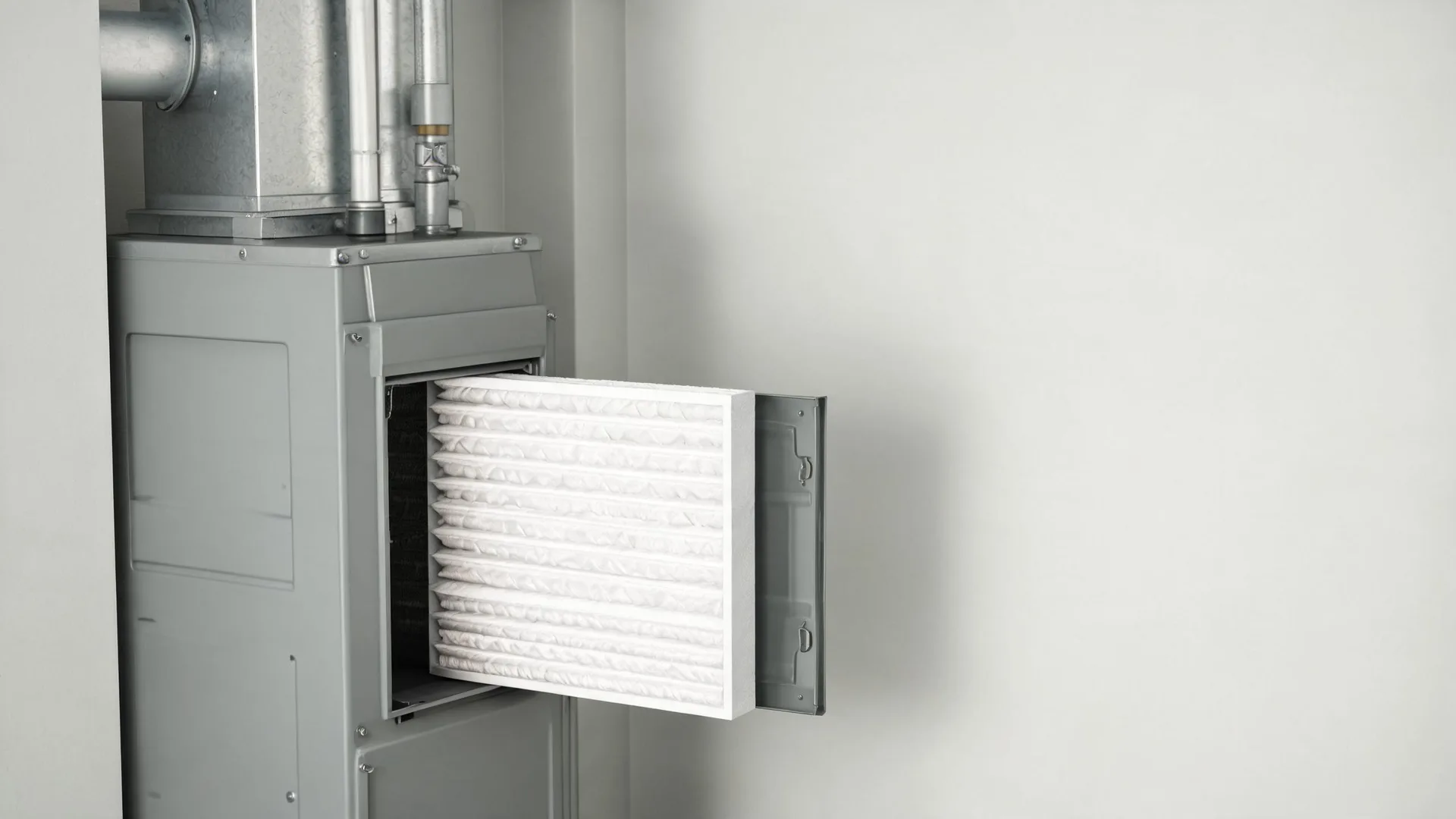
A furnace doesn't have a coil or a drain the way the cooling side does, but the filter still runs the whole show. Everything drawn into the blower passes through it before it reaches the burner compartment and the heat exchanger. A clogged filter starves the furnace for air, and a furnace short on airflow runs hotter than it should, because the heat has nowhere to go but back into the exchanger instead of out through the ducts. That's what cracks a heat exchanger early, more than age does. Check the filter monthly during the stretch the furnace runs hardest, and swap it when it's gray instead of white. It's the cheapest thing in the furnace and the easiest one to forget.
A tune-up starts with the furnace running, not off. A technician wants to see the burner lit and watch a full cycle, because some problems only show up once the furnace has been going for a while. The blower gets pulled and checked for dust buildup on the wheel itself, not just the filter in front of it. Electrical connections get checked for looseness, since a connection that works loose from vibration can arc or heat up at the terminal. The condensate line, if the furnace has one, gets checked for a clog, because a blocked line can back up and shut the furnace down on a safety switch. The flame sensor gets cleaned, since a thin layer of residue on it is enough to make the furnace shut off seconds after it lights. None of this is guesswork. It's the same checks, done the same way, every time.