




Illuminated timber-frame and stone houses along a residential street at night, with snow-capped mountains visible in the background.

Furnace Installation in Orofino, ID

Tell us about the job

Takes about a minute. No obligation.

New system or replacementFurnace or heatingClearwater County, ID
Step 1 of 2

What ZIP code is the job in?

Idaho electricity ran $33.76 per million Btu in 2024, and most homes around Orofino heat with it. That number sits lower than what a lot of states pay. But a furnace that wastes heat still turns that cost into a bigger bill than it needs to be, every month it runs. A new furnace gets sized and installed to use what it burns instead of losing it up the flue or through a leaky plenum. Here, where the furnace carries the whole winter, that difference shows up every time the bill comes.

10 months
September through June, your furnace is on duty
22°F
the average winter night it heats against
80% AFUE
the federal minimum any new unit must meet
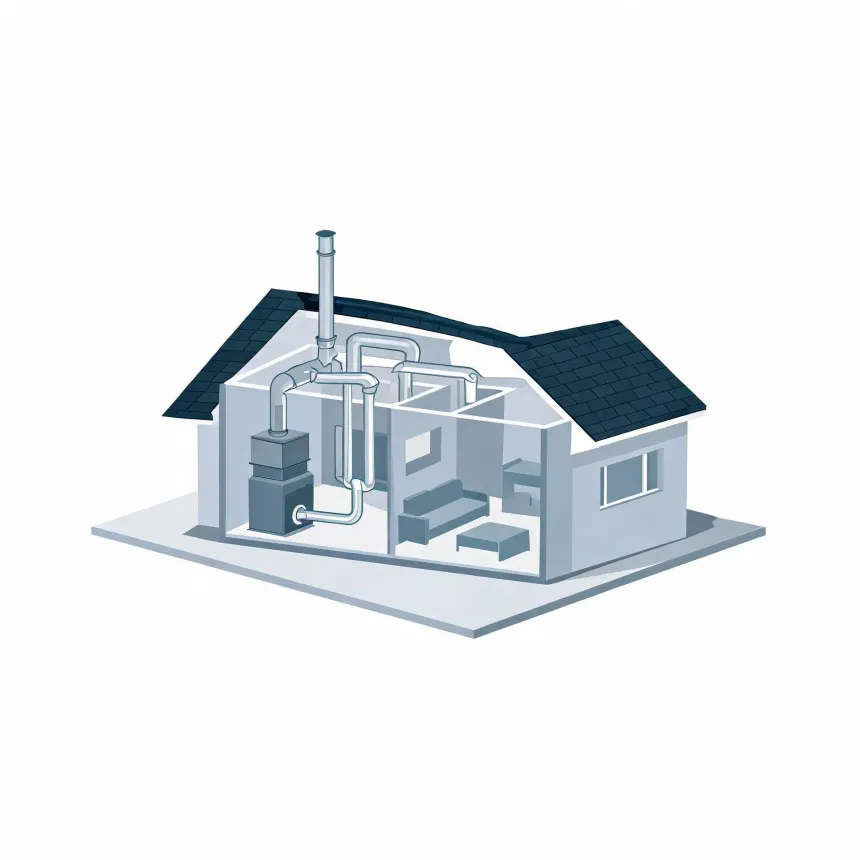
Isometric illustration of a cutaway single-story house showing a gray furnace unit, connected ductwork, and a vertical flue extending above the dark shingled roof.
Your furnace works hardest from October through April.

NOAA nClimDiv, 1991–2020 normals

Electricity heats more homes in Clearwater County than gas, oil or anything else.

A new furnace built for electric heat is the straightforward choice for most homes around Orofino.

Ten months of heat a year, with 56 storms to push through

Heat runs September through June
Winter nights average 22°F
56 winter storms from 2015 to 2024

Clearwater County falls under zone 5B in the 2021 energy code, a cool zone where heating carries more of the year's work than cooling does. Any gas furnace installed has to clear a federal minimum built for that kind of load. Furnaces made on or after November 19, 2015 have to turn at least 80 percent of the gas they burn into heat. That floor rises to 95 percent for furnaces made on or after December 18, 2028, so a unit bought near that date needs checking against which rule it was built to meet. Either way, the number tells you how much of what you pay for turns into heat in the house instead of going out the flue.

Get the sizing right once, and it pays you back all winter

A furnace sized and installed right uses what it burns. One that isn't will cost you more on every bill, all winter, for as long as it runs that way.

Find a contractor
A gray high-efficiency gas furnace installed in an unfinished basement, surrounded by gas lines, a condensate drain, and sheet-metal ductwork.

Nearly year-round, so the install can't wait for a breakdown

This furnace starts its season in September and runs through June. That's ten months out of twelve. Two months off, then it's back to work. A system idle that briefly doesn't get much chance to rest or to dry out, and it doesn't get much of a window for a calm, unhurried install either. Get it in before September and the work happens on your timeline, not during the first cold snap when you've already turned the thermostat up and found nothing happens.

Size drives the price, and the price drives the bill

A furnace is priced by the size of the heat exchanger and the output it's built to deliver, not just the brand on the cabinet. Go bigger than the house needs and you pay more up front for capacity that sits unused, cycling on and off instead of running a steady stretch. Size it right and the unit costs what it should and runs the way it was designed to.
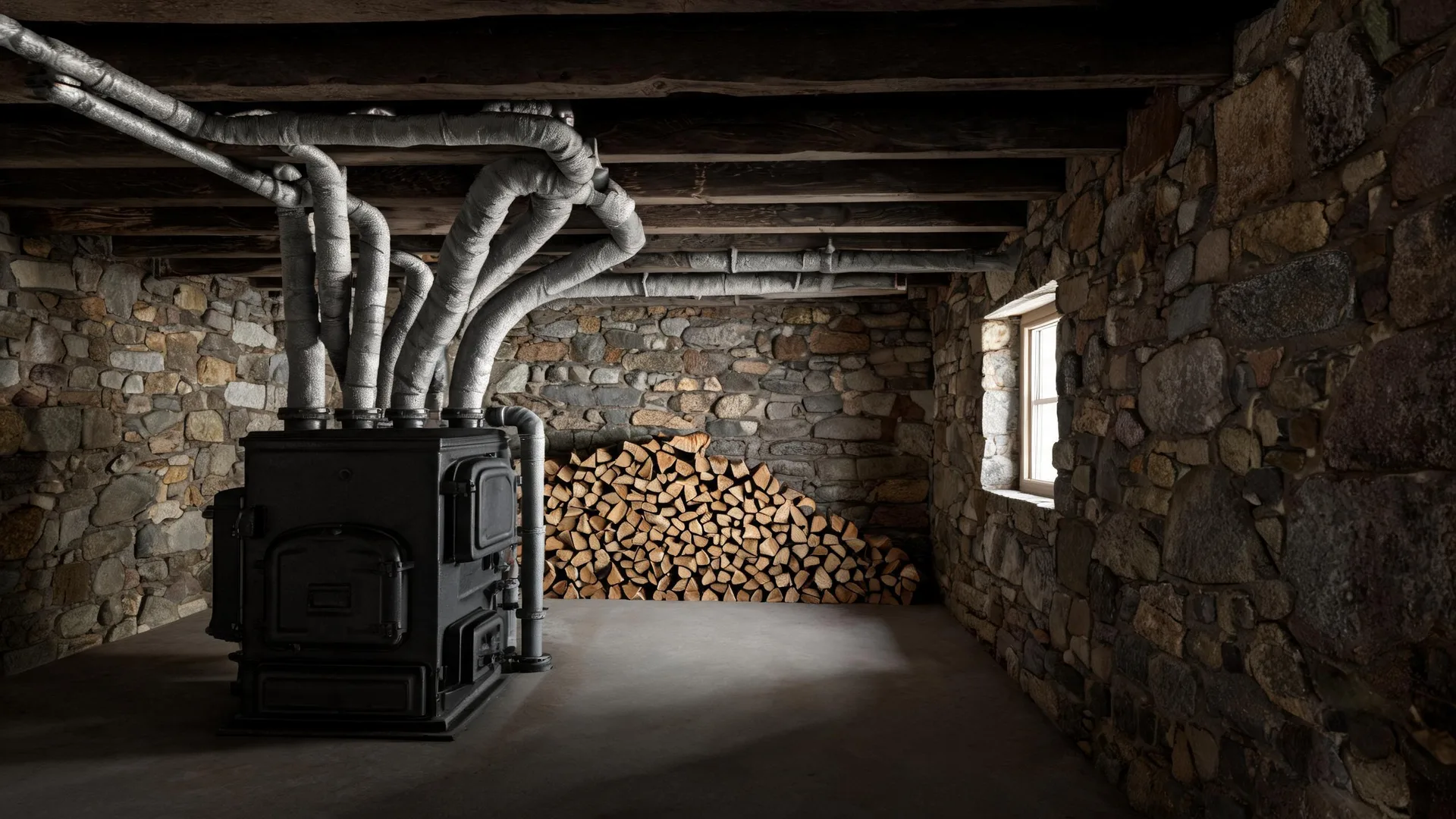
The ducts it ties into matter as much as the furnace itself

A furnace moves air through whatever ductwork is already in the house, and that ductwork has to be sized to carry what the new unit puts out. Undersized or leaky ducts force a contractor to do more than swap boxes: sealing joints, adding returns, sometimes resizing a trunk line. That work shows up in the quote, and skipping it shows up later as rooms that never quite heat.

Sizing a furnace starts with the heat loss of the house, not the size of the one coming out. A contractor measures the square footage, counts the windows, checks the insulation, and runs a load calculation to find out how much heat the place actually loses on a cold day. That number, not a guess and not whatever the old unit happened to be, is what the new furnace gets matched to. Too small and it runs flat out all day without catching up. Too big and it blasts the house to temperature, shuts off, and starts again a few minutes later, never running the long steady cycle that actually carries heat into the walls and floors evenly. Short cycling like that wears the ignition system harder and leaves rooms farther from the furnace feeling the swing between cycles. The right size runs longer, steadier stretches and wears evenly instead of in bursts.

A load calculation gets you the right size on paper. What proves it is watching the system run through a winter like this one, ten months of heat with storms pushing through on a regular basis. A furnace sized right handles that without strain, cycling the way it was designed to. One sized off a guess shows its mistake fast here, because there's so little time in the year when it isn't running. That's the case for choosing the contractor who runs the numbers over the one who quotes off the old unit's nameplate. The install is the one chance to get the size right before the machine spends ten months proving whether it was.