



An unfinished basement featuring a grey forced-air furnace with metal ductwork, concrete block walls, exposed wooden joists, and a single hanging bare bulb.

Furnace Installation in Grangeville, ID

Tell us about the job

Takes about a minute. No obligation.

New system or replacementFurnace or heatingIdaho County, ID
Step 1 of 2

What ZIP code is the job in?

Electricity ran $33.76 per million Btu in Idaho homes in 2024. Most furnaces around Grangeville run on electricity, so that rate is what drives the bill, not a gas meter somewhere else. A furnace that wastes power turns that cost into higher bills every month it runs. With winters here as long and hard as they are, that furnace is going to run a lot. How well it converts electricity into heat is going to show up on paper, bill after bill.

10 months
September through June, your furnace is on duty
18°F
the average winter night it heats against
80% AFUE
the federal minimum any new unit must meet
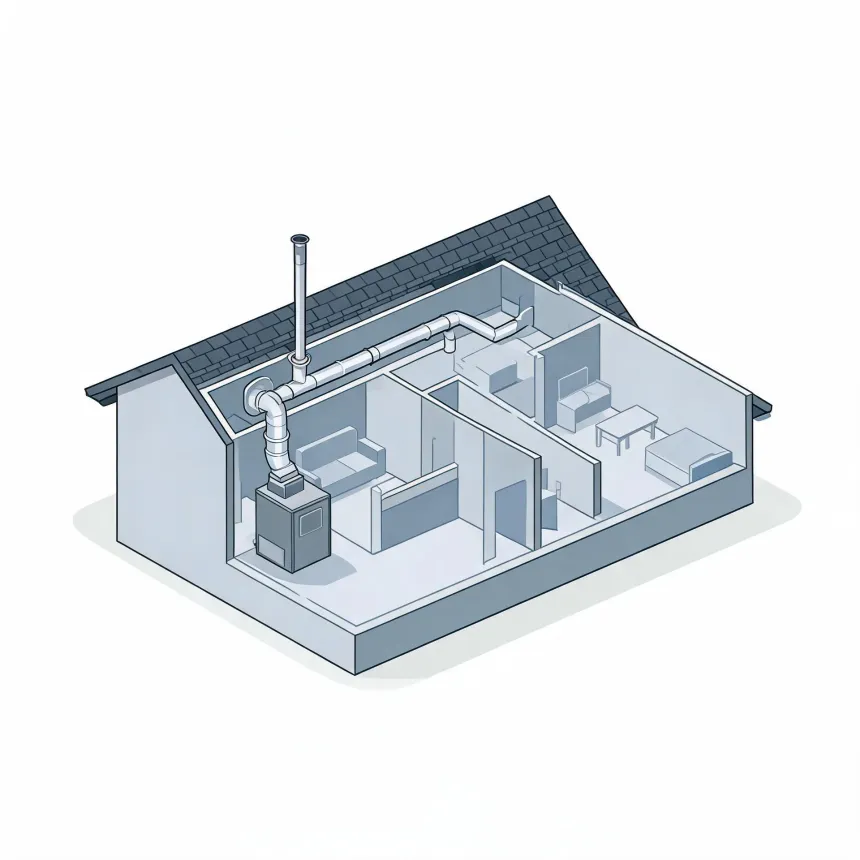
Isometric cutaway illustration of a single-story house showing interior rooms with furniture and a furnace connected to ductwork and a vertical flue pipe extending through the roof.
Your furnace works hardest from October through April.

NOAA nClimDiv, 1991–2020 normals

Electricity heats 42% of homes in Idaho County, more than gas, propane, and oil combined.

An electric furnace matches what's already in the walls here, which makes it the straightforward choice for most installs.

Ten months of heat a year means this furnace barely gets to rest

Heat runs September through June
Winter nights average 18°F
66 winter storms from 2015 to 2024
Install before SeptemberHeat starts in September. August is the last month to get this done without rushing.

Idaho County falls under zone 5B in the 2021 energy code, a cool zone where heating carries most of the load. That's the standard a gas furnace would have to clear here, with units built from November 2015 on required to turn at least 80 percent of the gas they burn into heat over the winter. Most homes around Grangeville heat with electricity instead, and electric furnaces aren't measured against that gas standard at all. What they do have to meet is the building code for this zone, which sets how well a new system has to perform to go in here at all. A federal tax credit is available for a qualifying new system, worth checking against before deciding what to install.

How this furnace runs matters more than what it costs to install

Idaho runs $33.76 per million Btu, and that rate doesn't change based on which furnace you buy. What changes is how much of it turns into heat in your house instead of leaking out as waste. Picking the right one for this install is worth getting right the first time.

Find a contractor
A man in a dark long-sleeve shirt and tan pants climbs porch steps toward a blue front door, carrying a worn canvas tool bag with tools in its side pockets, beside a potted shrub in a blue planter.
A gray residential gas furnace installed in an unfinished basement, surrounded by ductwork, a metal flue pipe, and a gas supply line.

This furnace runs most of the year, so get the size right

Ten months a year is a lot of hours on an igniter, a blower motor, a set of relays. Get the size wrong and it's worse: too big, and the furnace short cycles instead of running a steady load, which wears those parts faster than the long season already does. Too small, and it strains to keep the house warm through the coldest stretch. This is one case where the cheapest unit up front and the right unit for this house are rarely the same thing. Idaho County also sees its share of winter storms, 66 of them between 2015 and 2024. A furnace sized and installed right is one less thing to worry about when one hits.

The furnace is one part of the job

The unit itself is only part of what goes into an install. The ductwork has to be sized to move the air that furnace puts out. Runs that are too narrow or too long make the blower work harder to push heat through the house, and that strain shows up in the electric bill right alongside the furnace's own rating. The vent system has to match the furnace too, since a higher efficiency unit often vents differently than an older one did.
Matching the furnace to the house takes a load calculation

A contractor sizing a furnace for a house should run a load calculation, not guess off square footage or copy the old unit's size. That calculation looks at the walls, the windows, the insulation, how the rooms connect. Skip it and you end up with a furnace that's wrong for the house in one direction or the other, and either way that mismatch costs more to run for as long as the furnace is in there.

Two furnaces can carry the same efficiency rating and still perform differently once they're installed, so ask what the rating is actually measured on. Ask about the blower motor, since a variable speed motor adjusts its output to match the heat called for, where a single speed motor runs at full output every time it kicks on. Ask how the furnace stages its heat. A single stage unit is either off or running flat out, while a two stage or modulating unit can run a lower flame for milder stretches and save the full output for when it's actually needed. Ask what the warranty covers on the heat exchanger specifically, since that part is the most expensive to replace and the hardest to get to once the furnace is boxed in. Ask what sound rating the unit carries too, since a blower that runs for months at a stretch is worth hearing before it's installed, not after.

Install day starts with the old furnace coming out, and that alone can take a few hours if the ductwork or venting has to change to fit the new unit. Once it's out, the crew sets the new furnace, connects the supply and return ducts, and runs the venting to code. The electrical hookup comes next, along with the thermostat wiring if that's being replaced too. Before anyone calls it done, the furnace gets fired up and checked: airflow across the coil, temperature rise through the unit, and the controls cycling the way they should. A combustion analyzer or amp draw reading confirms the furnace is running the way it was built to, not just that it turns on. Expect the crew to walk through the thermostat and any filter changes before they leave, since a furnace set up right on day one is a lot less likely to need a callback that winter.