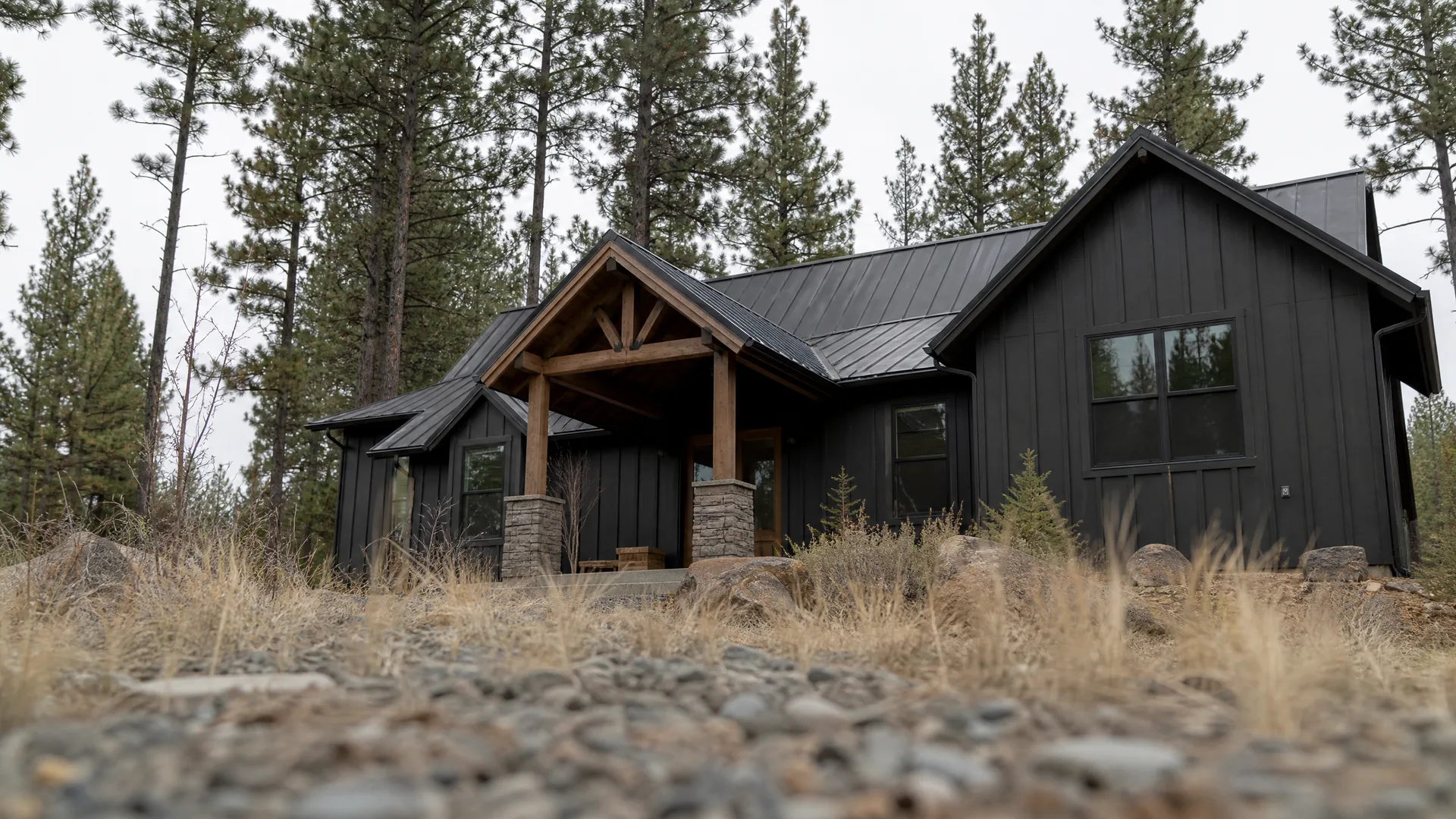






A single-story black board-and-batten house with a dark metal roof, timber-framed entry porch and stone pier bases, set among tall pine trees with dry grass and a rocky gravel foreground.

Furnace Installation in Arco, ID

Tell us about the job

Takes about a minute. No obligation.

New system or replacementFurnace or heatingButte County, ID
Step 1 of 2

What ZIP code is the job in?

Idaho runs on electricity more than most states, and in 2024 it cost $33.76 per million Btu here. If your furnace is electric, that rate hits every hour it runs. A furnace with a higher efficiency rating turns more of that power into heat in your house instead of losing it. Over a winter of steady use, that difference shows up on the bill every month, not just once.

10 months
September through June, your furnace is on duty
11°F
the average winter night it heats against
80% AFUE
the federal minimum any new unit must meet
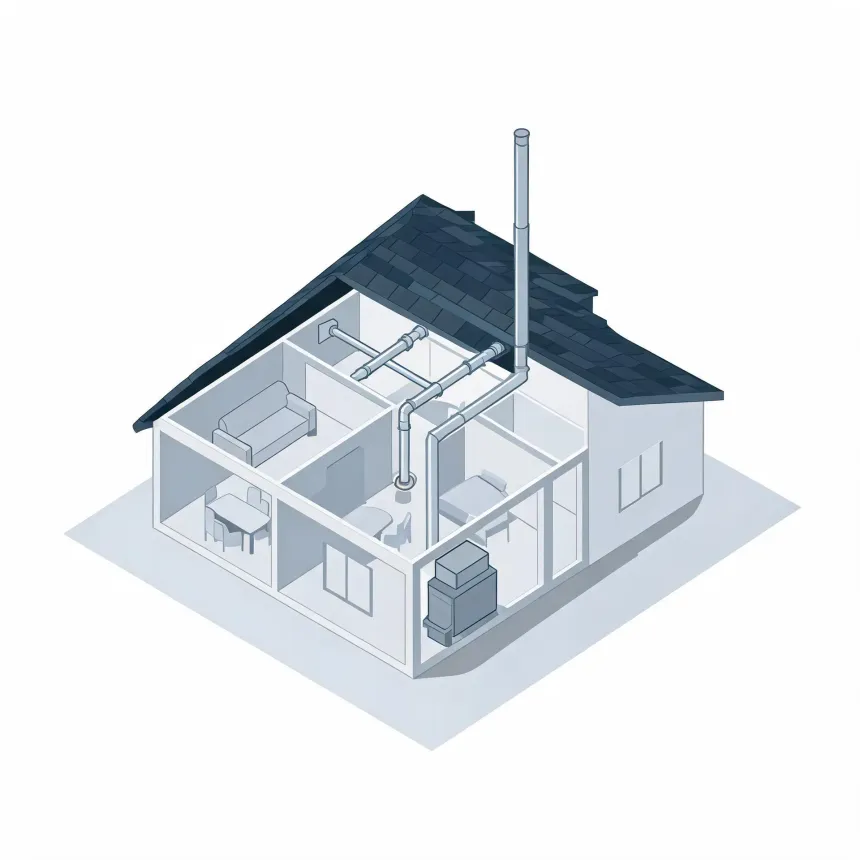
Isometric cutaway illustration of a single-story house showing interior rooms with furniture, ductwork and piping running to a tall vertical flue through the dark shingled roof, and a furnace-like appliance unit on the floor.
Your furnace works hardest from November through April.

NOAA nClimDiv, 1991–2020 normals

Electricity heats 40.5% of homes in Butte County, more than any other fuel.

A new furnace here that runs on electricity is the common choice, not the exception.

Ten months of heat means almost no offseason to work with

Heat runs September through June
Winter nights average 11°F
92 winter storms from 2015 to 2024
A furnace built for ten months of workOvernight lows here average 11°F across December, January and February

When you're choosing a furnace for this house, ask what AFUE rating it carries before you ask about price. That number tells you how much of the power you pay for turns into heat instead of getting lost. A contractor sizing the system can walk you through what rating makes sense against what you'll spend to run it here. Paying more upfront for a higher rating is worth doing the math on, since the rate you pay per Btu doesn't change, only how much of it goes to waste.

Size the new furnace to the house it's going into

Half the homes in Butte County were built in 1971 or earlier. An older house carries different duct runs and different heat loss than a new build, so the furnace going in has to be sized for the house you actually have. Have a contractor size it against this house, not the one next door.

Find a contractor
A man in a cap, navy T-shirt and brown pants carries a waxed canvas tool bag up the steps toward a blue front door of a shingled house, beside a potted shrub.
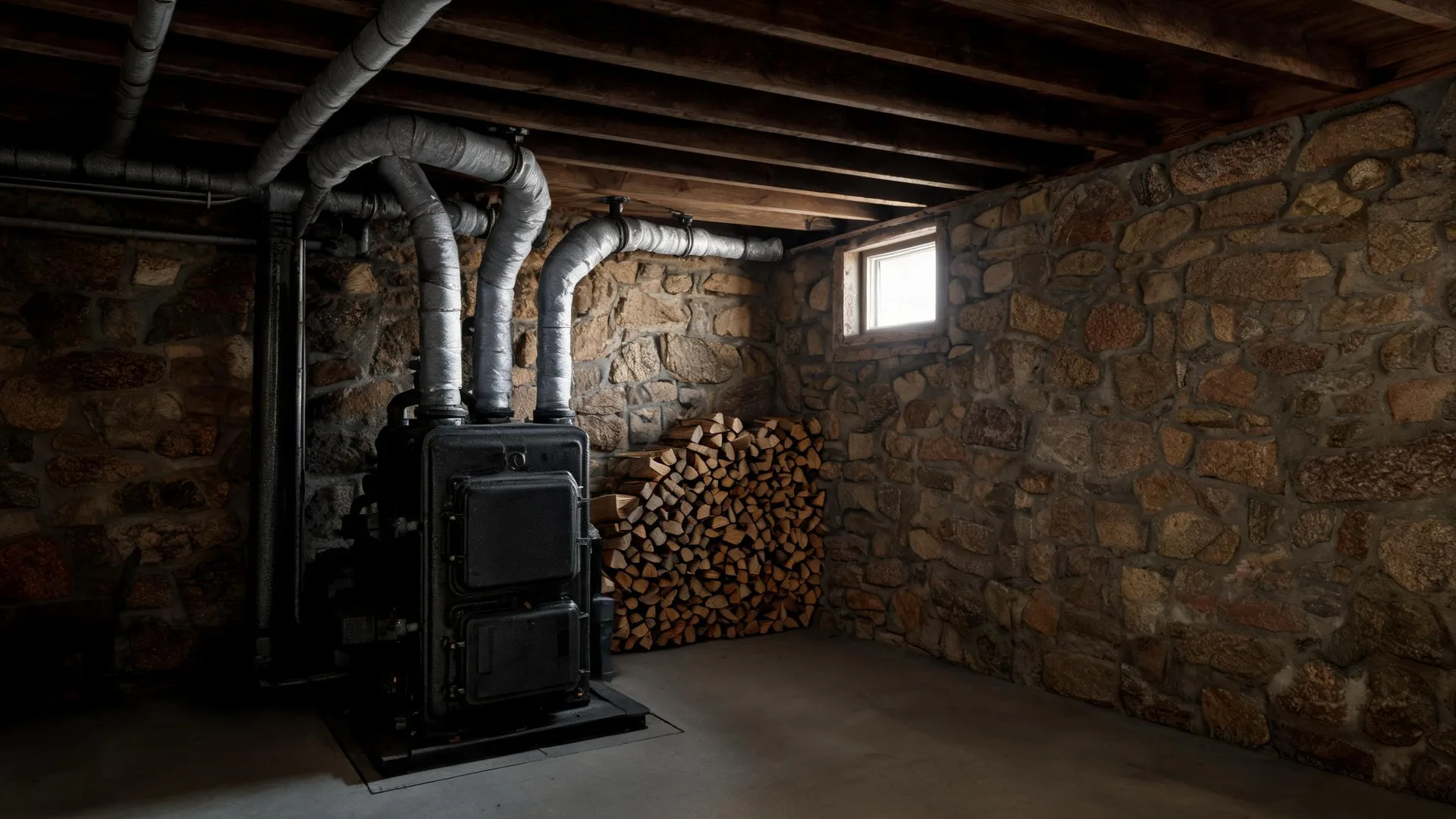
A gray gas furnace with attached ductwork and piping installed in an unfinished concrete basement.

Built for the storms, not just the cold

Ten months of heat and 92 winter storms in the last ten years mean this furnace won't get much of a break to recover from a hard week. Size it for the load this house actually carries, not for the smallest unit that technically heats the square footage. A furnace running near its limit every cold snap wears sooner than one with room to spare.

The rating only holds up at full output

AFUE is measured at steady, full-fire operation. A furnace that's oversized for the house cycles on and off more, and every start costs a little efficiency the label doesn't account for. That's another reason the rating and the sizing have to be decided together, not one after the other.
The rating doesn't move once it's installed

AFUE is a fixed number stamped on the furnace, not something a filter change or a tune-up can raise. Keeping the system maintained protects the rating you paid for. It won't improve on it.

What you pay for a furnace installation comes down to more than the unit sitting in the box. The size of the furnace matters more than the brand, since a unit sized wrong for the house either struggles to keep up or cycles so often it wears out early. Ductwork is often the real driver. If the existing ducts are too small, leaky, or routed poorly for the new furnace, a contractor has to address that before the furnace can do its job, and that work costs more than swapping one box for another. The venting matters too. A higher efficiency furnace vents differently than an older one, sometimes needing new vent pipe run to the outside instead of tying into an old chimney. Electrical and gas line work adds to the job if the new furnace draws more power or needs a line moved. The labor to remove the old system and set the new one correctly, with the ductwork sealed and the venting done right, is where a lot of the job's value sits, even though it's not a part you can point to.

Sizing a furnace comes down to a heat loss calculation, not the square footage on the listing. A contractor works through the walls, the windows, the insulation and how the ductwork is laid out to figure out how much heat the house actually loses on the coldest day. That number, not the size of the old unit, is what the new furnace gets matched to. Too small and it runs flat out all winter without ever catching up. Too big and it blasts the house warm fast, shuts off, then starts again a few minutes later. That short cycling is hard on the parts that start the furnace each time, and it leaves rooms farther from the furnace feeling uneven. The right size runs long, steady cycles that hold a temperature instead of chasing it.