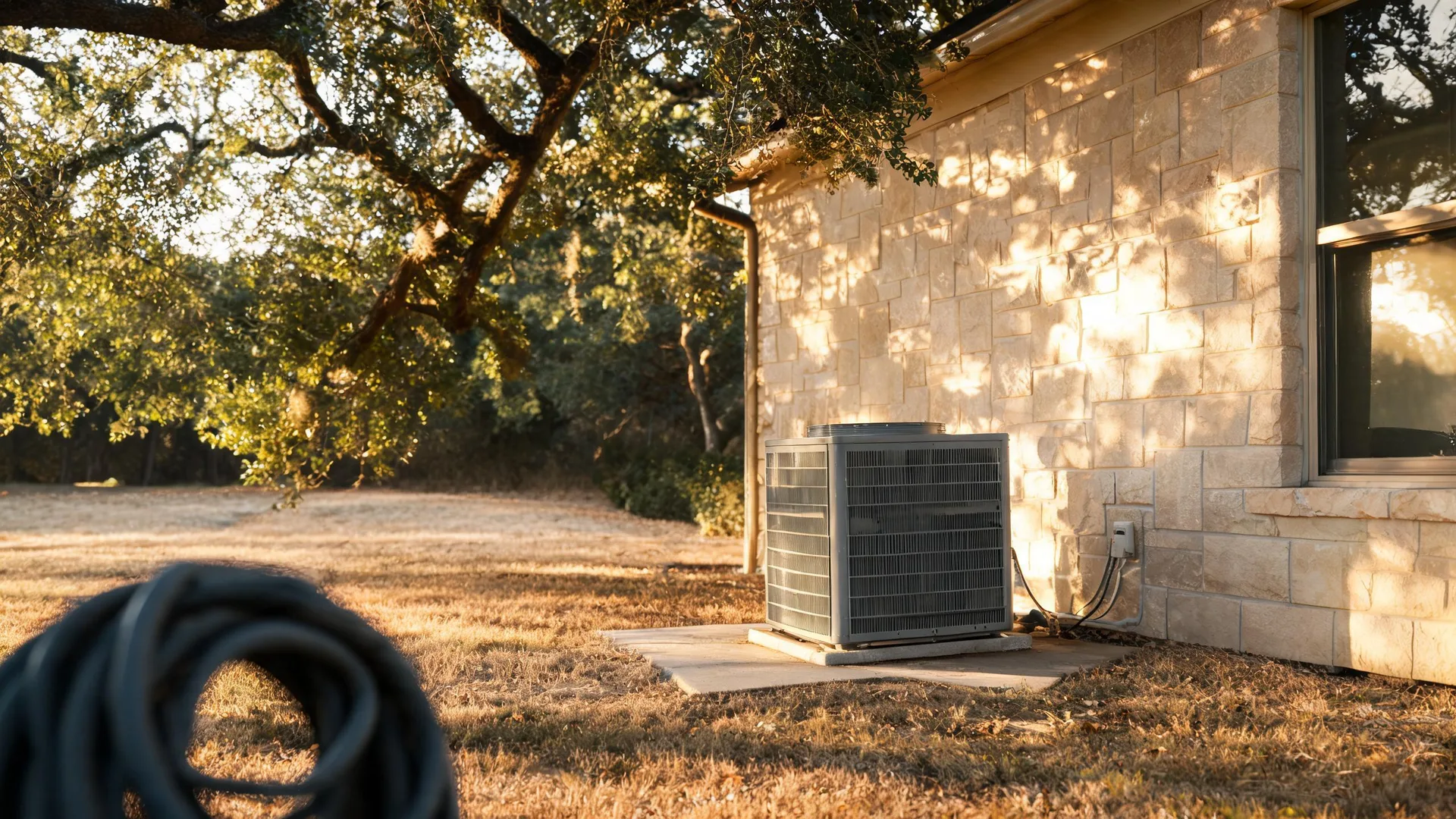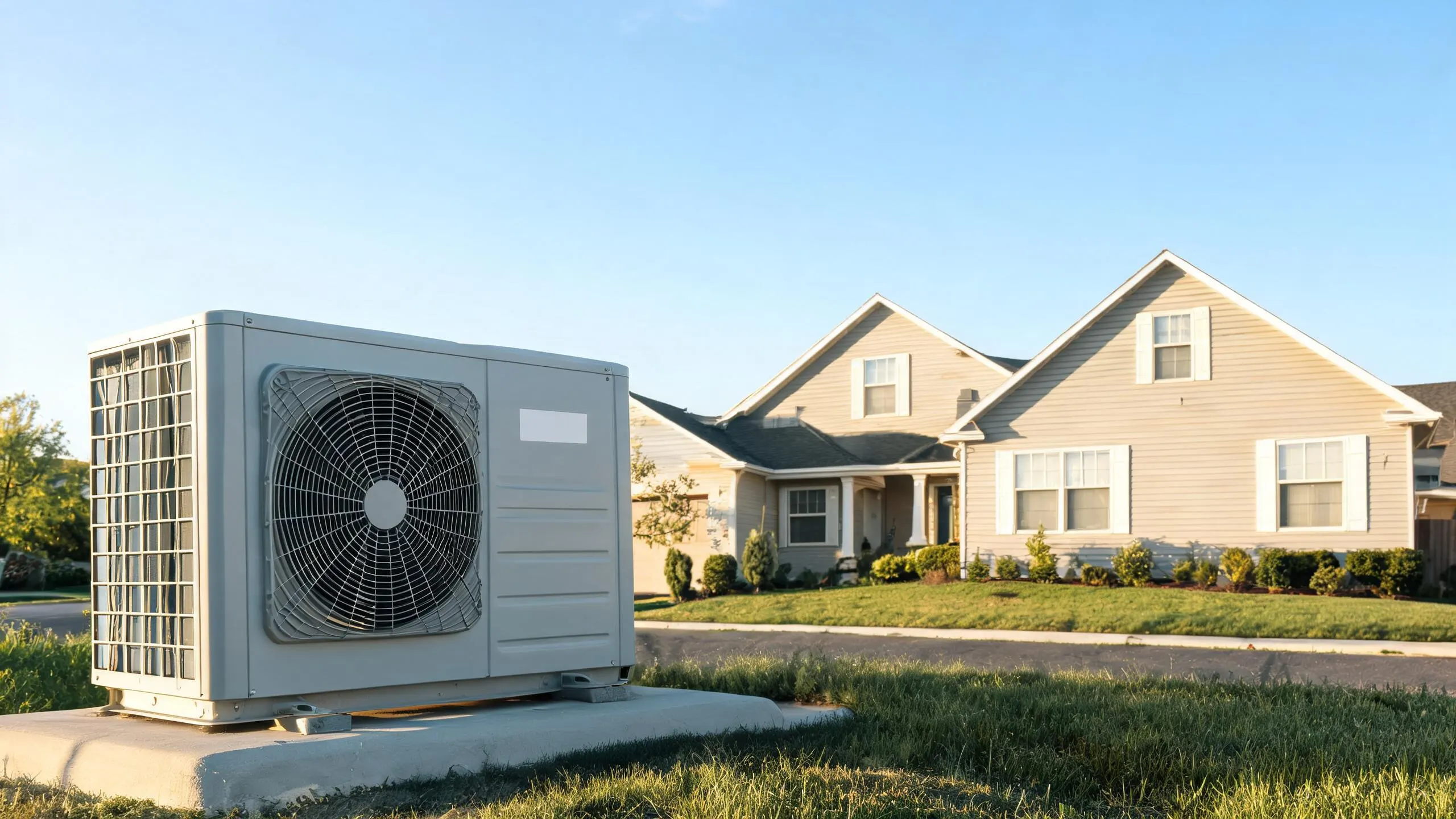
An outdoor heat pump unit mounted on a concrete pad in front of a two-story suburban house.

Heat Pump Repair in Horseshoe Bend, ID

Tell us about the job

Takes about a minute. No obligation.

RepairHeat PumpBoise County, ID
Step 1 of 2

What ZIP code is the job in?

Cold nights here are normal for a heat pump

Overnight lows around Horseshoe Bend average 18°F through December, January and February. A heat pump works harder on those nights. That's normal wear, not a sign your unit is undersized or wrong for this place.

So the cause is usually the ordinary one

When a heat pump struggles in cold weather, a few things usually explain it. The defrost control can fail. The refrigerant charge can run low. The reversing valve can stick in one position. A tech checks these first anywhere this cold, and the fix is the same one used anywhere else.

10 months
September through June, your system heats
1 months
July through July, it cools
18°F
the average winter night it heats against
78°F
the average summer afternoon it cools against
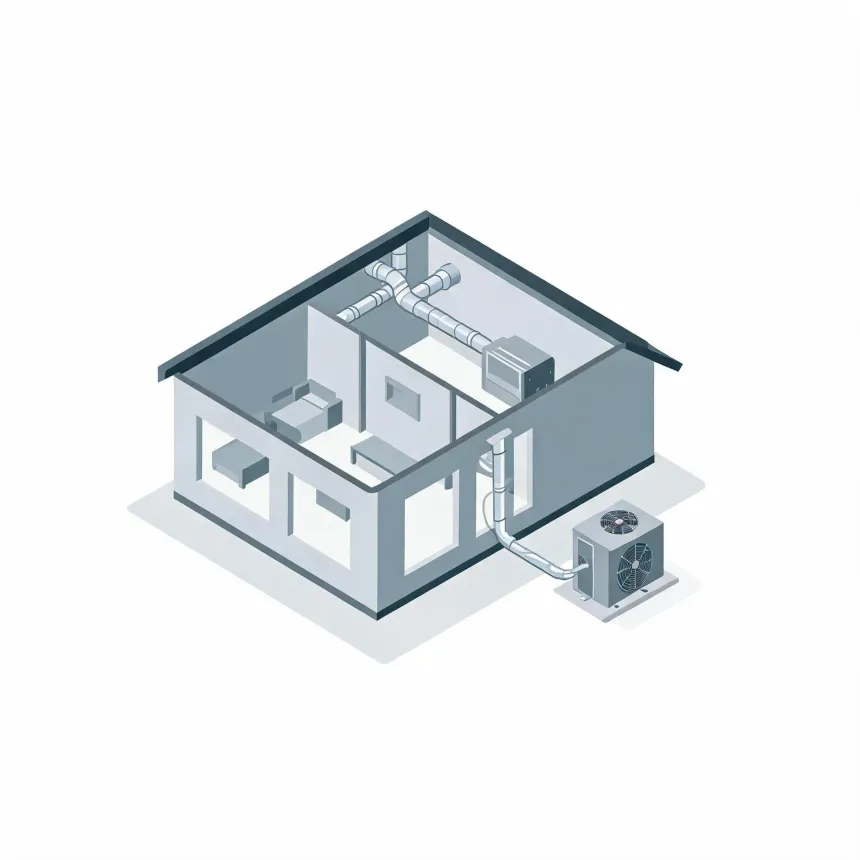
Isometric illustration of a cutaway house showing interior rooms, ceiling ductwork and an air handler, connected by lines to an outdoor condenser unit on a pad beside the building.
Your system heats September through June and cools July through July.

NOAA nClimDiv, 1991–2020 normals

A heat pump running nonstop without the house warming up is losing ground somewhere in the system.

A refrigerant leak or a worn compressor both show up this way, and either one needs a tech before the unit quits for good.

Half the homes here were built in 1991 or later, and the system in yours is likely that age too

Half the homes here were built by 1991
42 winter storms from 2015 to 2024
Winter nights average 18°F

Electricity here ran 11.52 cents a kilowatt-hour in 2024, close to what the rest of the state pays. A heat pump that's losing efficiency costs more to run every month it goes unfixed, and that shows up on the bill before most people think to call someone. If yours is cycling longer than it used to, or the house takes longer to come up to temperature, that's worth a look now rather than after another month of higher bills. The fix is usually straightforward once a tech finds what's actually wrong.

A system this age is worth fixing

A system that age is usually worth repairing rather than replacing. Get a tech to find out what's actually failing before you assume the worst.

Find a contractor
A man in a cap, gray long-sleeve shirt and tan work pants carries a worn canvas tool bag up wooden porch steps toward a blue front door, with a potted shrub to the left.
A dark gray heat pump unit mounted on a concrete pad next to a house with gray siding and a stone veneer wall.

A diagnosis is a list of parts ruled out, not a guess

A diagnostic visit starts outside, at the unit itself. A tech checks the refrigerant charge, since too little or too much changes how hard the compressor has to work. They test the capacitor that gets the compressor and fans started, because a weak one still starts the system some of the time, which is why it gets missed until it fails outright. They run the system through a full heating and cooling cycle to watch the reversing valve switch, since a valve that's starting to stick often works fine on the bench and only shows itself under a real cycle. They check the defrost control board and sensor, because a defrost cycle that runs too often or not enough points to a part failing there rather than the compressor. Electrical connections get checked too, since a loose one can mimic a bad part and send someone chasing the wrong fix. None of this is guesswork. Each test rules something in or out, and by the end a tech knows which part failed instead of which parts might have.

What you can check yourself

Look at the outdoor unit first. If it's buried in snow or ice has built up solid around the coil, that blocks airflow and the system can't do its job. Check the air filter too. A clogged filter starves the system on both heating and cooling sides. Walk around the house and make sure no vents are closed or blocked by furniture. Check the thermostat batteries and make sure it's set to heat, not fan only.

What to leave alone

A thin, even layer of frost on the outdoor coil during a heating cycle is normal. The unit clears it on its own through a defrost cycle. Don't chip at ice or pour water on the coil, and don't open the cabinet or touch any wiring. If the outdoor fan isn't spinning, or you hear grinding or clicking that wasn't there before, that's a call for a tech, not a project for a wrench.

A system struggling in cold weather is already asking for more than it can deliver, and running it that way doesn't buy you time. Ice that builds past what a normal defrost cycle clears means the coil is losing the fight, and every hour it keeps running, more frost locks on and less heat gets through. A low refrigerant charge works the same way. The compressor runs hotter trying to make up for what's missing, and heat is what shortens a compressor's life. A reversing valve that's starting to stick gets worse with use, not better, since it's the switching itself that wears it. None of these fix themselves by waiting. The part that's failing keeps failing, and it usually takes a healthy part down with it before anyone shuts the system off.

Age by itself doesn't mean replace it. A heat pump is built from separate parts, and most of what fails is one part, not the whole system. A bad run capacitor, a stuck reversing valve, a low charge from a slow leak, these get fixed on their own without touching anything else. What changes the math is the compressor. That's the part that can't be swapped out cheap, and if that's what's gone, a tech will tell you straight rather than start replacing parts around it. Ask what actually failed before you decide what the system is worth.