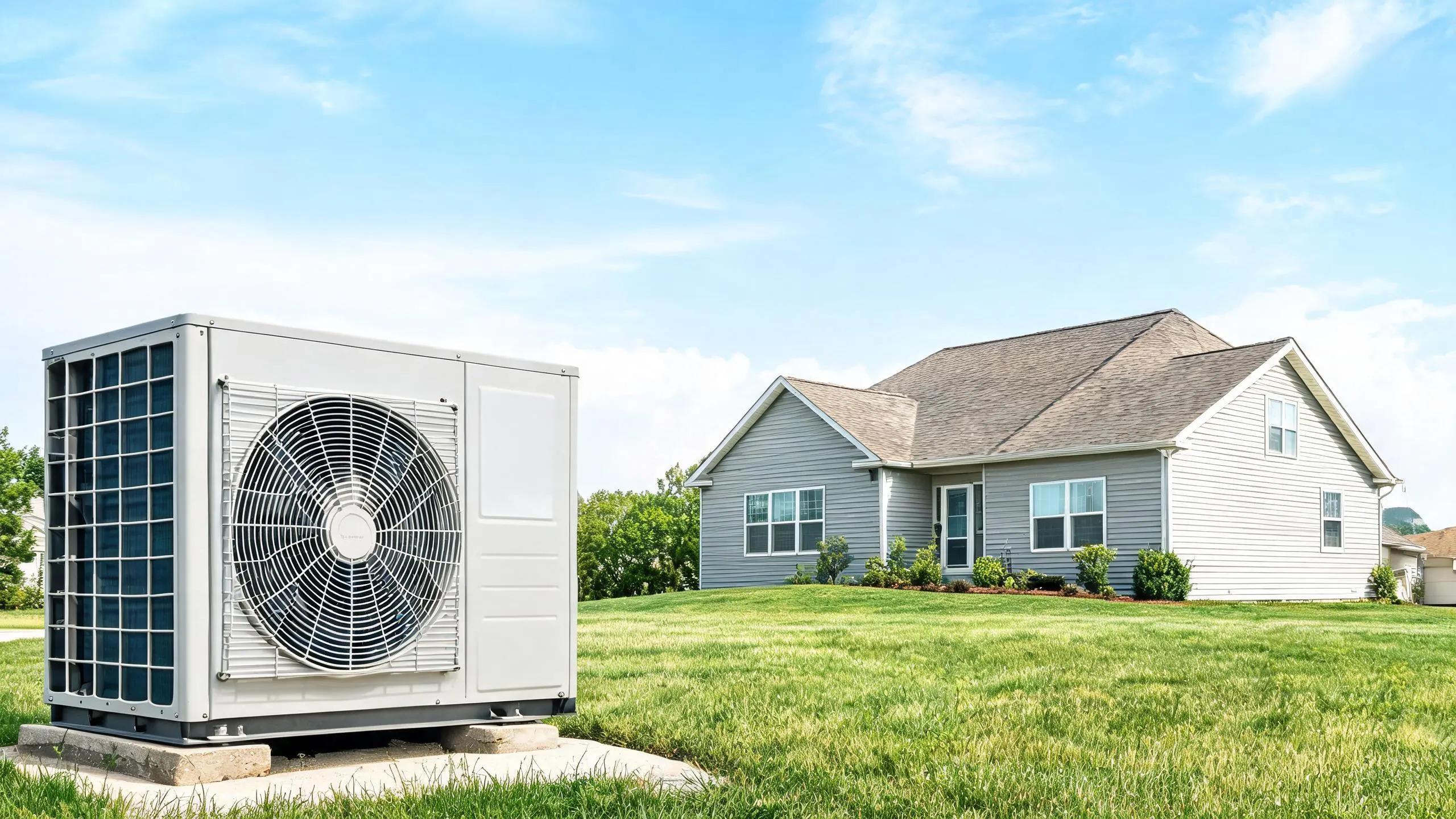
An outdoor HVAC condenser unit on a concrete pad in front of a single-story house with gray siding and a shingle roof.

Heat Pump Repair in St. Maries, ID

Tell us about the job

Takes about a minute. No obligation.

RepairHeat PumpBenewah County, ID
Step 1 of 2

What ZIP code is the job in?

Winters here are cold, not brutal

Overnight lows average 25°F through December, January and February in Benewah County. A heat pump works harder below freezing, but that average doesn't push the system into the kind of extreme cold that wears parts out fast.


So a repair is usually the right call

A heat pump in Benewah County isn't fighting extreme cold year after year. If yours is acting up, age or a worn part is the more likely cause than strain, and that's the kind of problem a repair fixes for good.

10 months
September through June, your system heats
25°F
the average winter night it heats against
77°F
the average summer afternoon it cools against
Isometric cutaway illustration of a single-story house showing interior ductwork, an indoor air handler and furnace unit, and an outdoor condenser connected by a line, on a white background.

Heat pumps in Benewah County start running heat in September, after sitting idle most of the summer.

A part that was already weak tends to fail in the first weeks of heat, not months into the season.

Winter storms here are routine, and this system is built to take them

274 severe weather events from 2015 to 2024
11% of homes statewide lost power a day or more in 2024
22 damaging wind events from 2015 to 2024
A storm-tested system over St. MariesIdaho homes paid 11.52 cents per kilowatthour in 2024

Half the homes in Benewah County were built in 1979 or earlier, and half in 1979 or later. That split doesn't point to any one setup inside a wall or closet, and it doesn't tell you anything about the heat pump itself. Mobile homes make up close to a fifth of the housing here. If yours is one, the system may connect to the ductwork a little differently, so it's worth mentioning when you call. Beyond that, an older house or a newer one fails the same way. A part wears out or was never quite right, and it gets fixed the same way either age of home.

Get it looked at. It's probably fixable.

Your heat pump isn't fighting brutal cold year-round here, so a repair holds up. Whatever's going on with it now is more likely a worn part or its age catching up than the system being run into the ground. Worth having someone diagnose it before you think about replacing anything.

Find a contractor
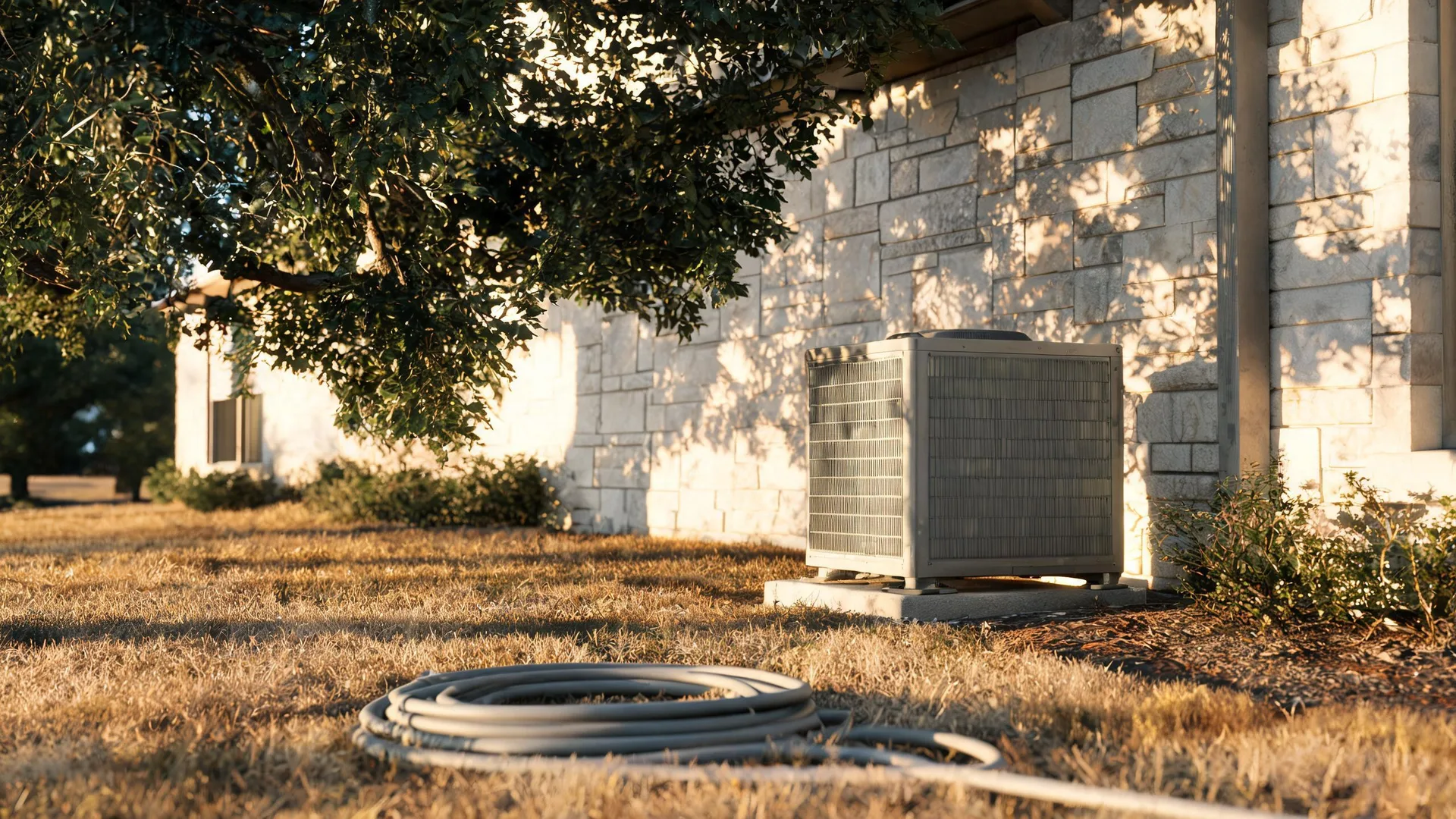
A gray heat pump outdoor unit mounted on a concrete pad next to a residential house with lap siding and stone accents.

A few things worth checking before the tech shows up

Go outside and look at the outdoor unit first. If the fan isn't spinning but you can hear the system trying to run, mention that when you call. Check the air filter inside too. A clogged filter makes a heat pump work harder and can let ice build up on the outdoor coil. At the thermostat, bump the temperature up a few degrees and listen for the system to respond. No response at all points to something electrical, which isn't something you can fix yourself but it helps the tech to know ahead of time. Look at the outdoor coil for ice. A light frost in cold weather is normal and clears on its own during the defrost cycle. A heavy, crusted layer that doesn't go away means the defrost cycle isn't working right. Last thing, walk around the outdoor unit and clear anything blocking it. Leaves, a snow drift, furniture pushed up against it all cut down the airflow it needs. None of this tells you exactly what's wrong inside it, but it gives the tech a head start.

The tech checks the whole system, not just the symptom

Low heat at the vents could be the reversing valve, a refrigerant leak, or a failing compressor, and each one shows up differently once the panels are off and the gauges are on. The tech checks refrigerant pressures, tests the capacitors and contactor, and watches how the system responds when it switches between heating and defrost. Systems with the same complaint can end up with different repairs once that's done.

Expect the unit to run during the visit

A tech usually wants to see the heat pump actually cycle, not just look at it sitting off. That means running it through a heating cycle and sometimes forcing a defrost cycle to see if it clears properly. If the system short cycles or the fan hesitates only under certain conditions, catching it while it runs is often the only way to find that kind of problem.

A heat pump that's starting to fail usually tells you in how it runs, not just whether it runs. Listen for the system cycling on and off more than it used to, never quite settling into a steady run. Feel the air coming out of the vents. Air that's barely warm, or that turns cold partway through a cycle, points to the system losing its heating ability partway through. A hissing or bubbling sound near the indoor or outdoor unit usually means refrigerant escaping, and that's not something that fixes itself. Rattling or a hard clank when the system starts up is often a loose part or a motor mount giving out. If you're setting the thermostat higher than normal just to feel warm air, the system is already struggling to keep up.

Most heat pump failures come down to one part giving out on its own, not the whole system wearing down together. A capacitor, a contactor, a sensor, these fail by themselves and owe nothing to the rest of the unit. Replace the part and the system runs the way it always has. A compressor is the one part that changes the math, since it costs more to replace and more to warranty than anything else in the system. Even then, a compressor failing doesn't mean the system was being run into the ground, especially in a place where it isn't fighting extreme cold for months at a stretch. It can simply be the original part reaching the end of its life. A technician who's opened the unit up can tell you which kind of failure you're looking at, and whether what's failed now makes another failure likely soon after.