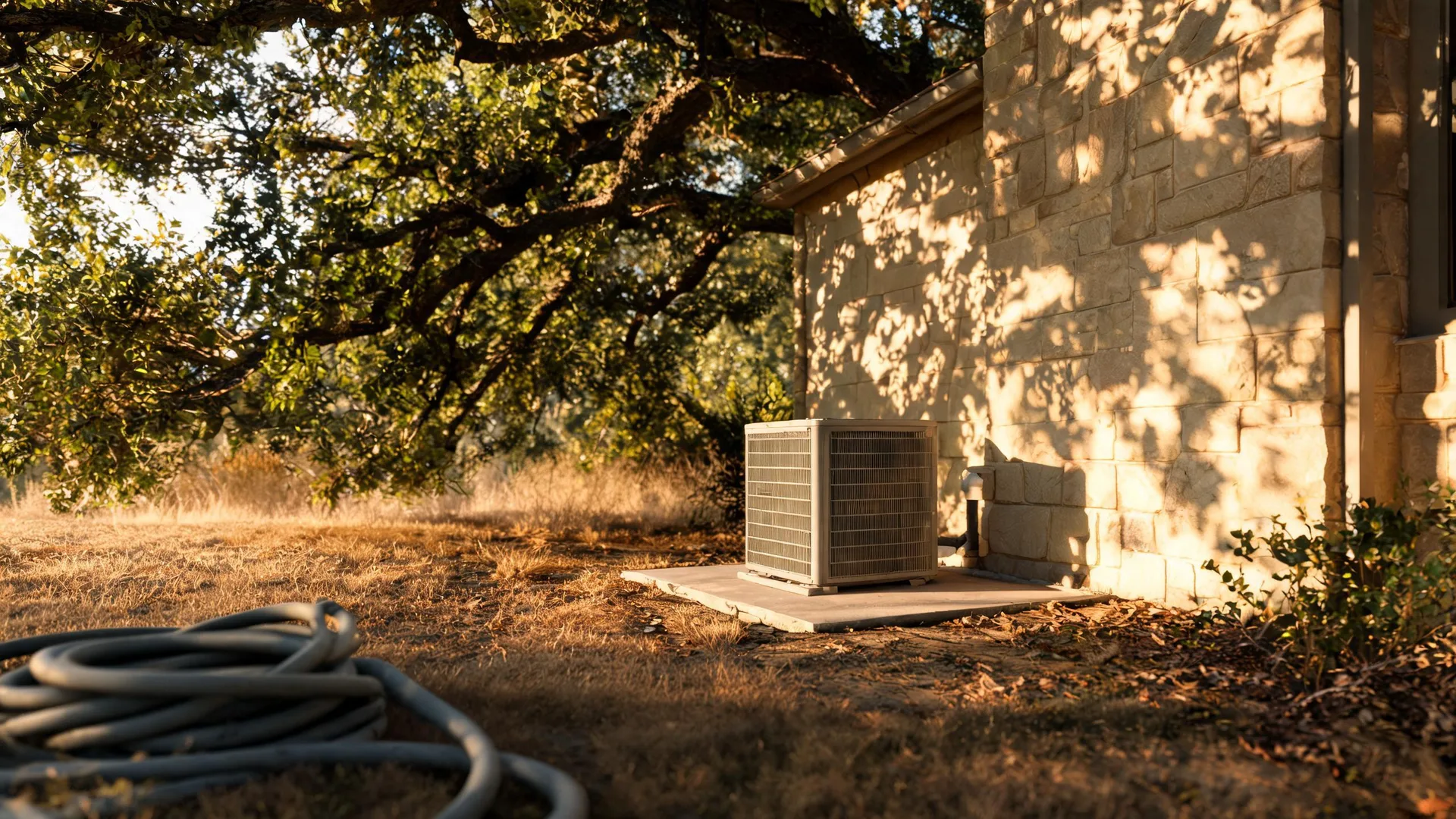
Cold, but not punishing on the system
Winters here average 18°F overnight through December, January and February. A heat pump works harder below freezing, but that's a steady, known load, not the kind of swing that wears a system out early.
Takes about a minute. No obligation.
Winters here average 18°F overnight through December, January and February. A heat pump works harder below freezing, but that's a steady, known load, not the kind of swing that wears a system out early.
A heat pump in Shoshone has probably been doing a normal amount of work for its age. When one acts up, the cause is more likely a failed part or a system that's gone a while without service, not a unit worn out from strain.

NOAA nClimDiv, 1991–2020 normals
Heat in Shoshone starts in September, so August is the month to get a heat pump looked at.
A weak part can limp along all summer and still fail the first cold morning it has to work hard.




A heat pump that's struggling is worth getting to before a storm hits. Lincoln County has seen winter storms, heavy snow, ice, blizzards, thirteen times between 2015 and 2024, and a unit already running rough won't hold up through one. Get the repair done before the next system moves in, not during it. A failed part found in good weather is a straightforward fix. The same part failing in a blizzard means days without heat while a contractor works through a backlog of calls.
It has an easier job here than in most places, so your heat pump is often in decent shape. Repair is usually worth it.
Find a contractorBefore calling anyone, look at the outdoor unit. If the fan isn't spinning, flip the breaker off and back on once, then see if it starts. If it trips again, stop and leave it off. Check the air filter next. A filter clogged with dust chokes airflow and can ice up the coil even when the weather isn't that cold. Look at the vents inside and make sure none are closed or blocked by furniture. If the outdoor coil has a layer of frost or ice on it, that's worth noting for the tech, but don't chip at it or pour water on it. Check the thermostat batteries and make sure it's set to heat, not cooling or fan only. None of this fixes a bad compressor or a refrigerant leak, but it rules out the simple stuff before someone drives out.
A heat pump low on refrigerant makes the compressor work harder to move the same amount of heat. That extra strain on the compressor is what shortens its life. Caught early, a leak is a patched line and a recharge. Left running, it can take the compressor down with it.
A weak capacitor makes the compressor or fan motor draw more current just to start up. Run it long enough in that state and the motor itself can burn out. A clogged filter chokes airflow until the coil ices over, and a frozen coil blocks what airflow was left, so the problem speeds itself along the longer the system keeps running.
A heat pump that needs attention usually tells on itself before it quits outright. Warm air blowing from the vents when it should be hot, or the system running in long stretches without ever quite catching up to the thermostat setting, both point to a unit that's lost some capacity. A hissing or bubbling sound near the lines is worth mentioning to a tech, since that's often refrigerant escaping somewhere it shouldn't. Short cycling, where the unit kicks on and off every few minutes instead of running a full cycle, strains the compressor every time it restarts. Ice building up on the outdoor coil outside of a defrost cycle means something isn't clearing the way it should. A unit that used to be quiet and now rattles, clicks, or hums before starting is asking for a look before whatever's loose or worn gives out completely.
A heat pump that's acting up isn't automatically on its way out. Most failures come from a single part doing its job badly, not the whole system giving up. A capacitor, a contactor, a defrost control board, any of these can quit on their own while the compressor underneath them is still sound. Replacing one failed part almost always costs less than replacing a working compressor along with it. The exception is the compressor itself. A compressor that's cracked or failing is the one repair that often costs enough to make a full replacement the better choice, since everything else in the system depends on it.