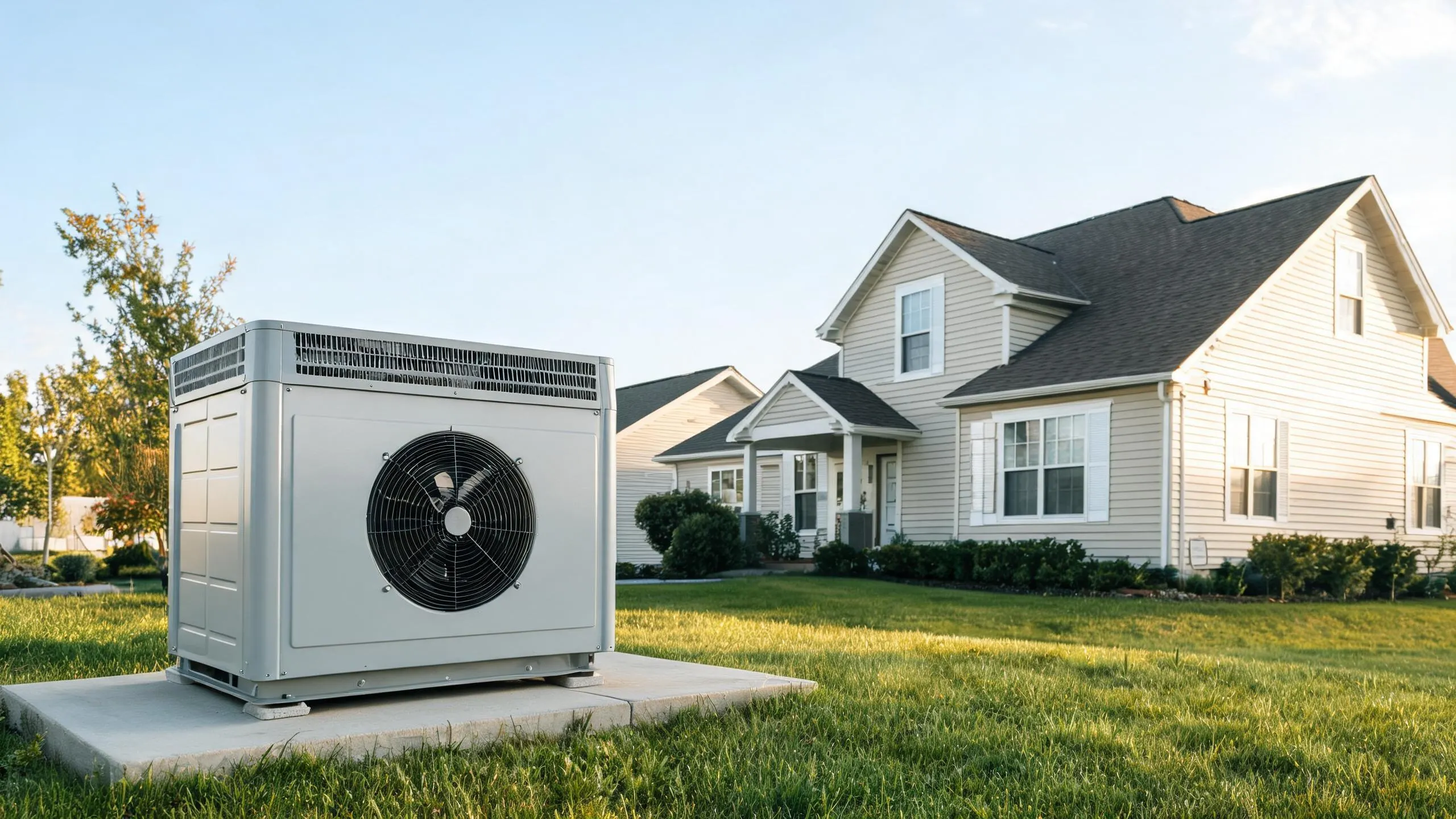
An outdoor heat pump unit mounted on a concrete pad in the front yard of a gray suburban house.

Heat Pump Repair in Preston, ID

Tell us about the job

Takes about a minute. No obligation.

RepairHeat PumpFranklin County, ID
Step 1 of 2

What ZIP code is the job in?

Air that feels cool blowing from the vents

A heat pump in heating mode shouldn't feel hot like a furnace, but it shouldn't feel cold either. Air that feels room temperature or cooler at the register usually means the reversing valve is stuck or the refrigerant charge is low. Either way the unit is running without actually heating.


Ice building up on the outdoor unit

Some frost on the outdoor coil during a defrost cycle is normal. A thick layer that doesn't clear, or ice that keeps coming back, means the defrost board or sensor isn't doing its job. Running it that way stresses the compressor, so it's worth getting looked at before it stops working altogether.

10 months
September through June, your system heats
2 months
July through August, it cools
16°F
the average winter night it heats against
80°F
the average summer afternoon it cools against
Isometric illustration of a cutaway single-family house showing interior ductwork and an air handler, with an outdoor condenser unit connected by lines along the exterior wall.
Your system heats September through June and cools July through August.

NOAA nClimDiv, 1991–2020 normals

A heat pump that keeps short cycling puts more wear on the compressor than one that runs a full steady cycle.

If the compressor is still sound, the fix is usually the part causing the short cycling, not the whole unit.

Half these homes date to 1975 or earlier, and that's not what's wearing on your heat pump

Half the homes here were built by 1975
8 hail events from 2015 to 2024
62 winter storms from 2015 to 2024
Ten months of heatHomes here run heat September through June, so August is the month to catch a weak part before it fails.

Winters in Preston are cold, averaging 16°F overnight across December, January and February, but cold alone doesn't wear out a heat pump. What wears on one is running against extreme swings, and that's not what happens here. Hail is rare, so the outdoor unit's coil and fins usually aren't the problem. Winter storms come around more often, but snow and ice sitting on the cabinet is a housekeeping issue, not strain on the compressor. A heat pump that's been maintained has had a fairly easy run in this climate. If yours is acting up, the cause is more likely a part that's failed or worn than a system that's been overworked.

Get the usual fix

Nothing about this area is especially hard on it. It's most likely the usual problem with the usual fix.

Find a contractor
A gray heat pump outdoor unit mounted on a concrete pad next to the stone-accented exterior wall of a house.

What to check before you call

Check the thermostat first. Make sure it's set to heat, not cool, and that the set point is above room temperature. If it has batteries, swap them. Next look at the outdoor unit. Clear away anything blocking it, leaves, a stack of snow, a cover someone left on it. Go inside and check the air filter. A filter clogged with dust chokes airflow and can make the whole system struggle, and it's the one thing anyone can fix with no tools. Walk around and check that supply vents aren't closed or blocked by furniture. If the breaker tripped, reset it once. If it trips again, stop and leave it off. None of this fixes a stuck reversing valve or a failed defrost sensor, but it rules out the simple stuff before anyone opens up the unit.

The capacitor goes before the compressor does

The compressor is the heart of the system, but it's rarely the first thing to fail. A run capacitor wears out from the constant start and stop cycling and the compressor or fan motor starts struggling to kick on. Caught early, that's a capacitor swap. Ignored, the motor it was supporting takes the damage too.

Low refrigerant means a leak, not a top-off

A heat pump doesn't use up refrigerant the way a car burns gas. If the charge is low, it's low because it's leaking out somewhere, usually at a fitting or a worn coil. Adding refrigerant without finding the leak just means doing it again in a few months, and running low puts extra strain on the compressor the whole time.

A heat pump that's struggling still tries to do its job, and that's the problem. If the reversing valve is stuck or the charge is low, the compressor keeps running to chase a temperature it can't reach. It doesn't shut off and rest, it just keeps working against whatever's wrong. Ice on the outdoor coil that isn't clearing cuts off airflow to the unit, so the system pulls in less heat each cycle and runs longer to make up for it. A failing capacitor makes the compressor or fan motor strain every time it starts, and each hard start wears it down a little more. None of this is the climate catching up with the unit. It's one worn part forcing the rest of the system to cover for it, and left alone that turns into a compressor replacement instead of a part swap.

A diagnostic visit starts with the complaint, not the unit. A tech wants to know what the air feels like at the vents, whether the outdoor unit is icing, whether it's making noise it didn't used to make. From there it's gauges and a meter. Checking the refrigerant charge, checking capacitor readings against what they should be, checking that the reversing valve actually switches when it's told to. Electrical testing on the defrost board and sensor if the ice points that way. None of this is guesswork, a failing part shows a reading outside its normal range, and that's what points to the fix. The goal of the visit is to find the one thing that's actually wrong, not to replace parts until something works.