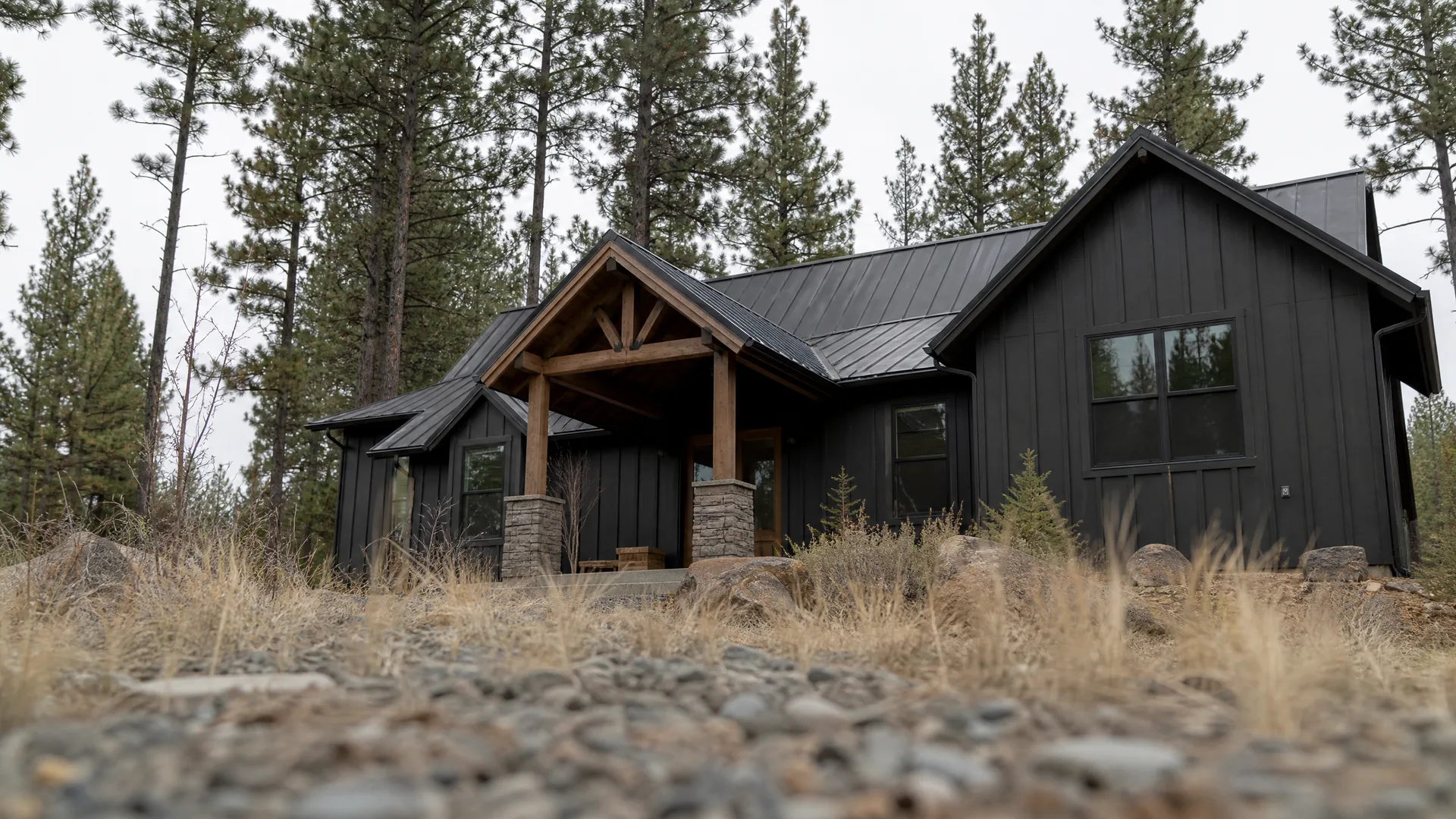





A single-story black board-and-batten house with a dark metal roof, timber-framed entry porch and stone pier bases, set among tall pine trees with dry grass and a rocky gravel foreground.

Heat Pump Repair in Payette, ID

Tell us about the job

Takes about a minute. No obligation.

RepairHeat PumpPayette County, ID
Step 1 of 2

What ZIP code is the job in?

A heat pump in Payette works two jobs, so it gets two shots a year to show a weak part. Heat switches on in October, and that first cold stretch after months of idling is when a struggling component usually gives out. The reverse happens in June, when the system starts pulling cooling duty again after sitting on heat since fall. If yours is acting up right at one of those changeovers, that timing is not a coincidence. A contractor who knows this can usually find the part that was already failing before the season put real load on it.

8 months
October through May, your system heats
3 months
June through August, it cools
25°F
the average winter night it heats against
88°F
the average summer afternoon it cools against
Isometric cutaway illustration of a gray house showing interior rooms, a central air handler with ducts in the attic, and refrigerant lines running to an outdoor condenser unit beside the building.
Your system heats October through May and cools June through August.

NOAA nClimDiv, 1991–2020 normals

Air blowing from the vents that feels room temperature instead of warm or cool means the system is running but not doing its job.

A heat pump stuck like that usually has a compressor or reversing valve problem, and it is worth a same-week call.

Nothing here works this machine harder than usual

Half the homes here were built by 1978
37 winter storms from 2015 to 2024
Winter nights average 25°F

Get it looked at early

Problems tend to show up in the first weeks of the season, when the load hits a part that was already weak.

Find a contractor
A dark gray heat pump unit mounted on a concrete pad next to a house with gray siding and a stone veneer wall.

What wears first on a machine that never really stops

A heat pump runs longer over a year than a furnace or an AC alone, since it covers both jobs. That extra running time wears its parts on a different schedule than either one alone. The reversing valve only gets asked to switch position at each changeover, but a valve that is sticking from corrosion or a worn seal usually shows it right then, not partway through a long run. The compressor wears with total hours, not the season on the calendar. Years of cycling on and off strain its windings and its internal valves, and a compressor on its way out often starts short cycling or tripping its overload before it quits for good. Outdoors, the defrost board and sensor earn their keep every time the coil frosts over and the unit has to clear itself, and a bad sensor can leave that coil iced over or stuck cycling into defrost when it does not need to. None of these parts fail because the machine is old. They fail because they have been asked to work, switch, and cycle far more than a furnace or an AC ever has to, and eventually one of them gives before the rest.

What you can check yourself

Look at the outdoor unit. If the coil is caked in ice or buried in leaves and debris, clear what you can reach and see if airflow improves. Check that nothing is blocking the indoor vents, and swap the filter if it is gray or clogged. Check the breaker box for a tripped switch before assuming the worst. These take a few minutes and sometimes the fix is that simple.

What to leave alone

Do not open the outdoor cabinet or touch the refrigerant lines. Do not keep flipping the breaker if it trips again right away, that usually means a short or a locked compressor, and resetting it repeatedly can do more damage. If you smell burning or hear grinding metal, shut the system off at the thermostat and the breaker and wait for a contractor rather than running it to see what happens.

A heat pump that is struggling still tries to meet the thermostat setting, so it just runs longer to get there. That extra runtime is what turns a small problem into a bigger one. A reversing valve that is starting to stick gets worked harder every time it is asked to switch, and a weak compressor under extra strain runs hotter than it should, which is what actually damages the windings inside it. Ice on the outdoor coil blocks airflow, so the system pulls in less heat and leans on the compressor to make up the difference. Left alone, a problem that started as a part working a little too hard usually ends with that part burned out or seized, instead of just worn.

A diagnostic call starts outside, at the unit itself. A tech checks refrigerant pressures first, because a low charge shows up there before it shows up anywhere else. Then comes the electrical side. That means the capacitor, the contactor, and the wiring to the compressor, looking for a part pulling more current than it should or failing to hold a charge. Indoors, they check the air handler, the blower wheel, and the coil for ice or restricted airflow. A reversing valve gets tested by watching it actually switch between heating and cooling, since a valve can sit there looking fine and still fail to move when asked. If the outdoor coil was iced over on arrival, the defrost board and its sensor get checked too. The goal is not just naming what broke, but figuring out why that part was the one to go.