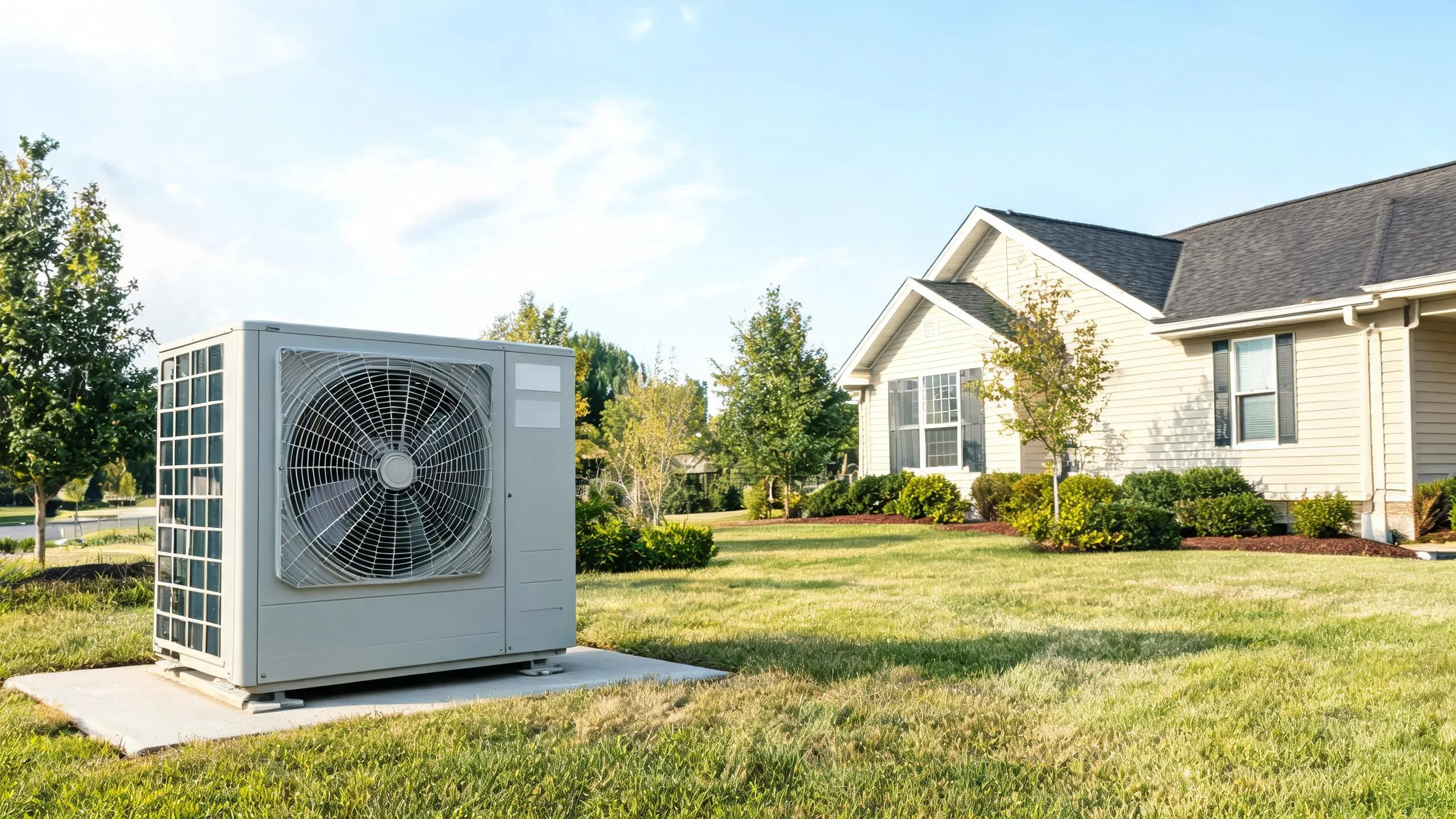
A grey heat pump outdoor unit mounted on a concrete pad in a suburban backyard, with a single-storey house visible behind it.

Heat Pump Repair in Montpelier, ID

Tell us about the job

Takes about a minute. No obligation.

RepairHeat PumpBear Lake County, ID
Step 1 of 2

What ZIP code is the job in?

What the age and the damage tell you

A heat pump that's old and now needs a major part like the compressor or reversing valve is usually not worth fixing. One that's still within its expected working life and has a simple failure, like a bad capacitor or a stuck contactor, is worth repairing almost every time. The pattern matters too. A system that's needed a few different repairs over recent years is wearing out in more places than the one you can see.


What waiting costs you

A heat pump that's struggling, running long cycles or short-cycling, icing up when it shouldn't, is putting strain on parts that were fine before. Leaving a weak system running can turn a single repair into a bigger one as other parts fail from the extra load. If the system is near the end anyway, that's worth knowing before paying for a repair that only buys a short stretch of time.

10 months
September through June, your system heats
12°F
the average winter night it heats against
77°F
the average summer afternoon it cools against
Isometric cutaway illustration of a small house showing interior rooms with furniture, an indoor air handler with flexible ducting, and refrigerant lines running to an outdoor condenser unit beside the building.

Heat here starts up in September, and that first cold stretch is when a weak part finally gives out.

If your heat pump is going to fail, it usually happens early, so a repair now is worth doing right.

Cold winters, but nothing here works a heat pump harder than normal

Power costs 11.52 cents a kWh statewide
106 winter storms from 2015 to 2024
Winter nights average 12°F

A heat pump that's icing up or short-cycling and keeps running is working against itself. Ice on the outdoor coil blocks airflow, so the system pulls harder to move the same heat, and the defrost cycle that should clear it runs longer and more often to keep up. A reversing valve that's starting to stick gets worked every time the system tries to switch between heating and defrost, and that's exactly when it's most likely to fail completely. Low refrigerant charge is another one. Run it low for long enough and the compressor starts working oil that isn't circulating the way it should, and a compressor is the one part that usually ends the system rather than just needing a repair. None of this gets better by waiting out the cold snap.

Get it looked at early

Problems tend to show up in the first weeks of the season, when the load hits a part that was already weak.

Find a contractor
A gray heat pump outdoor unit mounted on a concrete pad next to the stone-accented exterior wall of a house.

What a struggling heat pump sounds and feels like

A heat pump that needs attention usually tells you before it quits outright. It runs but doesn't bring the house up to temperature, or it runs longer than it used to for the same result. Outdoors, the unit may ice over and stay that way instead of clearing itself in a normal defrost cycle. You might hear it switch between heating and defrost more than it should, or hear a hard clunk when the reversing valve throws. Indoors, air coming from the vents feels cooler than usual, or the system blows but barely moves air at all. Some of these point to a simple fix, like a failed capacitor or a sensor reading wrong. Others, like a compressor struggling to start, point to something bigger. Either way, the signs show up before the system fails for good, and that's the window to get it looked at.

What actually wears out

The contactor pits from years of switching power to the compressor until it stops making contact. The capacitor loses its charge and can't kick the compressor or fan motor into motion. The reversing valve's coil burns out, or the valve itself sticks from corrosion and won't throw. A refrigerant leak at a fitting or coil starves the compressor over time. Each of these fails on its own schedule, not because of any single bad day.

Why it's rarely one thing

A heat pump under strain pulls other parts down with it. Low refrigerant makes the compressor run hotter and shortens its life. A coil fouled with dirt or ice makes the fan motor work harder than it was built for. A sensor that's drifted off can leave the system running a cycle it doesn't need, adding hours onto parts that were otherwise fine. The first failure is rarely the last word if the cause behind it goes unaddressed.

A few things are worth checking before anyone drives out. Look at the outdoor unit. If it's caked in ice and it's not in the middle of a defrost cycle, that's worth mentioning when you call, but don't chip the ice off yourself, you can bend the fins or damage the coil underneath. Check the thermostat is actually set to heat and the setpoint is above room temperature. It sounds obvious but it gets missed more than you'd think. Look at the air filter. One packed with dust chokes airflow and can cause a lot of what feels like a bigger problem, and swapping it takes a minute. Walk through the house and check vents aren't closed or blocked by furniture or rugs. If there's a breaker panel you know how to read, check nothing's tripped, but don't go further than that. None of this fixes a bad capacitor or a stuck reversing valve, but it rules out the easy stuff first.

A diagnostic starts at the outdoor unit, not on paper. A tech checks refrigerant pressure, because a reading that looks fine in cooling mode can point to a problem once the system is running in heating mode. They'll run the defrost cycle manually and watch whether the reversing valve actually throws when it's told to, since a stuck valve often only shows itself when it's asked to work. The contactor and capacitor get checked under load, not just by sight, because a part can sit there looking fine and still fail to do its job. Electrical readings at the compressor matter too. A compressor drawing the wrong amperage is telling you something before it quits outright. Most of this only shows up with the system running, which is why a tech wants it operating, not shut down, when they arrive.