A stack of split firewood sits against the black vertical wood siding of a house, with a gravel strip, dry grass, and pine trees under an overcast sky.

Heat Pump Repair in Kamiah, ID

Tell us about the job

Takes about a minute. No obligation.

RepairHeat PumpLewis County, ID
Step 1 of 2

What ZIP code is the job in?

Early fall is when weak parts show up

Heat here starts up in September, after a heat pump has sat idle most of the summer. A part that was already marginal, like a weak capacitor or a contactor with worn contacts, tends to fail right when the system switches over and starts working hard again.

August is worth a look before you need heat

If your heat pump struggled last season, August is a good time to have it checked before the switch to heat in September. Catching a weak part before it fails outright means less chance of losing heat on a cold morning.

10 months
September through June, your system heats
23°F
the average winter night it heats against
78°F
the average summer afternoon it cools against
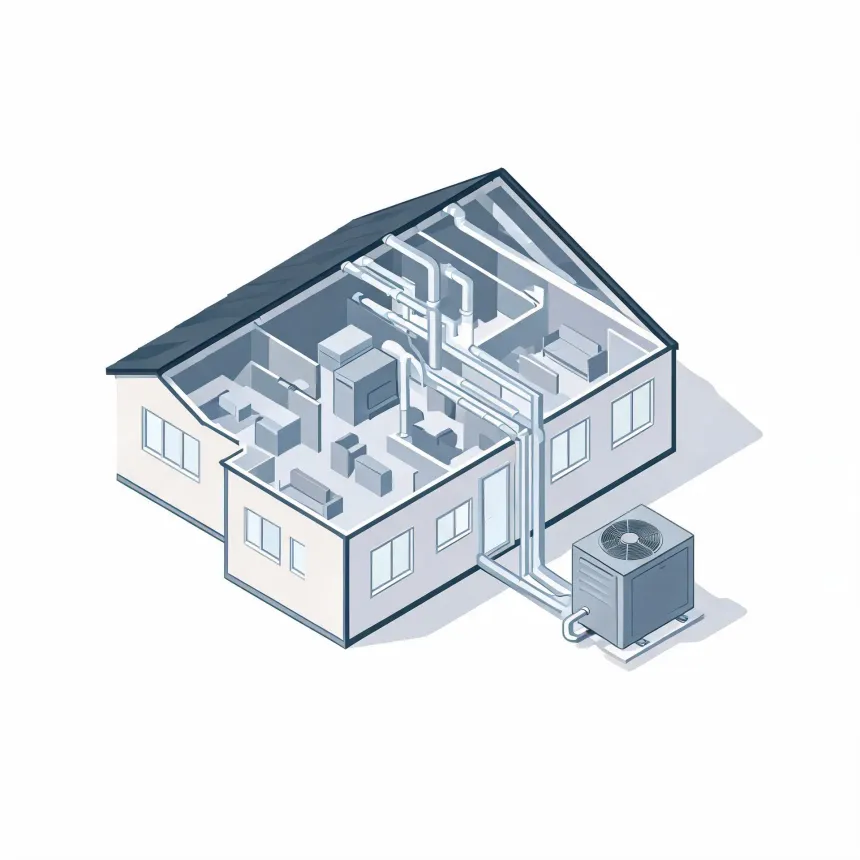
Isometric illustration of a cutaway single-story house showing interior ductwork and vents connected to an outdoor condenser unit beside the building, on a white background.

A heat pump in Lewis County isn't fighting extreme heat or deep cold most of the year, just a 23°F average night in winter.

A heat pump that isn't overworked year after year is usually still in decent shape underneath, so a repair is worth doing.

Kamiah doesn't put unusual strain on a heat pump

Power costs 11.52 cents a kWh statewide
19 damaging wind events from 2015 to 2024
10 hail events from 2015 to 2024
Kamiah has a lot of older homesHalf the homes in Lewis County were built in 1965 or earlier.

That's worth knowing when you're deciding whether a repair is worth the call. A heat pump that's spent years cycling against a mild winter low, not an extreme one, usually hasn't been pushed hard enough to wear out its major parts. So when something goes wrong, a stuck reversing valve, a failed capacitor, a bad sensor, it's more likely a single part than a system worn out from years of strain. That's a straightforward fix, not a sign the whole unit is done. Worth having someone track down the actual part before anyone talks about replacement.

Worth fixing, if you know what else you're buying

If the heat pump came with the house, ask the contractor how much life it has left while they're there for the repair. A straightforward fix is still worth doing on a unit with good years left in it.

Find a contractor
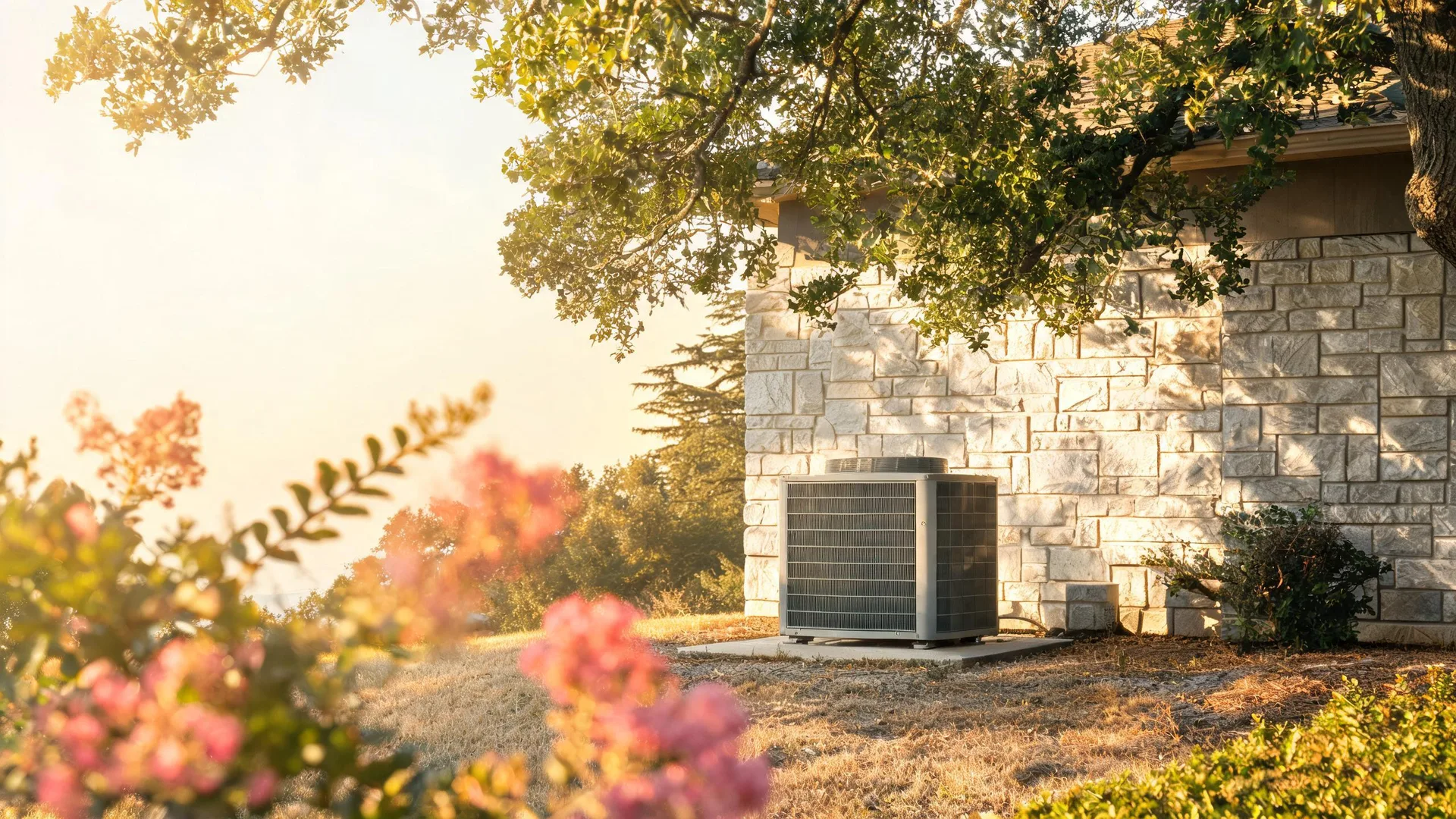
A white mini-split heat pump outdoor unit mounted on a concrete pad beside a gray-sided house, surrounded by gravel and green shrubs.

Running it while it struggles wears it out faster

A heat pump that's struggling doesn't fix itself by staying on. If it's low on refrigerant, the compressor keeps trying to move a full load with less than it has to work with. That's what wears it out, not just age. A failing capacitor means the compressor or fan motor draws hard on every start, and each start after that stresses windings that are already weak. Ice on the outdoor coil works the same way. If the system can't finish a defrost cycle, running it longer just builds more ice instead of clearing it, and that blocks the airflow the compressor needs. None of these get better on their own. The part that's struggling now is usually the part that fails outright later.

Check the obvious before you call

Look at the thermostat first. Make sure it's set to heat and the setpoint is actually above room temperature, since a setting bumped by accident looks exactly like a dead system. Then check the breaker and any shutoff switch near the indoor and outdoor units. A tripped breaker or a switch knocked off happens more than people think, and it rules out a whole repair call.

The filter and the outdoor coil

Pull the air filter and hold it up to a light. If you can't see light through it, airflow is choked, and a heat pump starved for airflow will ice up outside or blow air that feels barely warm. Check the outdoor unit too. If the coil is caked in ice or buried in leaves and debris, that blocked airflow is likely part of what's going wrong, not just a side effect of it.

Most heat pump failures trace back to a handful of parts, and a system that hasn't been worked hard tends to buy them more time. The capacitor weakens over time, giving the compressor or fan motor a weak push on startup until one day it doesn't start at all. Contacts inside the contactor pit and burn a little with each cycle, and a system that cycles less often gets there more slowly. The reversing valve, the part that switches the system between heat and cooling, can stick in one position, usually from a buildup of debris inside it or a coil that's lost power. Refrigerant leaks show up slowly, at a fitting or a coil, and the system keeps running while it quietly loses its charge, no matter how light the load has been. Sensors and defrost boards drift or fail outright, and when they do, the system can't tell when to defrost or when to stop, so ice builds where it shouldn't. A gentler history slows most of this down, but it doesn't stop a part from eventually giving out on its own.

A diagnostic visit starts with questions, not tools. What's the system doing, or not doing, and when did it start. Then a tech checks the thermostat call against what's actually happening at the unit, because that tells them whether the problem is in the controls or in the equipment itself. From there it's gauges on the refrigerant lines, a meter on the electrical components, and a close look at the outdoor coil and the reversing valve. Each reading rules something out. By the time a part gets named as the cause, the other likely ones have already been checked and cleared, not guessed past.