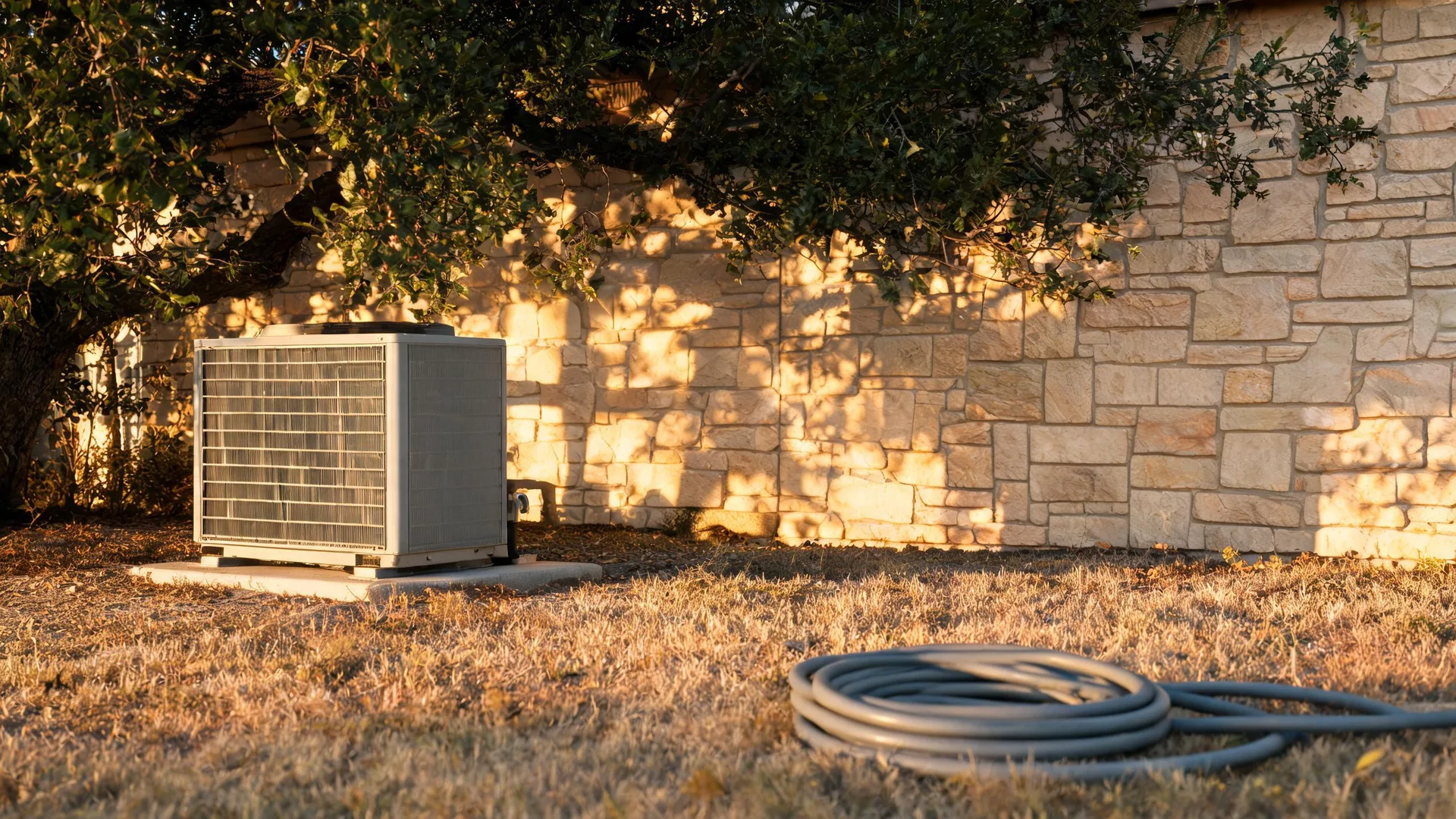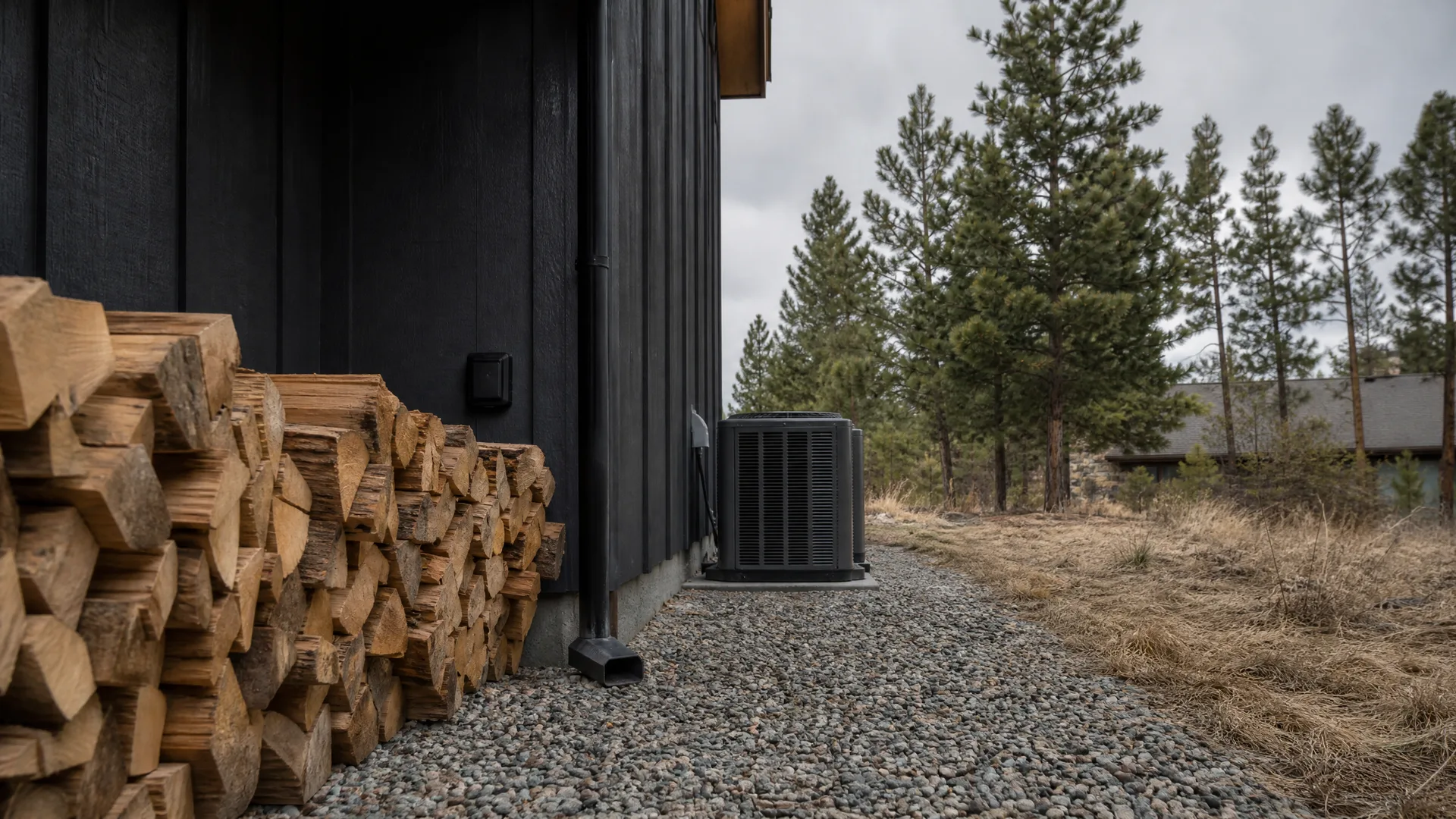
A stack of split firewood beside a dark vertical-board house wall, with an outdoor air conditioning condenser unit on a gravel path and pine trees under an overcast sky.

Heat Pump Repair in Coeur d'Alene, ID

Tell us about the job

Takes about a minute. No obligation.

RepairHeat PumpKootenai County, ID
Step 1 of 2

What ZIP code is the job in?

Weather here takes a toll on outdoor units

Kootenai County logged 730 severe weather events between 2015 and 2024, including 68 rounds of damaging wind and 655 winter storms with heavy snow and ice. An outdoor heat pump unit sits outside through all of it, exposed to wind-driven debris and ice buildup that a furnace never has to deal with.


A unit that still runs may still be hurt

Wind and ice can bend fins, crack a fan blade, or knock a panel loose without stopping the unit outright. If your outdoor unit has been through a storm, a technician can check it over and catch damage before it turns into a bigger repair.

10 months
September through June, your system heats
1 months
July through July, it cools
25°F
the average winter night it heats against
77°F
the average summer afternoon it cools against
Isometric line illustration of a cutaway house showing interior rooms with furniture, ceiling ductwork connected to an indoor air handler, and a line running outside to an outdoor condenser unit.
Your system heats September through June and cools July through July.

NOAA nClimDiv, 1991–2020 normals

Half the homes in Kootenai County were built in 1996 or later.

A heat pump that came with a newer house still has years of work left in it.

August asks a lot of a heat pump that sat quiet all summer

Cooling runs July through July
Heat runs September through June
68 damaging wind events from 2015 to 2024

If your heat pump is original to a newer house, the fix is worth doing. Heat pumps are built to last well over a decade, and a system installed with the house has likely only had a handful of years of work. A repair now gets you back the rest of that life. Replacement makes more sense on an old unit near the end of its run, not on one that still has years ahead of it. A technician can tell you which case you're in once they've looked at the unit.

If your outdoor unit has been through a storm, get it looked at

After wind or ice has gotten at your outdoor unit, a running system is not the same as a sound one. A technician can check it over now and catch bent fins or a cracked blade before they turn into a bigger repair.

Find a contractor
A man in a dark jacket, tan work pants and a cap, seen from behind, climbs stone steps toward a blue front door while carrying a canvas tool bag, with a blue planter of greenery at left.
A white mini-split heat pump outdoor unit mounted on a concrete pad beside a gray-sided house, surrounded by gravel and green shrubs.

A problem that's ignored keeps working against the machine

A heat pump that's struggling doesn't fix itself by staying on. A refrigerant leak gets worse under continued run time, since the compressor keeps working against a charge it doesn't have enough of. Low charge makes the compressor run hotter than it should, and heat is what kills a compressor. A failing capacitor is the same story. It's what gives the motor its starting kick, and a weak one makes the motor strain every time it tries to start. That strain shortens the motor's life a little more each cycle. Ice on the outdoor coil points to the same pattern. Once ice starts building, it blocks airflow across the coil, and the system works harder to move the same amount of heat. Left alone, that cycle feeds itself until the unit trips off on its own or something inside gives out. Short cycling, where the system kicks on and off in quick bursts instead of running a full cycle, wears on the compressor the same way. None of these problems announce themselves loudly. The unit keeps running, just worse, until the part that was struggling finally fails.

What you can check yourself

Look at the thermostat first. Make sure it's set to heat or cool as needed and the batteries aren't dead. Check your breaker panel for a tripped breaker on either the indoor air handler or the outdoor unit. Walk outside and look at the unit itself. Clear away leaves, ice or snow piled against the cabinet, since blocked airflow around the coil will stop it from heating or cooling right. Check that the outdoor fan is spinning when the system is running. Go inside and pull the air filter. A filter clogged with dust chokes off airflow the same way a buried outdoor unit does, and it's the one part in the whole system a homeowner is meant to handle.

Where to stop and call someone

If the breaker trips again after you reset it, stop resetting it and get a technician out, since that usually means something is drawing more current than it should. The same goes for a burning smell, any grinding or screeching from the outdoor unit, or ice coating the lines or coil even after you've cleared the area around it. Don't take panels off the unit or touch anything inside the cabinet. A heat pump runs on refrigerant under pressure and electrical components that need the power cut and locked out before anyone opens them up, and that part of the job belongs to someone trained for it.

A heat pump fails the same handful of ways most of the time. The reversing valve is one. It's what lets the system switch between heating and cooling, and when it sticks, the unit keeps running but stops doing the job you asked it for. Refrigerant leaks are another, usually at a joint or fitting where a line connects, and the system loses capacity slowly rather than all at once. Capacitors and contactors wear out from the everyday work of starting and stopping the compressor and the fan motors, and that kind of failure tends to show up as a unit that hums but won't start, or one that doesn't start at all. Dirty coils cause more trouble than people expect, since a coil caked with dirt or grime can't move heat the way a clean one does, and the system has to work harder for less. The compressor itself usually isn't the first thing to go. It's more often the last, worn down by something else that went unaddressed, like low charge or restricted airflow, until the strain finally caught up with it.

Repair versus replacement comes down to what's actually wrong and what else is riding on it. A stuck reversing valve or a bad capacitor is a straightforward fix on its own, and fixing it doesn't leave anything unresolved. The harder call is a compressor problem, since the compressor rarely fails by itself. It usually gives out after something else wore on it for a long time, and replacing a compressor on a unit that's already old often costs most of what a new system would. A technician checking a heat pump isn't just asking what broke. They're asking what else is worn, what the rest of the unit has been through, and whether this repair is the last one it needs or the first of several.