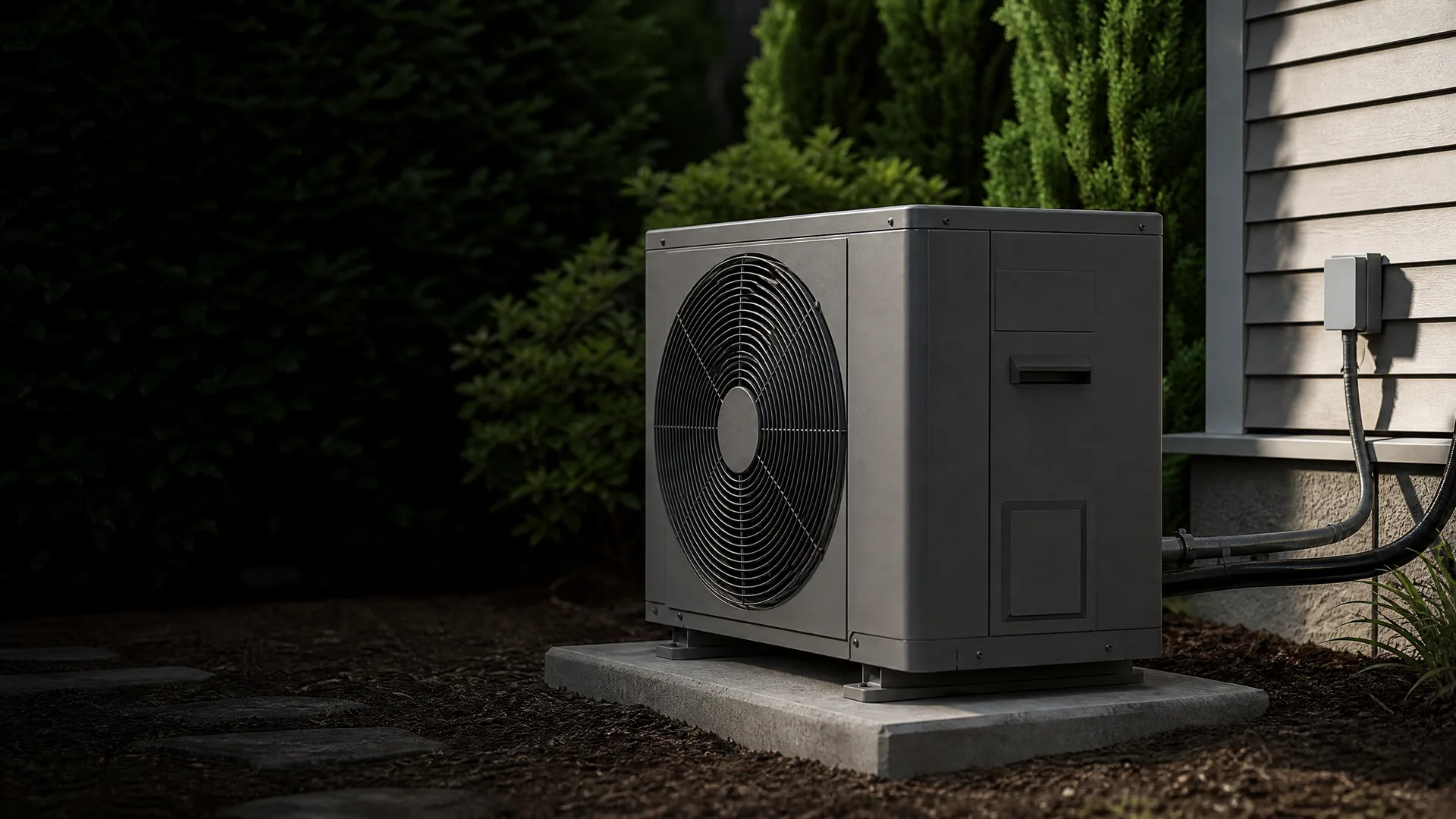
A gray outdoor heat pump unit on a concrete pad beside a dark horizontal-siding wall, with a small electrical box on the wall, shrubs and a concrete walkway to the right at dusk.

Find a heat pump repair pro in Bingham County

Heat pump blowing cold air in Blackfoot, ID

Cold air from a heat pump in the dead of a Bingham County winter usually means it's stuck in the wrong mode, or something is stopping it from switching over to heat. It could be the reversing valve, a thermostat setting, or ice built up on the outside unit. The next step is getting a local contractor who works on heat pumps through Blackfoot winters to look at yours and tell you which one it is.

Match me with a pro

A heat pump blowing cold air usually means it hasn't switched into heating mode, or something is keeping it from working the way it should. Check the thermostat first. If it's set to "auto" or "cool" instead of "heat", that alone will send cold air through the vents. If the mode is right and the air is still cold, the reversing valve may be stuck. That's the part that switches the system between heating and cooling, and when it fails, the unit keeps running as if it were summer. Winters in Bingham County push these systems hard, and the outdoor unit can also ice over enough to block the defrost cycle, which does the same thing. None of this means the heat pump is done for, but it does mean it's not warming your home right now, and with temperatures the way they get here, that's not something to leave for later.

A gray outdoor condenser unit on a raised pad beside a house with horizontal lap siding, with refrigerant lines, conduit and an electrical disconnect box on the wall, and shrubs on a mulch bed to the left.
A clean outdoor unit can still pull heat from air well below freezing, which is what gets you through a Bingham County winter.
An outdoor air conditioner condenser unit on a gray composite pad beside a house with horizontal lap siding, with refrigerant lines and a conduit running to a wall-mounted disconnect box, and a shrub at left.
Coils caked with dirt or grass clippings can't absorb heat the way they should, and the air at your vents turns cold.
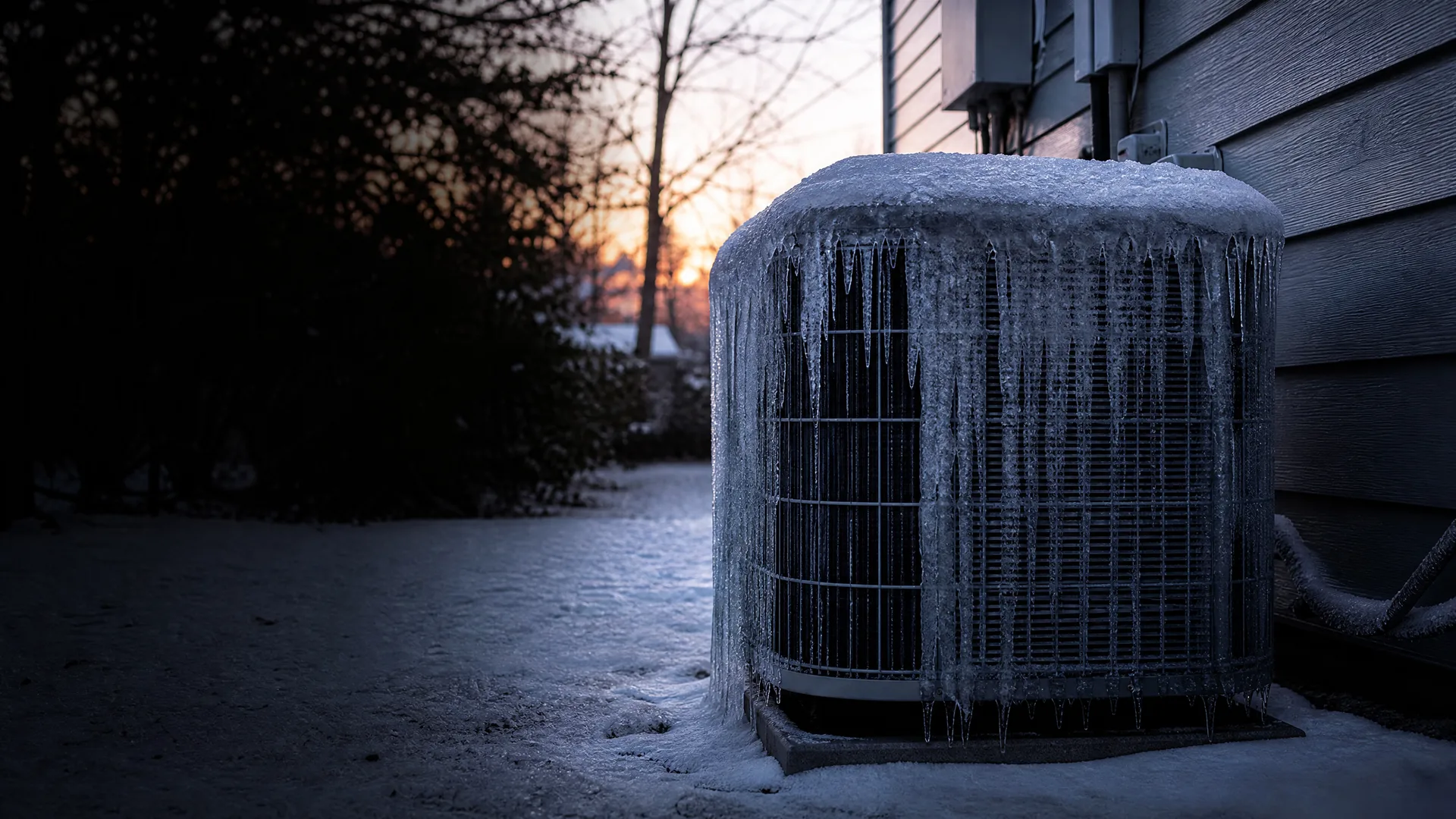
An outdoor condenser unit beside a horizontally sided house, encased in thick ice with hanging icicles, on snow-covered ground at dusk with bare trees and a sunset behind.

You go out before sunrise to start the car and the side yard is still dark except for the porch light. The outdoor unit sits against the fence with a coating of ice thick enough to hide the fins. Frost has crept up the refrigerant lines. Inside, the air coming through the vents has gone cool, and you've already bumped the thermostat up twice. Bingham County mornings this time of year sit well below freezing, and the unit outside looks less like a machine and more like something left out all winter and forgotten. You crouch down to look closer, and the fan isn't turning at all. It's just sitting there, locked under the ice, while the house keeps asking it for heat it can't deliver.

Why does the air at the vents feel cold instead of warm

Walk up to a vent and hold your hand near it. If the air moving is barely warm, or not warm at all, you've found the problem everyone in the house is feeling. A thermostat reading 68 doesn't mean much if what's coming out of the duct is room temperature or cooler. You might notice the system running longer than usual, cycling on and off more than it used to, or the house slowly losing ground overnight even with the heat set the same as always. Someone sleeping near a vent will notice first. Left alone through a cold stretch, the house keeps losing heat faster than the system replaces it, and pipes in exterior walls are the first thing at risk once the inside temperature keeps dropping.

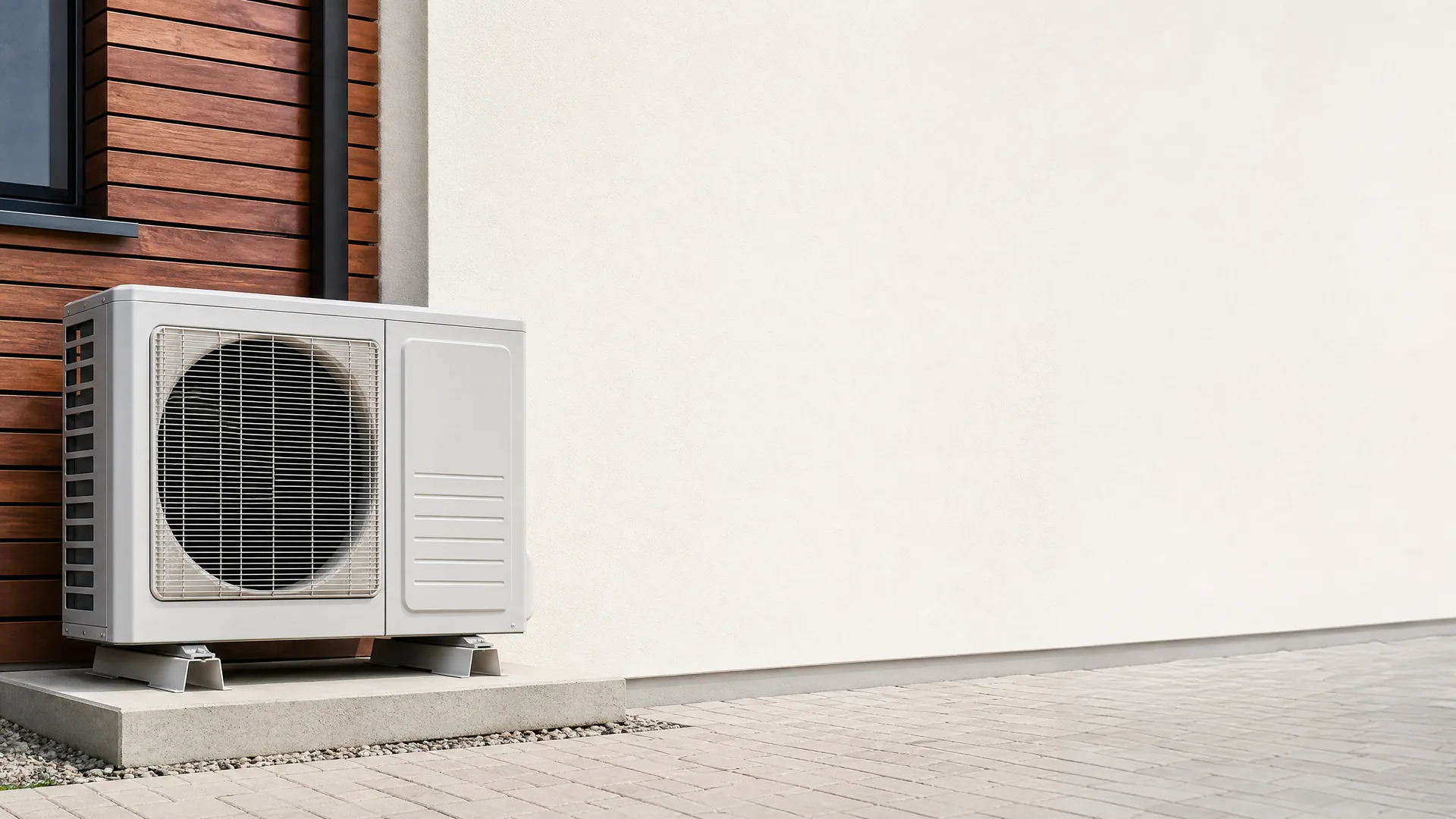
A white outdoor heat pump unit on a concrete pad beside a house with wood-slat siding and a large plain light-colored stucco wall, with paving stones in the foreground.

How the reversing valve switches modes

A heat pump has one valve that decides which way refrigerant flows. Push it one way and the outdoor unit absorbs heat for the house. Push it the other way and it does the opposite, which is how the same unit cools your home every summer. The valve moves on a small electrical signal from the thermostat. If that signal is weak or the valve sticks partway, the system stays in cooling mode no matter what the thermostat says, and cold air keeps coming through the vents.

A white outdoor heat pump unit on rubber feet sits on a concrete pad beside a gray-sided house wall, next to a smooth light wall, gravel strip and lawn.

Why defrost cycles matter in winter

Below freezing, frost forms on the outdoor coil as the unit pulls heat from the air. A working heat pump runs a defrost cycle to clear it, briefly reversing itself and sending heat outside to melt the ice. During that short stretch, the indoor air can feel cool since the system isn't heating the house. If the defrost control fails or the sensor that triggers it goes bad, frost builds up unchecked and the unit loses its ability to heat at all.

Power here costs 12.37 cents per kilowatt-hour

At 12.37 cents per kilowatt-hour, running the heat pump's backup strip heat through a cold snap costs real money fast, since that backup heat draws far more power than the compressor alone. A heat pump stuck blowing cold air often forces that backup heat to carry the whole load, and you'll see it on the bill before the problem gets fixed.

EIA-861 2025

Wait it out through a defrost cycle

A heat pump in Bingham County runs a defrost cycle on its own when frost builds up on the outdoor coil. For a few minutes, the outdoor fan stops, the system reverses, and the air at your vents turns cool or cold while it melts that ice off. This is normal in the middle of winter and it ends on its own, usually within 15 minutes. If the air warms back up after that and stays warm, nothing was wrong. The reversing valve, the defrost control, and the coil all did their job. No call needed, just a few minutes of cold air you can explain to anyone else in the house who notices it.


Call it in instead

If the air has stayed cold for longer than one defrost cycle, or the outdoor unit is iced over thick enough to hide the fins, waiting won't fix it. Something is stuck: the reversing valve isn't switching, the defrost control isn't ending the cycle, or the thermostat is holding the system in the wrong mode. A contractor who works on heat pumps through Bingham County winters sees this same failure often enough to know where to check first. Getting matched with one local company means one visit, one call back, and someone who already knows what tends to fail on these systems when the temperature drops.

A woman wrapped in a knit blanket sits on a gray sofa in a living room, looking toward a bright window with houseplants and an armchair in the background.
A woman with long dark hair in a green knit sweater sits on a couch indoors, smiling and looking toward a window with a blurred room behind her.
A woman with dark hair in a bun wearing a cream knit sweater sits on a gray sofa in a bright living room, looking off to the side.
A woman in a gray cowl-neck sweater sits on a light sofa with cushions, smiling and looking to the side, with a kitchen and window visible behind her.
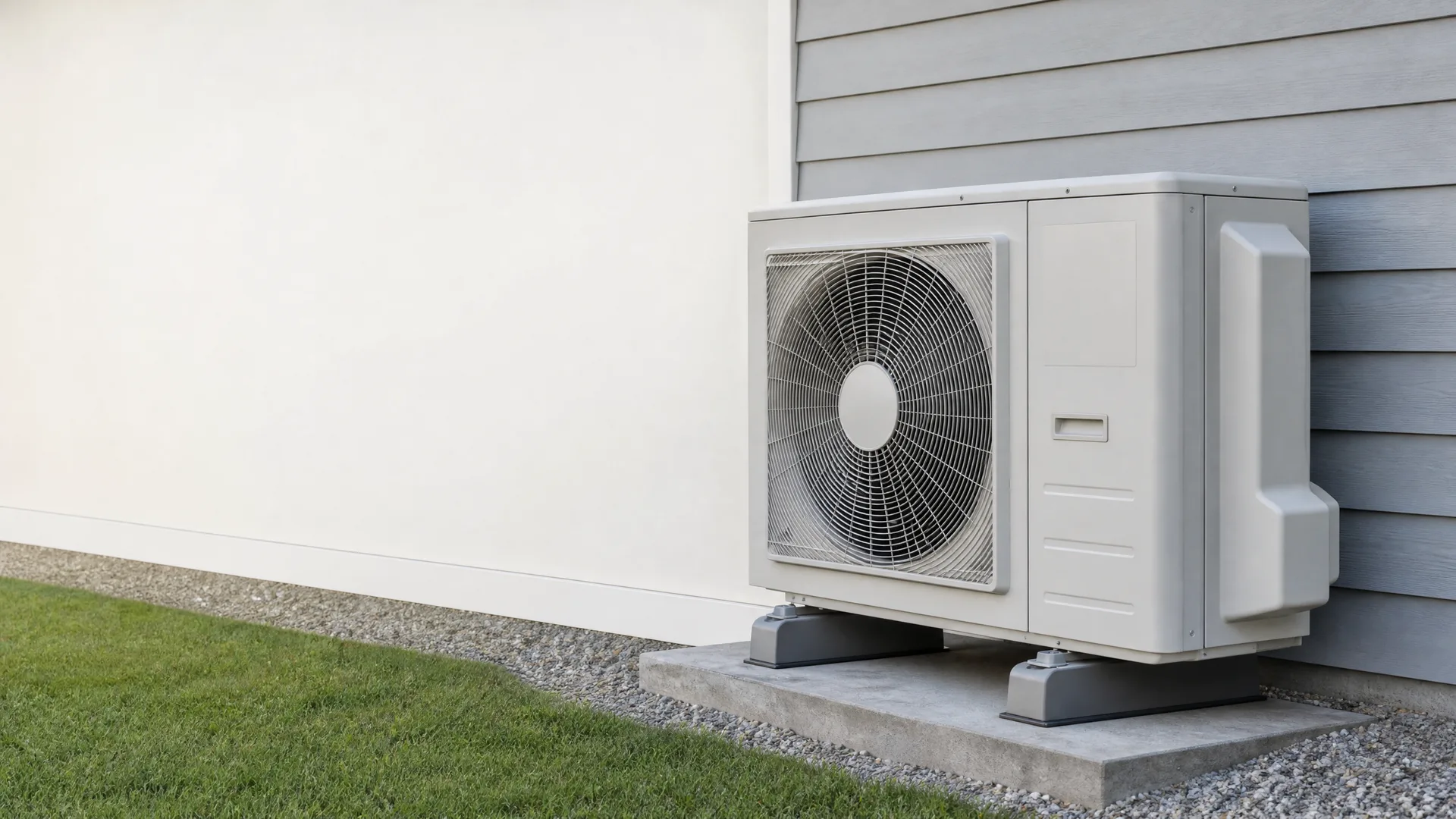
A gray outdoor heat pump unit with a large fan grille sits on a concrete pad beside a house with horizontal lap siding, next to a green shrub, mulch bed, and lawn.

Running the way it should

This is a heat pump doing its job in winter. The coil is clean, the fan runs free, and the unit pulls heat out of cold air without trouble. Nothing is blocking airflow around it, and no ice has built up on the fins.

A weathered outdoor condenser unit on a concrete pad beside a house with white horizontal vinyl siding, with refrigerant lines and conduit running to a wall-mounted electrical box.

Struggling to keep up

Grime has caked onto the grilles here, and the coil underneath is working through buildup instead of clean metal. An outdoor unit in this shape can't absorb heat the way it's supposed to, and that shows up as cold air coming through your vents.

An outdoor air conditioning condenser unit on a concrete pad beside a house with light horizontal siding and a concrete block foundation, with bare soil and small green plants around it.
Before you get your heat pump repair
A gray outdoor condenser unit on a concrete pad beside a white horizontal-siding house, with refrigerant lines and conduit running to a wall-mounted disconnect box, bare soil in front and a green shrub at left.
After you get your heat pump repair
  1. A contractor checks the thermostat mode and call for heat

  2. Next, the reversing valve is tested under power

  3. Then the outdoor coil is checked for ice or debris

  4. Finally, refrigerant charge is measured against the system's rating

An older woman with short blond hair in a cream turtleneck sweater stands smiling and looking off-camera in a kitchen, with a loaf of bread, a lit candle, a window showing darkness outside, and wood cabinets behind her.
A woman with hair in a bun sits on a couch holding a sleeping child, both wrapped in a chunky knit blanket, in a dimly lit room with a lamp and bookshelves behind.

The right pro for this job

A heat pump stuck blowing cold air isn't something to live with until spring. In Bingham County, where winters don't let up, every hour it runs wrong is an hour your house loses ground and your backup strip heat quietly runs up the bill. The valve, the thermostat setting, the ice on the coil, whatever it turns out to be, a local contractor who works on these units all winter has seen it before and knows where to look first. Submitting your request connects you with one contractor who covers Blackfoot and the surrounding area, someone who already knows what tends to fail on these systems in this climate. You don't have to figure out which part is at fault before you ask for help. You just have to stop guessing at the thermostat and get someone out who can tell you, for certain, what's keeping your system from doing its job.

A gray outdoor condenser unit on a concrete pad beside a beige vinyl-sided house, with a wall-mounted disconnect box, flexible conduit, mulch bed, shrubs and a concrete walkway in front.

Clear coil, open airflow

The fins are clean and bare, so air moves through them the way they're built for. A unit like this pulls heat out of winter air without a fight, and what reaches your vents comes out warm.

A weathered gray outdoor condenser unit on a concrete pad beside a house with horizontal vinyl siding, with conduit, refrigerant lines, and an electrical disconnect box on the wall behind it.

Caked grille, dead leaves at the base

Dust and grime cover the grille and top panel, and leaves have piled against the bottom edge. Air can't get through buildup like that, and a coil working that hard to breathe struggles to pull any heat out of the air.

A man in a gray polo shirt holding a clipboard walks up a paved path toward a light-colored house where a woman stands in the open front doorway.

What this means for your house right now

If the vents are running cold, your house is losing warmth faster than the system is replacing it. The thermostat might say 68, but the people in the rooms feel the draft at the register, and that's what they'll remember when they talk about how cold the house got. Pipes near outside walls, a baby's room, an elderly parent's bedroom, these are the places it shows up first. Left alone through a Bingham County cold snap, that gap doesn't close on its own.

You don't need to know whether it's the reversing valve, a frozen coil, or a thermostat stuck on the wrong setting to get this fixed. What you need is someone who works on heat pumps in this area all winter and has seen which of those three is most likely on a unit like yours. A local contractor who gets matched to your situation can look at your specific outdoor unit, your thermostat, your home, rather than treating it like any call that comes in. That's one visit, one person who knows the equipment, not a string of callbacks while the house stays cold.

A living room corner with a beige sofa and cushion, a round wooden coffee table holding a pale ceramic vase of eucalyptus stems and a wooden bowl, and a curtained window with a potted plant above a latticed radiator cover in the background.

How long does your heat pump have to get this right?

  • Winter nights average 16°F

    Winter nights here average 16°F, cold enough that the system leans on backup heat whenever it can't switch over right.

  • Heat runs September through June

    Heat runs September through June in Bingham County, so a heat pump stuck blowing cold air is a problem most of the year.

  • Cooling runs July through August

    Cooling only runs July and August here, which means this same system spends ten months depending on the reversing valve to work.

NOAA nClimDiv 1991-2020

Where your heat pump stands

  • Cold air from the vents almost always traces back to the thermostat mode, the reversing valve, or ice on the outdoor coil.
  • A defrost cycle fixes itself in a few minutes, but a reversing valve stuck in cooling mode does not.
  • Backup strip heat will keep the house warm while the heat pump is broken, at a much higher cost on your bill.
  • A contractor who works on heat pumps through Bingham County winters has already seen which of these parts tends to fail first.
  • Matching with one local, licensed contractor means a single company looking at your system, not several calls competing for the job.
  • The same checks apply whether the unit is a few years old or came with the house.

A heat pump blowing cold air in the middle of a Bingham County winter comes down to one of a few things. The thermostat mode, the reversing valve, or ice on the outdoor coil account for nearly every case. A defrost cycle sorts itself out in a few minutes and isn't a problem. A reversing valve that won't switch, or a coil caked in ice and dirt, stays broken until someone with the right tools gets to it. Until then, your backup strip heat carries the load, and it will keep your house warm while it does, at a cost that shows up fast on a bill tied to winters this long.

None of this depends on how old the unit is. The same checks that apply to a system installed last year apply to one that came with the house: thermostat setting, valve, coil, charge. What changes is who's doing the checking. A contractor who services heat pumps through winters here has already seen which of these fails most often in this kind of cold, and knows what to rule out first instead of working through the list blind.

When you request service through this page, you're matched with one contractor, local and licensed, not a handful of companies bidding for the job and blowing up your phone. One call, one visit, one person who knows what a heat pump stuck in the wrong mode looks like in Bingham County and how to get it back to blowing warm air through the rest of the season.

A gray outdoor heat pump unit with a large circular fan grille sits on a concrete pad beside a house with lap siding, with refrigerant lines running to an exterior electrical box and dark shrubs behind.

Matched to your heat pump job

RepairHeat PumpBingham County, ID
Step 1 of 2

What ZIP code is the job in?