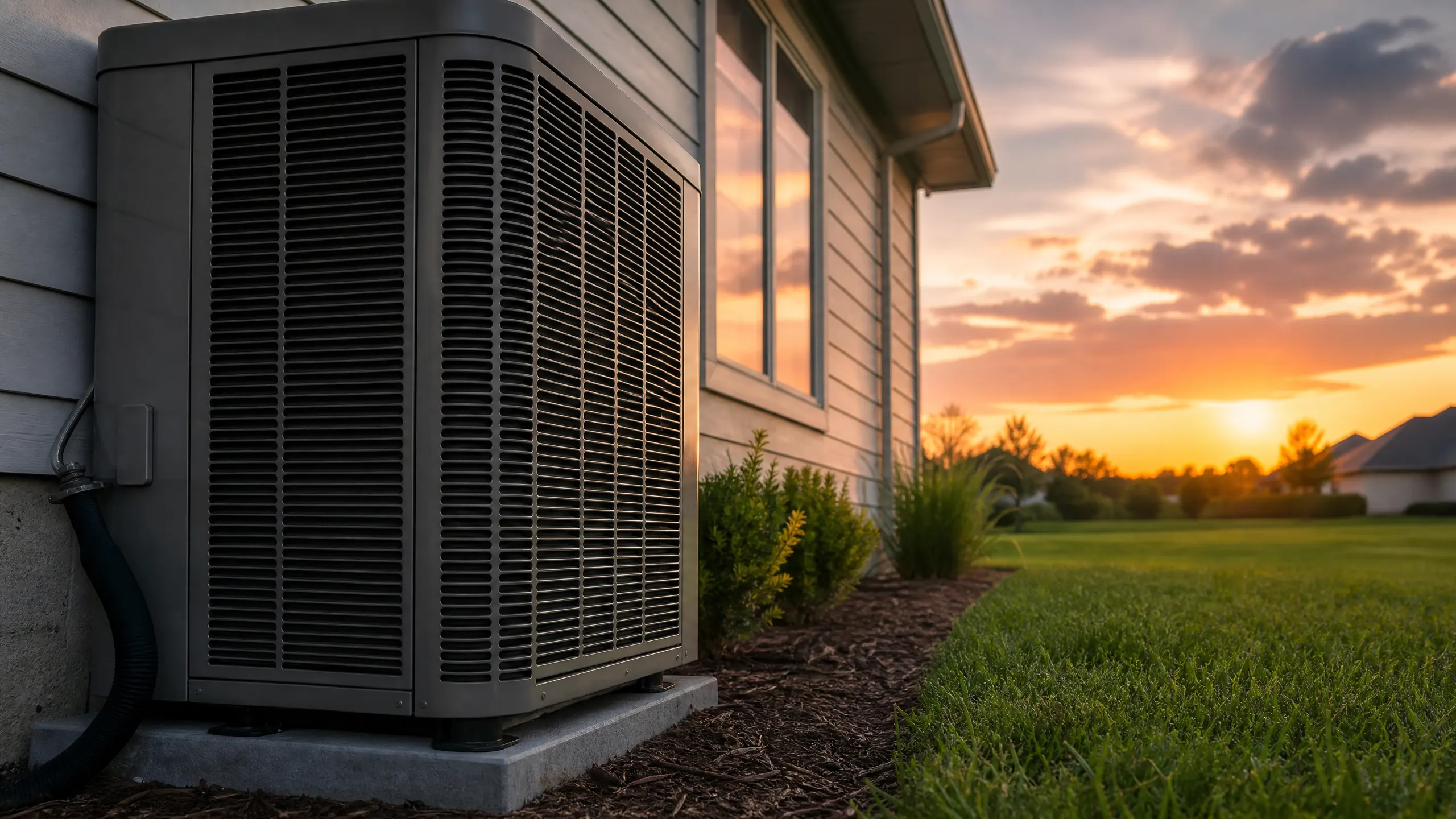

An outdoor air conditioning condenser unit mounted on a concrete pad beside a house at sunset.

Heat Pump Installation in Rigby, ID

Tell us about the job

Takes about a minute. No obligation.

New system or replacementHeat PumpJefferson County, ID
Step 1 of 2

What ZIP code is the job in?

Gas heats close to half the homes in Jefferson County, electricity about a quarter, and propane most of the rest. A heat pump works differently from any of those. Instead of burning fuel or running straight electric resistance heat, it moves heat from the outside air into the house, even when that air is cold. Putting one in usually means pairing it with the ductwork already there, or adding a backup source for the coldest stretches of winter. A home on propane now can see that tank get used less. A home on gas can often keep the furnace in place as backup while the heat pump carries most of the heating load.

10 months
September through June, your system heats
2 months
July through August, it cools
11°F
the average winter night it heats against
83°F
the average summer afternoon it cools against
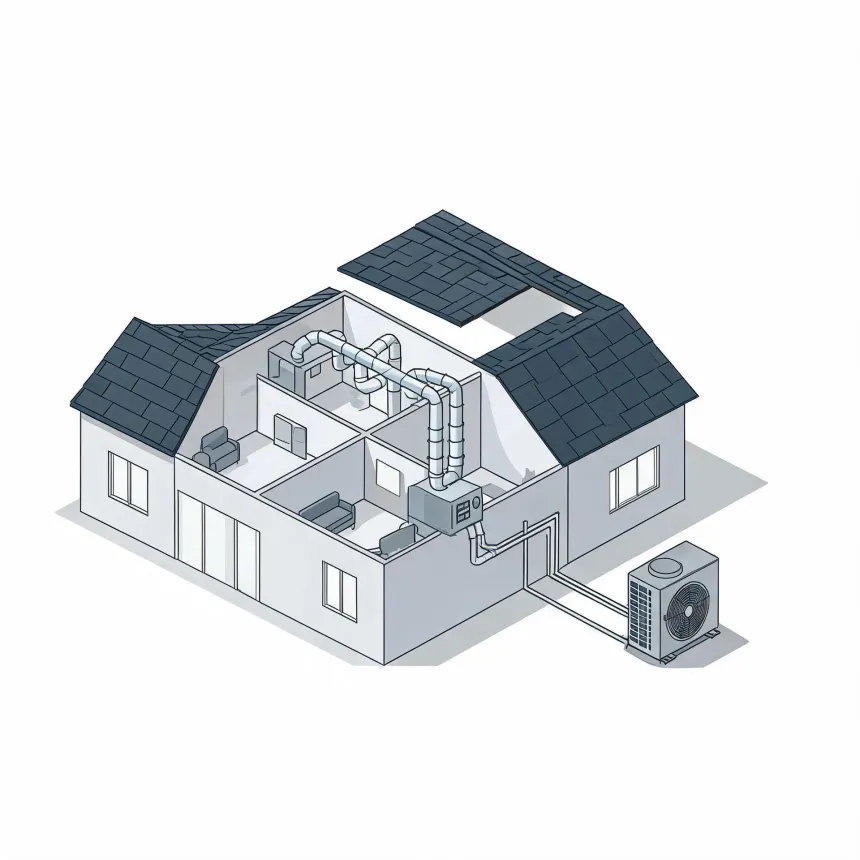
Isometric line illustration of a cutaway single-story house showing interior rooms, ceiling ductwork connected to an indoor air handler, and refrigerant lines running to an outdoor condenser unit on a pad.
Your system heats September through June and cools July through August.

NOAA nClimDiv, 1991–2020 normals

Jefferson County mornings average 11°F through December, January and February.

A heat pump sized for this county handles that low without any oversizing.

A standard size heat pump works fine in a Rigby home. There's nothing about the load here that calls for going bigger or paying for a higher-end unit than you'd put in anywhere else in this climate. Idaho homes paid 11.52 cents per kilowatthour in 2024, well under what a lot of the country pays. That matters more for a heat pump than for a gas furnace, since the heat pump runs on electricity full time, not just to power a blower and igniter. A lower rate keeps the running cost of that electric heat reasonable here, even on the mornings it's working hardest.

Have it in before September

Heat in Jefferson County starts up in September and runs until June. Putting a heat pump in before that gives it a full system check and a chance to pair it with your ductwork or backup heat before any of it has to work.

Find a contractor
A gray heat pump condenser unit mounted on a concrete pad against the gray lap-siding exterior wall of a house.

What happens to the old system

Whatever is heating the house now, pulling it out is part of the job, not an afterthought. A furnace gets disconnected from the gas line and the ductwork and hauled off. Electric resistance units come out of the air handler or get cut from the wall. If a gas furnace is staying on as backup heat, it doesn't go anywhere. It sits downstream of the heat pump and waits for the stretches too cold for the heat pump to carry alone, so it ends up running far less than it used to, which actually helps it last longer. An old propane furnace headed for the scrap yard should have its tank shut off and the line capped properly, not just left alone. None of this is unusual work. Any contractor installing a heat pump handles the old equipment as part of the same visit.

Sizing comes from a load calculation, not square footage

A contractor works out the right size by looking at window area, insulation, ceiling height and how much wall faces outside. Houses that look the same size on paper can call for different sized units once that math is done. Square footage alone skips too much to size a heat pump safely.
An oversized unit falls short on comfort

A heat pump too big for the house reaches the temperature on the thermostat and shuts off before it's pulled the humidity out of the air, so the house can feel damp even though the thermostat reads right. Cycling on and off that often also wears on the compressor faster than running a steady stretch does.

Systems can carry the same specs on paper and still work differently in the house, so the sheet isn't the whole comparison. Ask what the backup heat source is and at what outdoor temperature it kicks in, since that point decides how much of the cold months your electric heat is carrying alone. Ask what the sound rating is for the outdoor unit. A heat pump runs longer stretches than an air conditioner's compressor does, so you'll hear it more. Ask whether the quote includes a load calculation or just matches the size of what's coming out. A heat pump sized off the old furnace instead of the house itself can leave you with the same comfort problems you started with. Ask what happens to the refrigerant lines and electrical whip already in place. Reusing them without checking their size and condition can limit how the new system performs.

Installation day starts with the outdoor unit and indoor coil, not the thermostat on the wall. The crew sets the new outdoor unit on its pad and runs new refrigerant lines if the old ones don't check out. Indoors, the coil goes in above or beside the furnace or air handler, and that's where the heat pump ties into ductwork that's already there. Electrical work is its own piece of the day, since a heat pump needs a dedicated circuit and disconnect sized for it, not whatever was wired for the old system. Once everything's connected, the lines get pressure tested and the system gets charged with refrigerant to the exact weight the manufacturer calls for, not just topped off by feel. Before anyone leaves, the thermostat gets programmed for how the backup heat should stage in, and the whole system runs through a cycle to check airflow and temperature split.