





A grey air-source heat pump outdoor unit mounted on a concrete pad next to a modern white-rendered residential house.

Heat Pump Installation in Rexburg, ID

Tell us about the job

Takes about a minute. No obligation.

New system or replacementHeat PumpMadison County, ID
Step 1 of 2

What ZIP code is the job in?

Gas heats more homes in Madison County than anything else, at 54.3 percent. Electricity is next at 34.8 percent, and a smaller share run on bottled or LP gas. A heat pump installation in a gas-heated home usually means adding electric cooling and heating capacity alongside or in place of the furnace, which changes what the electrical panel and ductwork need to support. If your home already runs on electric heat, a heat pump can often use the same ducts and thermostat wiring, which makes the swap more straightforward. Either way, the contractor sizing the system needs to know which fuel your home uses now, since that decides what else the job involves.

10 months
September through June, your system heats
1 months
July through July, it cools
14°F
the average winter night it heats against
79°F
the average summer afternoon it cools against
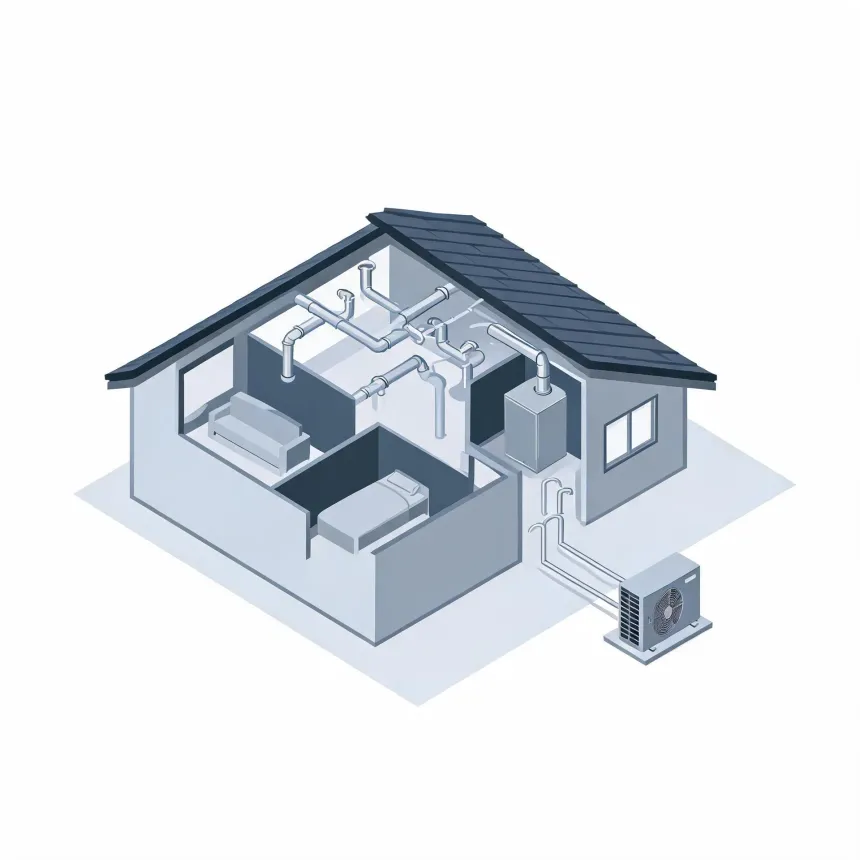
Isometric cutaway illustration of a small house showing ducted air distribution, an indoor air handler, and an outdoor condenser unit connected by lines, with a sofa and bed in the rooms.
Your system heats September through June and cools July through July.

NOAA nClimDiv, 1991–2020 normals

Idaho runs 11.52 cents per kilowatt-hour, well under the national average.

A standard heat pump sized right for your home keeps that rate working for you, no need to pay more for bigger or higher-efficiency gear than this house calls for.

A standard heat pump handles Madison County winters fine, down to 14 degrees

60 damaging wind events from 2015 to 2024
103 winter storms from 2015 to 2024
Winter nights average 14°F

Heat pump installation in Madison County goes easier outside the months it has to work. Cooling here only runs in July, and heat runs from September clear through to June, so there isn't much slack once those seasons start. June is the one month ahead of cooling, and August is the one month ahead of heat. A contractor installing before either of those windows can size the system, run the lines and test it without your house needing it to work yet. Wait until July or September and the same job happens while you're already relying on it.

A new heat pump here has to meet zone 6B's minimum, and the federal credit still applies

Madison County sits in zone 6B, so any split-system heat pump installed here has to clear 14.3 SEER2 for cooling and 7.5 HSPF2 for heating. That's the floor, not a suggestion, and it narrows down what a contractor can put in. Installing one now also qualifies for the federal tax credit on heat pump equipment.

Find a contractor
A man in a cap, dark long-sleeved shirt and brown work pants carries a canvas tool bag up porch steps toward a blue front door, with a shrub in a blue planter beside it.
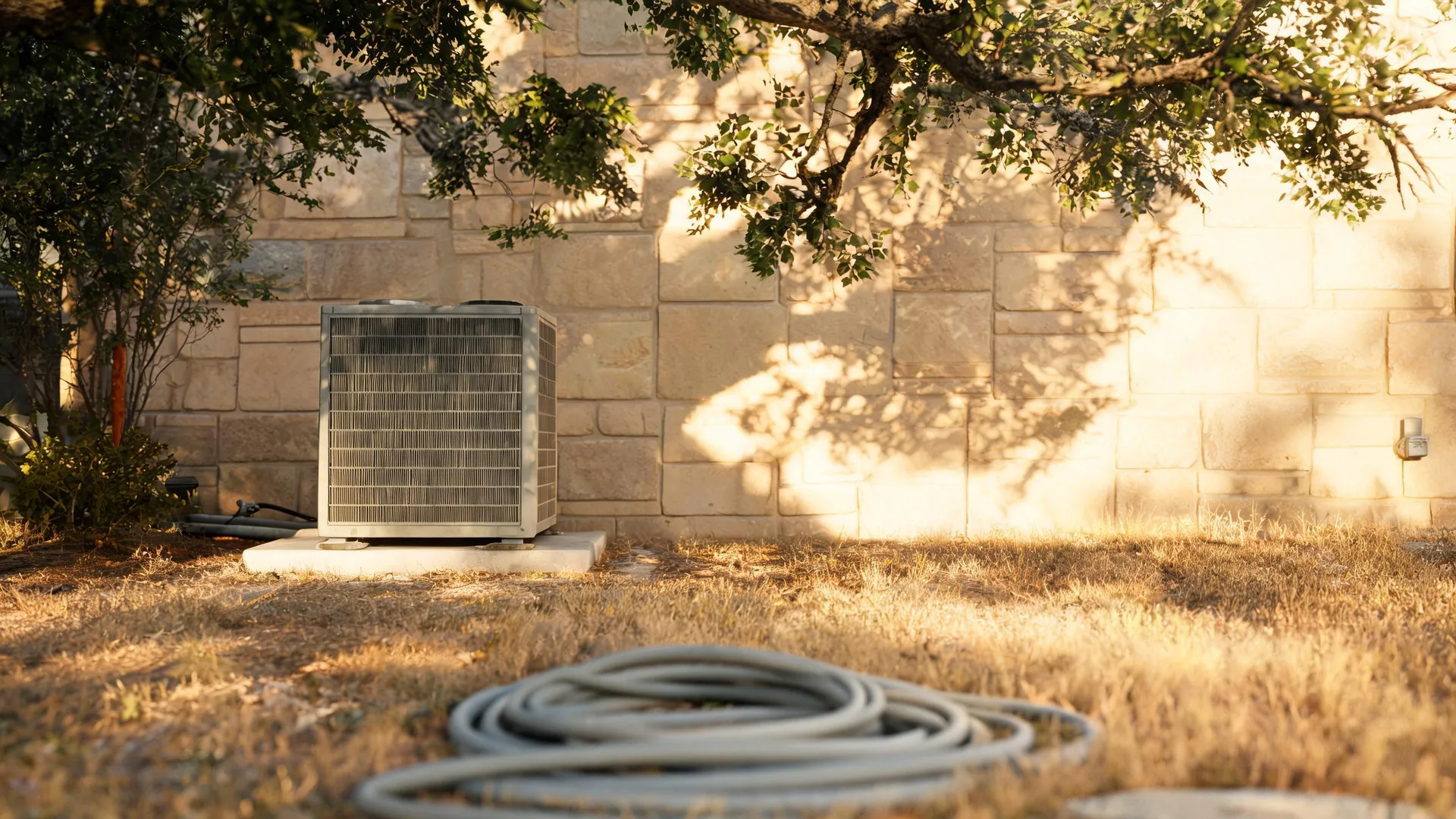
A residential heat pump outdoor unit mounted on a concrete pad next to a house with gray vinyl siding.

The label is a rating, not a guarantee

The SEER2 and HSPF2 numbers on the label tell you how much heat a system moves for the power it puts in, one for cooling, one for heating. A higher number means less electricity for the same comfort. That number is fixed when the unit leaves the factory, but what you actually get out of it depends on upkeep. A dirty coil makes the system work harder to move the same heat. A low refrigerant charge makes it run longer than it should to reach the set temperature. Either one means you're paying for a lower rating than the one on the label. Keep the coil clean and the charge correct and the system keeps earning the number it was built to hit, for as long as it runs.

The old equipment gets hauled away

A furnace, air conditioner or existing heat pump being replaced gets disconnected, drained of any refrigerant, and removed from the property. Refrigerant can't legally go in the trash, so a contractor recovers it before the unit comes apart. The ductwork and thermostat wiring usually stay in place if they're being reused for the new system.
What stays depends on the swap

If gas heat is going away in favor of a heat pump, the old furnace comes out and the gas line to it gets capped off. If electric heat is already running the house, more of the existing setup, like the ducts and wiring, can carry over, which means less to remove and less to connect on the new side.

What makes a heat pump installation cost more or less usually comes down to what the job touches beyond the unit itself. Running new refrigerant lines costs more labor than reusing a set that's already in good shape. If the electrical panel can't support the new system's load, that's a separate job before the heat pump goes in at all. Ductwork matters too. Sealing leaks or resizing a run so the system can move enough air is more work than hanging the unit and connecting to ducts that already fit. The site itself plays a part as well, since a straightforward swap in an easy-to-reach spot goes faster than one where the old equipment is tucked somewhere tight. None of this shows up on the label or the spec sheet. It shows up once a contractor is standing in the house looking at what's actually there.

The outdoor unit goes in first, set on a pad or bracket with clear air around it, since a unit that sits crooked or crowded won't drain or breathe right later. Refrigerant lines run between the outdoor unit and the indoor coil, and the whole line set gets pressure tested before any refrigerant goes in, which catches a bad joint while it's still easy to fix. Once that holds, the system gets charged, the electrical connections get made, and the thermostat gets wired in and set up. Near the end, the contractor runs the system in both directions, cooling and heating, and checks the temperature at the vents to confirm it's moving the air it should. A system can look right on the outside and still be off on charge or airflow, so that check is what closes out the job, not the installation itself.