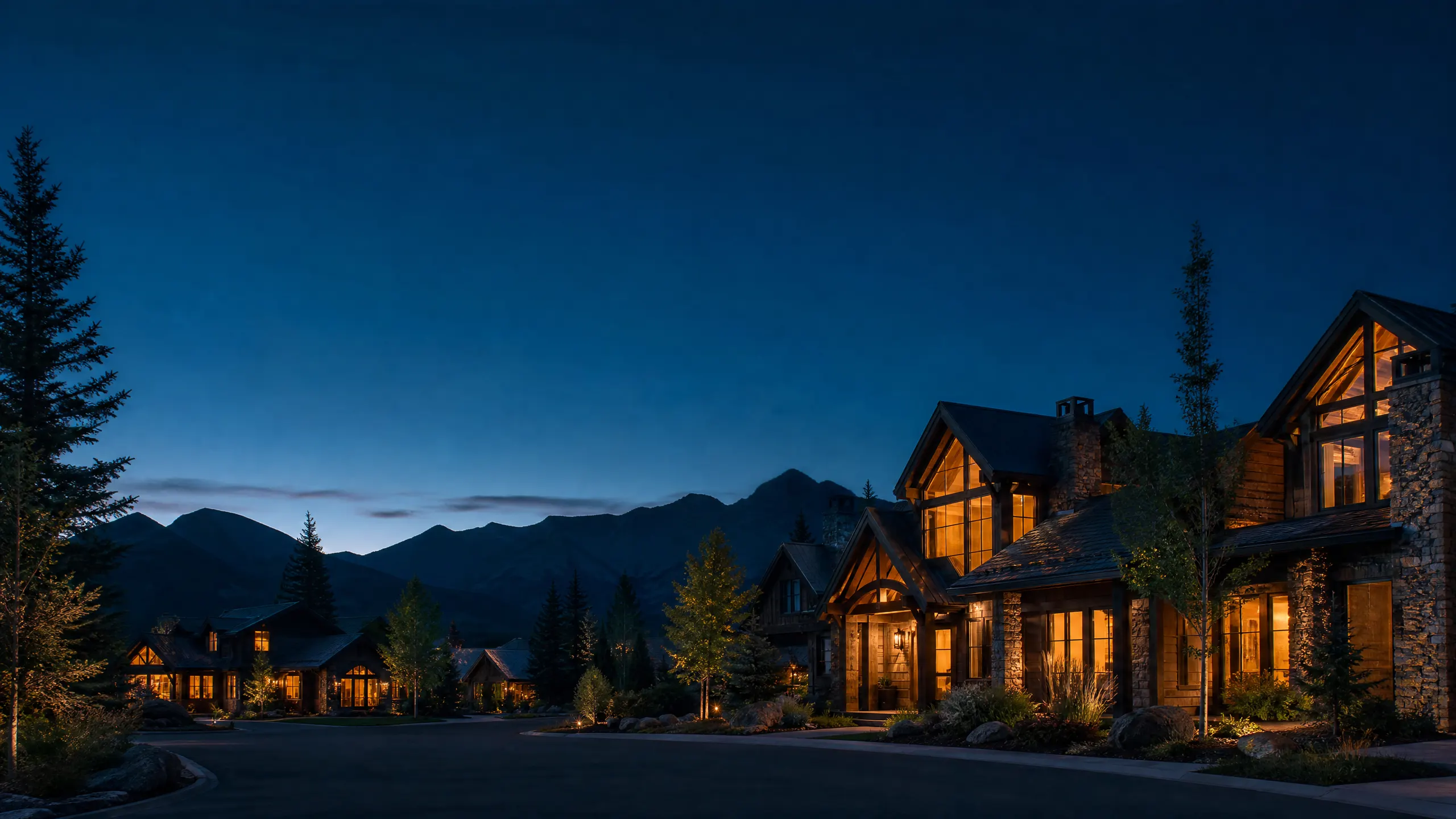



Illuminated stone-and-timber mountain homes line a quiet street at dusk, with evergreen trees and a mountain range in the background.

Heat Pump Installation in Preston, ID

Tell us about the job

Takes about a minute. No obligation.

New system or replacementHeat PumpFranklin County, ID
Step 1 of 2

What ZIP code is the job in?

Franklin County's homes split about evenly, half built in 1975 or earlier and half since. That mix doesn't call for anything special. A heat pump sized to the house, matched to its square footage and insulation, works the same whether the place is older or newer. What matters more than the build year is the load calculation a contractor runs before quoting anything. If your home still has its original ductwork, mention that when you get a quote, but it's not a reason to assume you need something bigger than standard. Most houses here call for a standard system sized to fit.

10 months
September through June, your system heats
2 months
July through August, it cools
16°F
the average winter night it heats against
80°F
the average summer afternoon it cools against
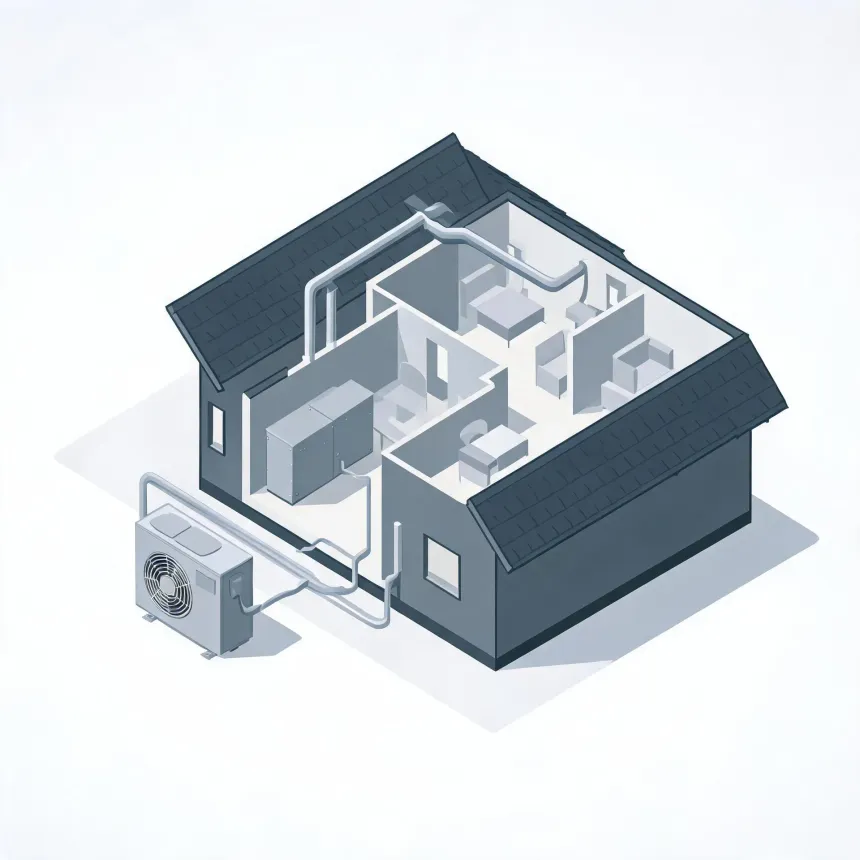
Isometric grayscale illustration of a cutaway house showing interior rooms, ductwork and an indoor air handler connected by lines to an outdoor condenser unit on the ground outside.
Your system heats September through June and cools July through August.

NOAA nClimDiv, 1991–2020 normals

Heat pumps here run heat from September through June, about ten months of the year.

Get the install done in August, before that first September heat call.

8 hail events in ten years, but 62 winter storms. Cold is what this heat pump has to handle, not hail.

8 hail events from 2015 to 2024
62 winter storms from 2015 to 2024
Winter nights average 16°F

A standard heat pump sized to your house will run fine here. Nothing about Preston pushes you toward oversizing or a higher-tier unit. Idaho homes paid 11.52 cents per kilowatthour in 2024, cheap enough that chasing the highest efficiency rating to save on electric bills usually isn't worth the extra cost up front. Put the money into getting the size right instead. A unit that's too big will short cycle and wear out faster. One that's too small will run constantly through the cold months and still lose ground.

A new heat pump here has to meet the federal minimum for this zone

Franklin County is zone 6B. Any heat pump installed has to meet 14.3 SEER2 for cooling and 7.5 HSPF2 for heating, the federal minimum now, not an upgrade option. A system meeting those numbers may also qualify for a federal tax credit. Get a quote and find out what fits.

Find a contractor
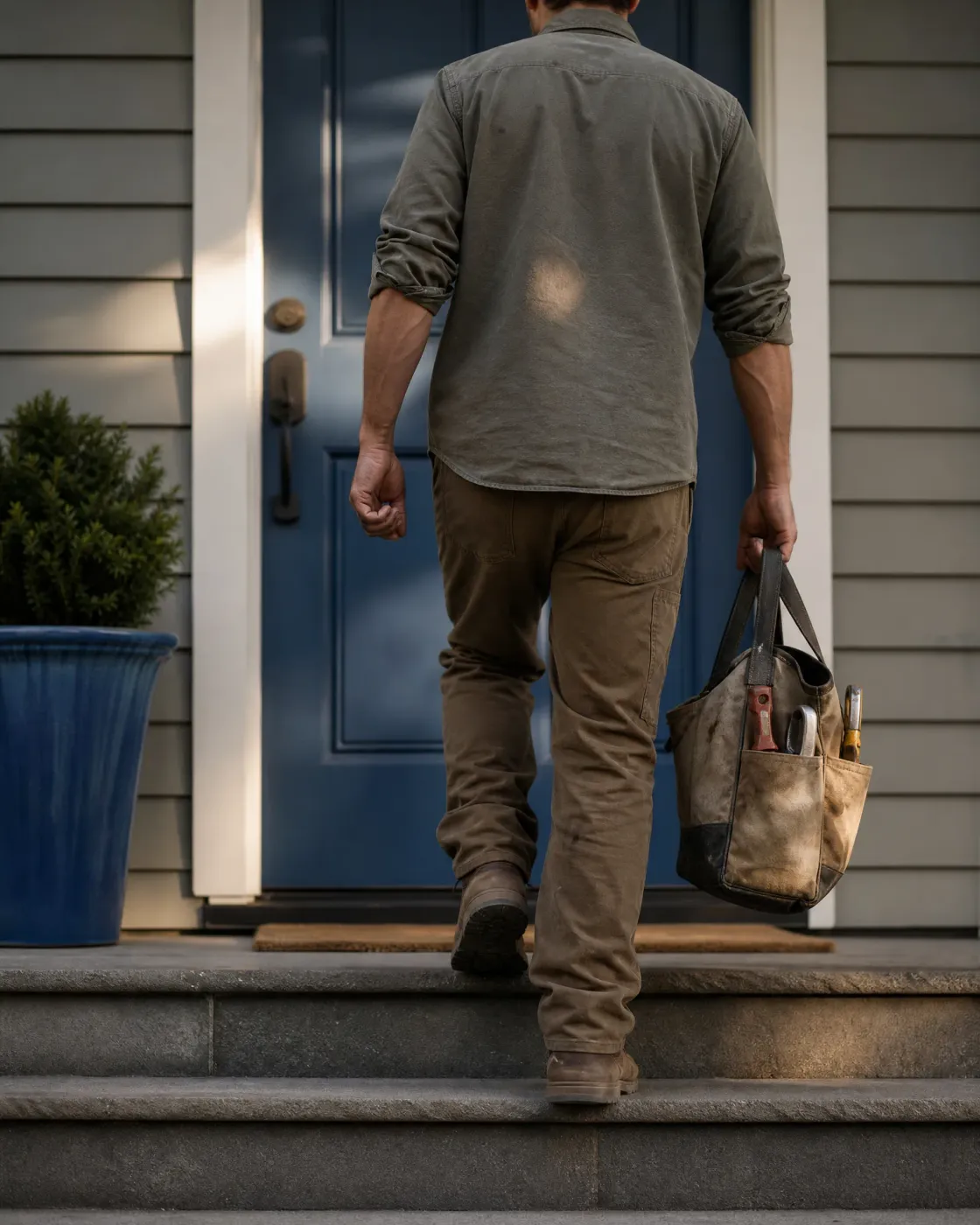
A man seen from behind in a grey shirt and tan work pants climbs stone steps toward a blue front door, carrying a canvas tool bag with hand tools in its side pockets, beside a blue planter with a small shrub.
A gray heat pump outdoor unit mounted on a concrete pad next to a residential house with lap siding and stone accents.

Built for cold nights, not emergencies

That 16°F average overnight low is what the unit has to work against, night after night, December through February. It's steady work, not sudden strain. A heat pump built to meet the federal minimum for zone 6B can handle that if it's sized right for your house. Pick a contractor who runs the load calculation and stands behind the install, not one pushing a bigger unit than you need.

The line set and the ductwork decide more than the unit does

Running new refrigerant line between the outdoor unit and the air handler takes labor, and the distance and any walls or floors in the way change how much. If the ducts already in place are leaky or sized wrong for a heat pump's airflow, sealing or modifying them adds to the job. None of this shows up on the sticker price of the equipment itself.
Cold climate systems cost more because of what's inside them

A heat pump built to keep working at low outdoor temperatures needs a compressor that can ramp its output up and down and controls that manage defrost cycles without losing heat to the house. That extra engineering is why systems with similar capacity can price out differently. Paying for it only makes sense once the system is sized to the house in the first place.

Sizing starts with a room by room load calculation, not a tape measure around the house. A contractor works out how much heat the place loses on the coldest nights by looking at wall and ceiling insulation, window area, and how the house is laid out, then matches that number to what the heat pump can deliver at low outdoor temperatures. Square footage alone misses too much. A house with more window glass or a thin attic can need a different size unit than one the same size without those things. The goal is a unit that runs long and steady on the cold days, not one that blasts on and shuts off. Short cycling like that wears the compressor down faster than steady running ever does.

Installation day starts with the outdoor unit and the indoor air handler, set in place and connected by the line set a contractor already ran or is running fresh. The refrigerant lines get brazed, then pressure tested before any charge goes in, because a leak found after the fact means pulling the system apart again. The electrical hookup is its own step, separate from the refrigerant work, and the system doesn't get powered up until both are done and checked. Ductwork gets tied in or sealed where it meets the air handler, since a loose connection there loses conditioned air into the attic or crawl space instead of the house. Once everything's connected, the contractor weighs in the refrigerant charge to the amount the manufacturer specs for that line length, not just until the gauges look about right. The last step is running the system through a cycle in both directions, heating and cooling, and checking airflow at the registers before calling it finished.