Gas heats most homes here
Utility gas heats 58.9% of occupied homes in Bannock County. Electricity is next at 31.9%, with the rest split between propane and oil. If your house came with a gas furnace, you're in the majority here.
Takes about a minute. No obligation.
Utility gas heats 58.9% of occupied homes in Bannock County. Electricity is next at 31.9%, with the rest split between propane and oil. If your house came with a gas furnace, you're in the majority here.
Swapping a gas furnace for a heat pump means the new system runs on electricity instead, so the install has to account for that. A contractor looking at your place will check what's there now against what the heat pump needs.

NOAA nClimDiv, 1991–2020 normals
Half the homes in Bannock County were built in 1976 or earlier, half in 1976 or later.
A heat pump sized the standard way fits either one.




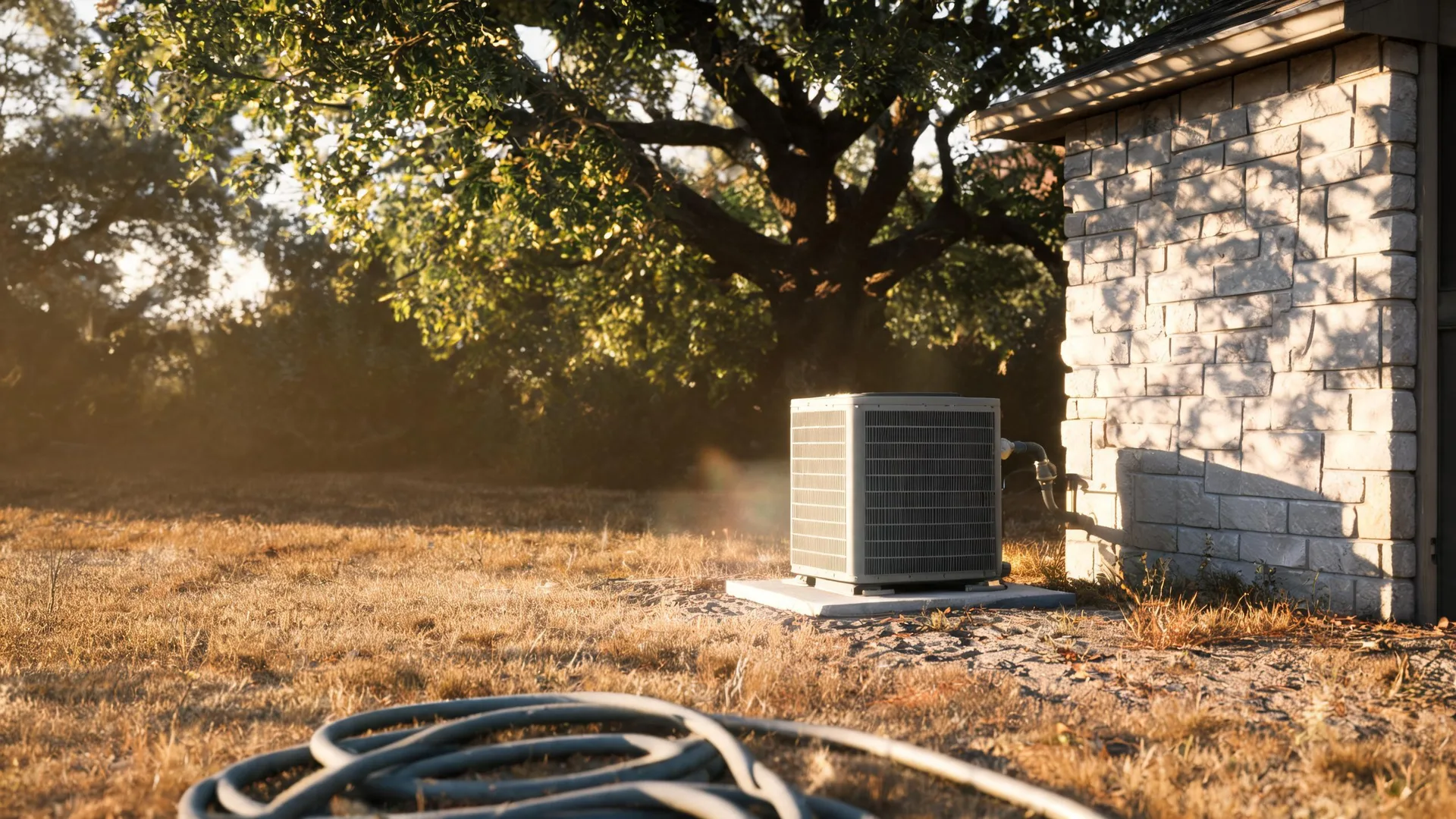
Winter nights here average 18°F. That's cold enough that a heat pump install needs backup heat for the coldest stretches, but that's standard practice anywhere this cold, not something particular to Bannock County. Sizing works the same way it does anywhere else. A contractor runs a load calculation based on your house, not a bigger unit because of what the weather does here. The wind and hail counts in this county matter more for where the outdoor unit sits and how it's mounted than for its size. A contractor will set the condenser out of the worst of it and secure it the way any outdoor unit should be secured. None of that changes the equipment itself.
Bannock County is zone 6B, a cold, dry climate zone under the 2021 energy code. Any split-system heat pump installed here has to clear 14.3 SEER2 for cooling and 7.5 HSPF2 for heating. That's a federal floor, not a local add-on, so it narrows the field before a contractor ever gets to your specific house.
Find a contractor
Every system gets compared on paper first, and the paper looks similar from one quote to the next. The questions that matter are the ones about your house specifically. Ask what load calculation the contractor ran, not what size unit the last homeowner had. Ask what happens below the balance point, the temperature where the heat pump alone can't keep up and the backup heat has to carry part of the load. Ask how that backup heat is controlled, because a heat pump that defaults to backup too early will cost more to run than one set up correctly. Ask about the line set length and whether the existing one can be reused or needs replacing. Ask where the outdoor unit will sit and what it sits on. A system that looks identical to another on a spec sheet can perform very differently once it's matched to your ductwork, your electrical panel and the way your house holds heat.
If a gas furnace is being replaced, it gets disconnected from the gas line and removed along with the flue or vent pipe that ran up through the roof or wall. That opening has to be sealed properly once nothing is using it anymore. The gas line itself either gets capped off or stays if something else in the house still runs on gas.
A furnace and a heat pump move air differently, so the ducts that worked fine before don't always work fine after. A contractor checks duct size and airflow against what the new system needs, not just whether the old ducts are hooked up. Register placement matters more too, since a heat pump puts out air that feels cooler than a furnace's even when it's heating.
The sticker on a heat pump lists a rating for cooling and a separate one for heating. Both describe how much electricity the unit uses to produce a given amount of comfort over a season, not how powerful the unit is. A higher rating means less electricity for the same heating or cooling, but it also usually means a more complex unit, with a variable-speed compressor instead of a single-speed one. That complexity is what buys the efficiency. A unit at the minimum allowed rating will heat and cool the house just as reliably as one rated higher. The difference shows up on the electric bill and in how evenly the system runs, since a variable-speed unit modulates instead of switching full on and off. Neither rating says anything about how loud the unit is or how long it lasts. Those come down to the specific equipment and how it's installed, not the number on the label.
Installation day starts with the old equipment coming out and the new lines getting run. Most of the day goes to things you won't see once it's buttoned up. The refrigerant lines get set between the outdoor unit and the indoor coil. Those have to be the right size and properly sealed, since a leak at a bad joint shows up as lost performance months later, not on day one. A heat pump often draws differently than what was there before, so the breaker and disconnect get checked against what the new unit actually needs. Once everything's connected, a tech pulls a vacuum on the line set to clear out moisture and air before refrigerant goes in, because either one left behind causes problems down the road. Then comes the startup check, airflow at the registers, refrigerant charge, and the backup heat cycling on and off the way it's supposed to. None of that is visible from the kitchen, but it's the difference between a system that runs quietly for years and one that's back on the schedule by next season.