






A gravel road curves between dark wood cabins with metal roofs and a split-rail log fence, surrounded by tall conifer trees under an overcast sky.

Heat Pump Installation in Montpelier, ID

Tell us about the job

Takes about a minute. No obligation.

New system or replacementHeat PumpBear Lake County, ID
Step 1 of 2

What ZIP code is the job in?

Utility gas heats 43.8 percent of homes in Bear Lake County, more than any other fuel. Another 23 percent run on bottled or LP gas, and electricity accounts for 18.5 percent. That means most houses here already have a gas furnace doing the heating. A heat pump installation often means pairing a new heat pump with the existing ductwork, or setting it up to work alongside a furnace rather than replace it outright. Worth asking a contractor whether a dual fuel setup makes sense for a house that's always run on gas.

10 months
September through June, your system heats
12°F
the average winter night it heats against
77°F
the average summer afternoon it cools against
Isometric line illustration of a cutaway single-story house showing interior rooms with beds and furniture, ceiling ductwork connected to an indoor air handler, and an outdoor condenser unit linked by refrigerant lines.

The size number on the unit matters less than the calculation behind it.

Ask the contractor to walk through the load calculation for your house, not just quote a tonnage.

A standard heat pump handles Montpelier winters fine

Half the homes here were built by 1974
106 winter storms from 2015 to 2024
Winter nights average 12°F
Get it in before SeptemberHeat runs September through June here. August is the month to have it done.

A standard heat pump, sized right for the house, is all this job calls for. Nothing about Montpelier pushes you toward oversizing or hunting for a premium unit. Electricity here runs 11.52 cents per kilowatthour, in line with what most of the region pays, so there's no rate quirk that changes the math on running one. The honest work is getting the size and the gas pairing right for the house you've got, not chasing a bigger or fancier system than the place needs.

Go with the standard fit

A standard size and efficiency fit fine here. There's no local reason to go bigger or pricier.

Find a contractor
A man in a cap, dark jacket and tan pants walks up porch steps toward a navy blue front door, carrying a canvas tool bag filled with hand tools, with a potted plant in a blue planter to the right.
A gray air-source heat pump mounted on a concrete pad next to a house with gray vinyl siding, surrounded by gravel and flanked by green shrubs and white hydrangea flowers.

Sizing is a calculation, not a guess

A heat pump that's too big cycles on, satisfies the thermostat fast, and shuts off again before it's pulled enough moisture out of the air or run long enough to settle into steady, efficient operation. A heat pump that's too small runs and runs on the coldest days and still can't keep up, leaning hard on backup heat strip or the paired furnace to make up the difference. Getting the size right means a contractor works out how much heat the house loses on the coldest days and how much it gains on the hottest, room by room, counting the walls, the windows, the insulation and the attic along with the floor area. That load calculation is what tells you the tonnage, not a guess based on square footage or whatever size the old unit happened to be. A system sized off the house itself runs in long, steady cycles for most of the day, holding temperature instead of chasing it, and that steady running is what keeps the compressor and the fan motor working within the range they're built for over the long haul.

The ductwork decides a lot

If the house already has ducts sized and sealed for a furnace, a heat pump can often use them as is, which keeps the job closer to a straight swap. Ducts that are too small, leaky, or poorly laid out need work before the new system can move the air it's rated for, and that work adds to the job regardless of which heat pump gets chosen.
The outdoor unit's placement and wiring matter

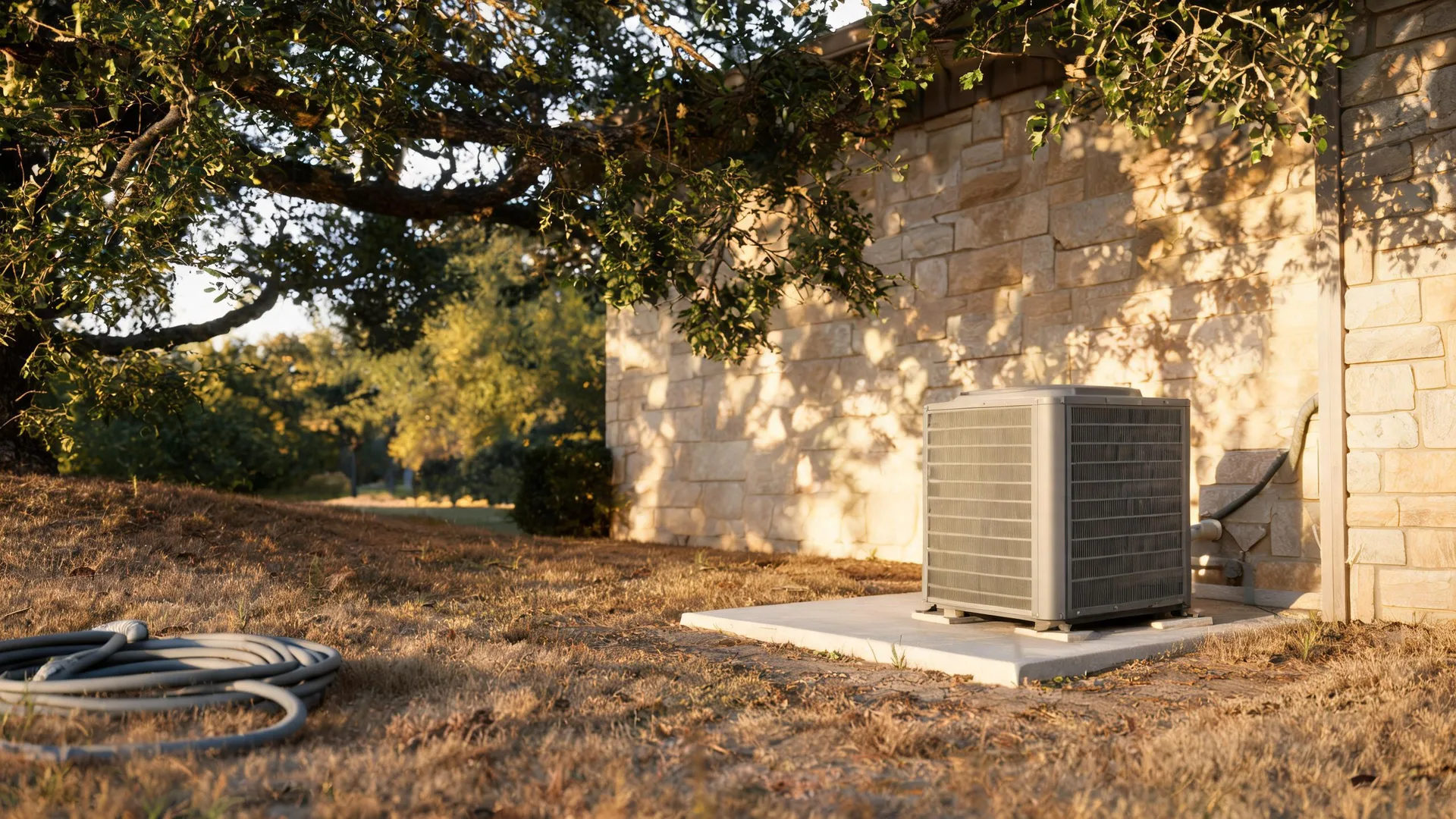
A heat pump needs a spot with clearance for airflow and drainage, and it draws on a dedicated electrical circuit. Running new wire or a new breaker, relocating the outdoor unit away from where the old condenser sat, or adding a pad all take labor beyond just setting the equipment in place.

The efficiency rating on a heat pump tells you how much heat it moves for the power it uses, nothing more. A higher rated unit pulls more heat out of the outdoor air per unit of electricity than a lower rated one, so it costs less to run over a season. It doesn't tell you how warm the house will feel, how big the unit should be, or how long it will last. Units with the same rating on the label can perform differently once installed, because a duct leak, a bad charge, or a wrong-sized system all drag down the real-world result no matter what the label promises. The rating is a lab number, measured under set conditions. What you actually get depends on the install.

Install day starts with the old equipment coming out, if there's a system there already. Refrigerant lines get disconnected and recovered, not vented, and the old wiring and ductwork connections come apart before anything new goes in. The outdoor unit sets on a pad or mounting brackets, leveled so the compressor inside runs the way it's built to. Indoor, the coil ties into the ductwork or air handler, new wiring runs to its own dedicated circuit, and a condensate drain gets set up so the system has somewhere to send the moisture it pulls out of the air. Refrigerant lines run between the outdoor and indoor sections and get charged to the exact weight the manufacturer calls for, not topped off by feel. Before anyone calls it done, the system runs in both heating and cooling, the installer checks static pressure in the ducts and the temperature split at the vents, and confirms the thermostat is actually controlling the system the way it should. Skip that last part and the system can look finished and still run wrong for years.