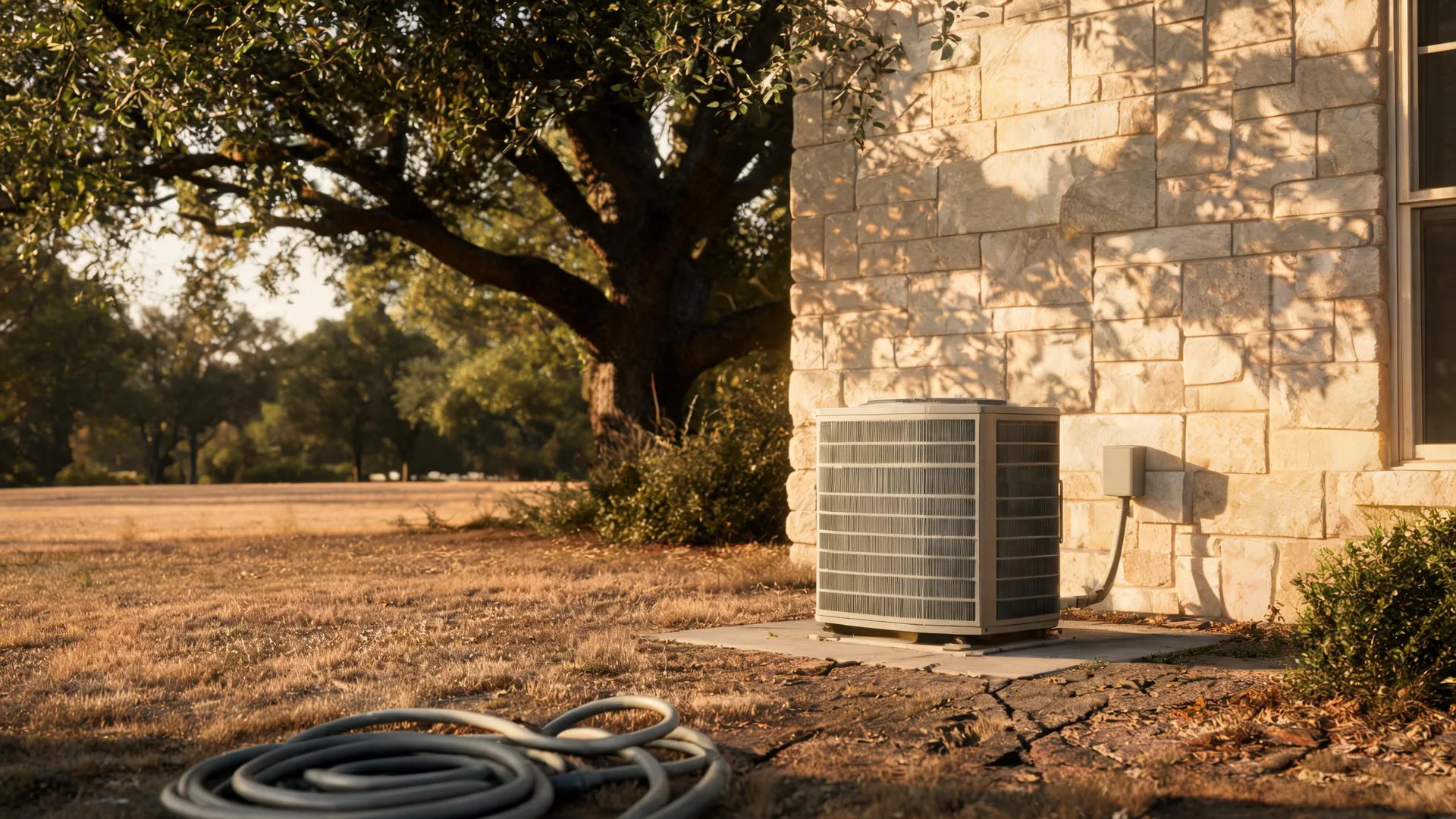
August is the month to get this done
Heat in Council starts up in September. Get the install finished in August and the new heat pump is tested and running before you need it, not during the first cold week.
Takes about a minute. No obligation.
Heat in Council starts up in September. Get the install finished in August and the new heat pump is tested and running before you need it, not during the first cold week.
Heat pumps here run heat from September through June, then cooling in July. There's barely a break between seasons, so a rushed install now means living with it for ten months before you'd get a slow season to fix anything.
NOAA nClimDiv, 1991–2020 normals
A heat pump is sized by the load calculation, not by the square footage of the house or the size of the unit it's replacing.
Ask any contractor bidding the job to show the load calculation, and be wary of one who quotes a price before doing it.




Taking out the old equipment is part of the install, not an afterthought tacked on. The outdoor unit gets disconnected from its refrigerant lines, and those lines get recovered properly, not vented. If the old system ran on a furnace with a separate air handler, that gets pulled too, along with the old thermostat wiring if it isn't compatible with the new setup. Any refrigerant left in the old lines has to be recovered by law, so a contractor can't just cut the lines and haul the unit away. If the ductwork is being reused, a decent contractor checks it for leaks and bad connections before the new system ever gets charged with refrigerant, since a heat pump run through leaky ducts will never perform the way the load calculation says it should.
Replace it before the season starts, so it happens on your schedule, not in a hurry.
Find a contractorA heat pump that's too big will short cycle. It kicks on, satisfies the thermostat fast, then shuts off again before it's run long enough to dehumidify the air or heat the house evenly. A heat pump that's too small runs flat out and still loses ground on the coldest nights, leaning hard on backup heat strips to make up the difference. The load calculation looks at the walls, the windows, the insulation, the ductwork and which way the house faces, not just the floor space, because houses that look alike on paper can lose heat at very different rates. A contractor doing it right measures the place room by room rather than matching the old unit's tonnage. Since this system runs nearly every month of the year here, a sizing mistake doesn't sit quiet in a closet waiting to be found. It shows up fast, in rooms that never feel right and a system that never gets to rest.
Adams County falls under zone 6B in the 2021 energy code, a cold zone with winter running most of the year. Any new split-system heat pump installed here has to meet 14.3 SEER2 for cooling and 7.5 HSPF2 for heating at minimum.
A heat pump installed in Council does most of its work heating, not cooling, so the HSPF2 rating tells you more about a system here than the SEER2 number does. These minimums apply to any split-system heat pump built on or after January 1, 2023, so a contractor bidding this job should already be working from equipment that clears both numbers.
What pushes the price has less to do with the unit itself and more with everything around it. Line sets run between the outdoor unit and the indoor coil, and if the old refrigerant lines are the wrong diameter or routed somewhere the new system can't use, they get replaced rather than reused. Electrical work is often part of it too. A heat pump with backup heat strips draws more than the old furnace circuit was built for, so the breaker panel sometimes needs attention before the new system can be connected at all. Ductwork plays into it as well. If leak testing turns up bad connections or runs that were never sized right, sealing or resizing that ductwork adds real cost on top of the install. None of this shows up on paper. It only shows up once a contractor gets into the walls and the attic, which is why bids that look alike going in can land very differently once the work starts.
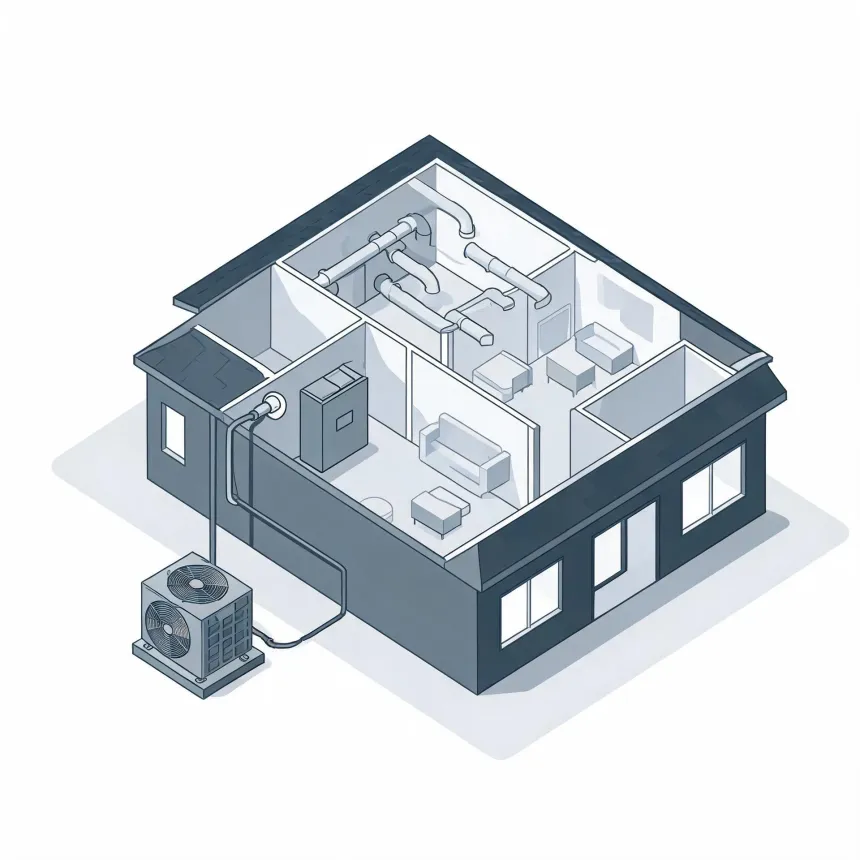
Install day starts with the outdoor pad and the spot picked for the air handler or coil, since a heat pump needs clearance around the outdoor unit to pull air through the coil properly. The electrical work usually happens early, before any refrigerant line gets touched, so the breaker and disconnect are ready when the rest of the crew needs them. Running new line sets and brazing the joints takes time and has to be done right. A bad joint means a slow leak that shows up months later instead of that day. Once everything is connected, the system gets evacuated to pull moisture and air out of the lines before it's charged with refrigerant, because any air left in there keeps the system from reaching the pressures it was designed to run at. After charging, a contractor checks refrigerant levels against the manufacturer's specs, not just by feel, and runs the system in both heating and cooling to see that it responds to the thermostat the way it should. The last part matters just as much. Airflow gets checked at the vents, the thermostat gets programmed, and a contractor walks through how the system behaves compared to whatever was there before.