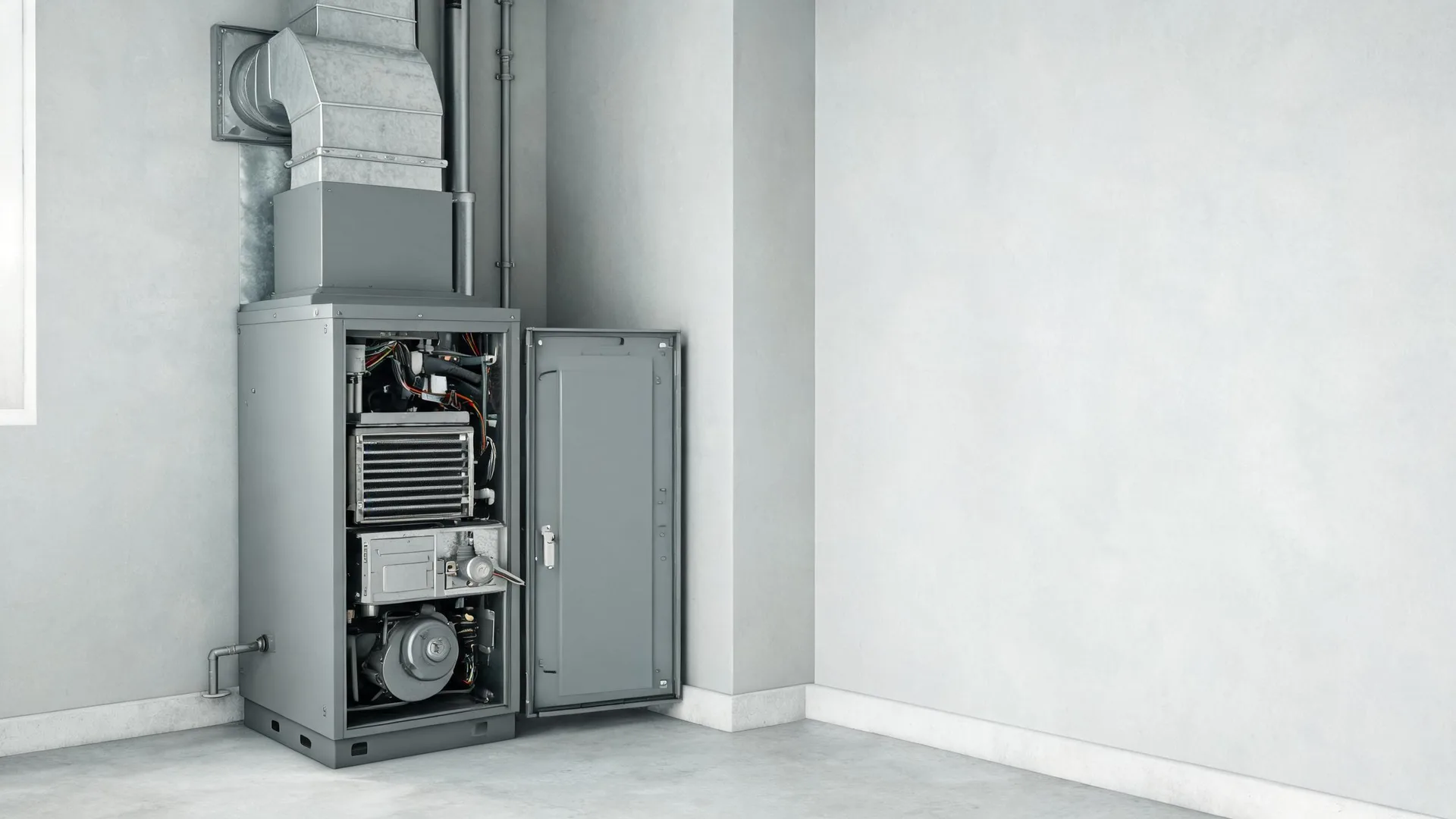
An unfinished basement interior featuring a large metal furnace unit, exposed ceiling joists, concrete walls, and scattered boxes and cables on the floor.

Furnace Repair in Blackfoot, ID

Tell us about the job

Takes about a minute. No obligation.

RepairFurnace or heatingBingham County, ID
Step 1 of 2

What ZIP code is the job in?

Ten months of runtime

A furnace in Bingham County runs from September through June. That's most of the year asking the igniter, the blower motor and the heat exchanger to cycle on and off, day after day. A machine that works that many months has more chances to develop a problem than one running half the year.

What that means for a repair call

When a furnace here starts acting up, the cause is usually tied to how much it's been asked to do, not a fluke. A problem that shows up after this much runtime is worth having looked at properly, so whatever gets fixed holds up through the rest of the winter.

10 months
September through June, your furnace is on duty
16°F
the average winter night it heats against
134 winter storms
in ten years, the nights a failure hurts most
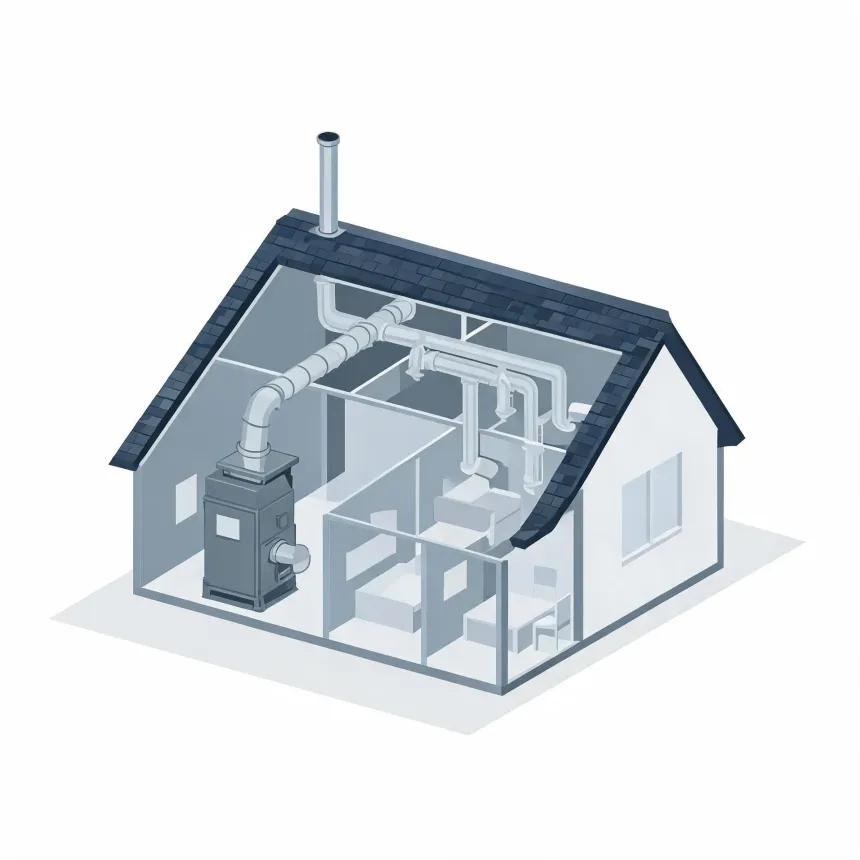
Isometric cutaway illustration of a small house showing a gray furnace unit with a flue pipe through the roof and branching ductwork running to rooms with simple furniture.
Your furnace works hardest from November through March.

NOAA nClimDiv, 1991–2020 normals

A furnace that short cycles, turning on and off every few minutes, is wearing out its ignition system faster than normal use would.

Short cycling early in the season is worth a service call before the igniter or flame sensor fails outright on a cold night.

134 winter storms in ten years is hard on a furnace that already runs nonstop

258 severe weather events from 2015 to 2024
11% of homes statewide lost power a day or more in 2024
109 damaging wind events from 2015 to 2024
September starts it coldFurnace here comes on in September, right after an August with no warning at all.

Winter storms knock out power, and a furnace with a gas burner still needs electricity to run the blower and the control board. When the power drops in the middle of a cold snap, the furnace stops with it, no matter how good the burner is. Most furnaces come back on by themselves once power is restored, so there's usually nothing to reset. But if a furnace was already struggling before an outage, the restart can be when a weak igniter or a failing control board finally gives out. If your furnace shut down during an outage this winter and hasn't run quite right since, that's worth a service call rather than waiting to see.

A furnace that's run this hard deserves a real diagnosis

Ten months a year and 134 storms in a decade will wear a furnace down in ways that don't always show up clearly in the symptom. A furnace acting up now has earned a proper diagnosis, not a guess, so the fix holds for the rest of winter.

Find a contractor
A man in a cap, long-sleeved shirt and work pants carries a canvas tool bag up porch steps toward a dark blue front door, beside a blue ceramic planter.
A gray gas furnace with attached ductwork and piping installed in an unfinished concrete basement.

Why waiting makes the repair bigger

A furnace that's struggling usually sends up a small signal first. A delayed start, a burner that cycles a little short, a blower that runs a touch longer than it used to. None of that stops the house from heating, so it's easy to let it ride. The trouble is a furnace doesn't rest between cycles. Each time it fires, the igniter takes a strain, the heat exchanger flexes as it heats and cools, and the blower motor's bearings take another turn. A small problem left alone doesn't stay small, because the machine keeps putting the same stress on the same weak point every single cycle. An igniter that's cracking gets hit with full voltage again and again until it finally fails, usually on the coldest night it's asked to work hardest. A blower motor running on a worn bearing keeps spinning under that load until the bearing seizes. Catching the problem while it's still a minor repair means replacing one part before it takes another one down with it.

Check the simple things first

Make sure the thermostat is set to heat and the setting is above room temperature. Check that the furnace switch, the one that looks like a light switch near the unit, hasn't been bumped off. Look at the breaker for the furnace in the electrical panel. If the furnace has a standing pilot, check whether it's lit. None of this takes a tool, and it rules out the causes that aren't actually a repair.

What's worth checking before you call, and what isn't

Swap the air filter if it's dirty, a clogged filter can choke airflow enough to make a furnace shut itself off. Check that supply vents and the return air grille aren't blocked by furniture or rugs. Past that, leave it alone. Don't take a panel off the furnace or reach near the burner or the flame sensor. If the furnace is making a new noise, tripping its switch repeatedly, or you smell gas, stop checking things yourself and get a technician out.

An unfinished basement containing a forced-air furnace with metal ductwork, exposed wooden ceiling joists, a hanging Edison bulb, and bare concrete floors.

A new furnace would cut about $100 a year off heating for a typical Bingham County home.

  • A new high-efficiency furnace$390 a year
  • An older furnace$490 a year

Estimates for a typical Bingham County home, compared with an older unit built to the previous federal minimum, from EIA household energy data, Idaho fuel prices and NOAA climate normals. Your home will differ.

Repair makes sense when one part has failed and the heat exchanger is sound.

Replacement makes sense when the heat exchanger is cracked or the furnace keeps needing parts.

A diagnostic visit starts before any panel comes off, with the technician asking what the furnace has been doing and when it started. Then comes the thermostat call, the cycle itself watched start to finish: how long ignition takes, whether the flame looks right, whether the blower kicks on when it should and shuts off when it should. A technician checks voltage at the igniter, resistance on the flame sensor, and the amp draw on the blower motor, because a motor pulling more current than it should is a motor on its way out even if it still spins fine today. The heat exchanger gets inspected for cracks, since a crack there isn't a comfort issue, it's a safety one. Gas pressure gets checked at the valve, not guessed at. A real diagnosis finds the part that's actually failing instead of swapping pieces until something works.