




A gray forced-air furnace with ductwork stands in an unfinished concrete basement surrounded by storage items and clutter.

Furnace Maintenance in Weiser, ID

Tell us about the job

Takes about a minute. No obligation.

Tune-up, service, or cleaningFurnace or heatingWashington County, ID
Step 1 of 2

What ZIP code is the job in?

Idaho runs on electric heat more than most states, and electricity here costs $33.76 per million Btu. A furnace that's lost efficiency doesn't heat any less, it just pulls more power to do the same job. The igniter wears out, the flame sensor gets a coating, the blower motor starts working harder than it should. None of that shows up as a change in the air coming out of the vents. It shows up on the meter instead.

Furnaces here run nine months of the year, September through May.

That's nine months for an igniter or a blower motor to wear down before anyone notices.

Nine months of heat starts in September. That's when a worn furnace starts costing you.

Heat runs September through May
Winter nights average 22°F
85 winter storms from 2015 to 2024
Most Homes Here Run on Electric HeatElectricity heats 46.2% of homes in Washington County, gas heats 31.7%

A tune-up before September catches the things that wear down quietly. A technician can clean the flame sensor, check the igniter, and see how the blower motor is holding up, before any of that costs you money on the meter. Washington County also sees its share of winter storms, 85 of them between 2015 and 2024. A furnace that's already struggling doesn't need a bad storm to push it into a bigger repair. Getting it looked at now means it's not the thing you're worried about when the snow starts.

Get the tune-up before the meter tells you about it

A worn igniter or a dirty flame sensor doesn't make your furnace heat less. It makes it pull more power to do the same job, for as long as it runs. A tune-up catches that wear before it shows up on the meter.

Find a contractor
A gray high-efficiency gas furnace installed in an unfinished basement, surrounded by gas lines, a condensate drain, and sheet-metal ductwork.

What a Furnace Tells You Before It Fails

A furnace gives you warnings before it fails outright. The burner flame should burn blue and steady. If it's flickering, or yellow, or uneven along the burner, something's off with the fuel mix or the burner itself. Short cycling is another one, where the furnace fires up, runs for a couple minutes, then shuts off before the house is warm. That can be a flame sensor that's lost its coating, a filter choking off airflow, or a limit switch tripping because the unit's running hotter than it should. A blower that keeps running after the burner shuts off usually means a control board or a fan limit switch isn't doing its job. And if you're hearing anything new, a bang at startup, a squeal from the blower, a rattle that wasn't there before, that's the furnace telling you a part is wearing loose or wearing out. None of these mean the furnace is done. They mean it's due for someone to open it up and look.

A Dirty Filter Changes How Hard Everything Else Works

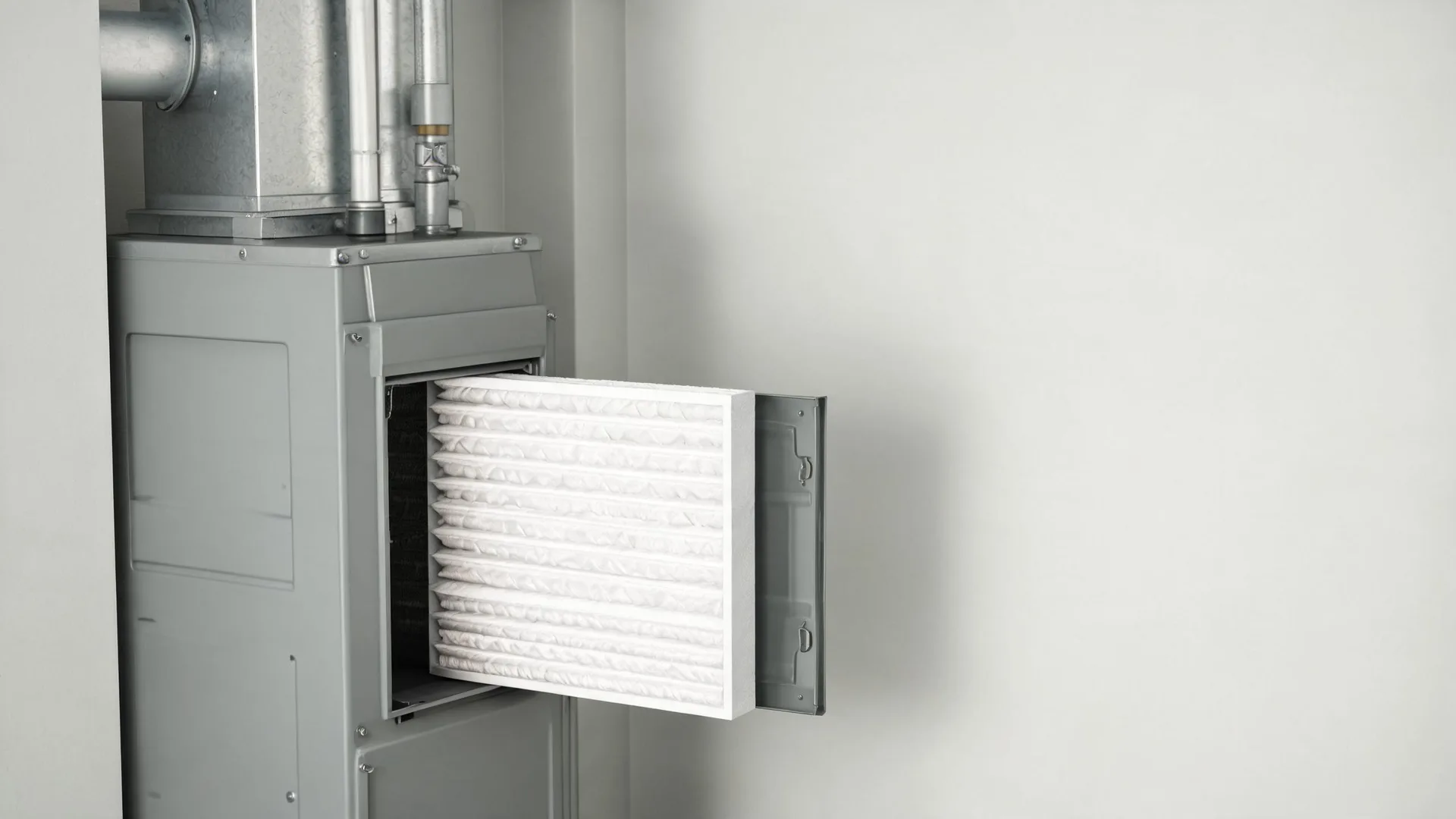
A clogged filter chokes off airflow across the heat exchanger. The burner still fires the same, but less air moves past it to carry that heat into the house. The exchanger runs hotter than it should, the blower motor strains to push air through a smaller opening, and heat that should be going into the rooms stays trapped inside the furnace. A filter changed on schedule is the cheapest way to keep every other part from working harder than it needs to.
The Flame Sensor and Blower Wear Quietly, Not Suddenly

The flame sensor builds up a coating over time just from sitting in the burner flame. Once that coating gets thick enough, the sensor stops reading the flame reliably and the furnace shuts itself off as a safety measure, sometimes right after startup. The blower motor wears a different way. Its bearings wear down slowly, and a motor working harder to push air through a dirty filter or dirty coil wears faster than one that isn't. Neither failure shows up as a sudden breakdown. Both show up first as a furnace that runs a little worse than it did last year.

Between visits, the filter is the one thing worth your attention. Check it every month or so during the heating months, more often if you have pets, and swap it when it looks gray and matted instead of waiting for a set date. Keep the area around the furnace clear too. It needs open space to pull air in, and boxes or stored items pushed up against it can choke that off. Outside, if the furnace vents through a wall, make sure that vent stays clear of snow, leaves or anything else that could block it. Past that, leave the cabinet closed. The blower, the igniter and the flame sensor aren't things to clean or adjust yourself, and opening up a gas furnace without the training to put it back together correctly isn't worth the risk.

A tune-up starts with the burner. A technician pulls it out, cleans off any rust or scale, and checks that the flame pattern is even across every slot. From there it's the heat exchanger, checked for cracks or corrosion, since a cracked exchanger can let combustion gases mix into the air the blower pushes through the house. The igniter gets tested under power, not just looked at, because a weak igniter can still glow without reliably lighting the burner. The flame sensor comes out and gets cleaned back to bare metal. Gas pressure gets checked and adjusted at the manifold, since pressure that drifts low or high changes how clean the furnace burns. The blower wheel and motor get a look too, for dust buildup on the wheel and play in the motor bearings. Last, the technician checks the vent pipe or flue for a solid connection and proper draft, so what the burner produces actually leaves the house instead of backing up.