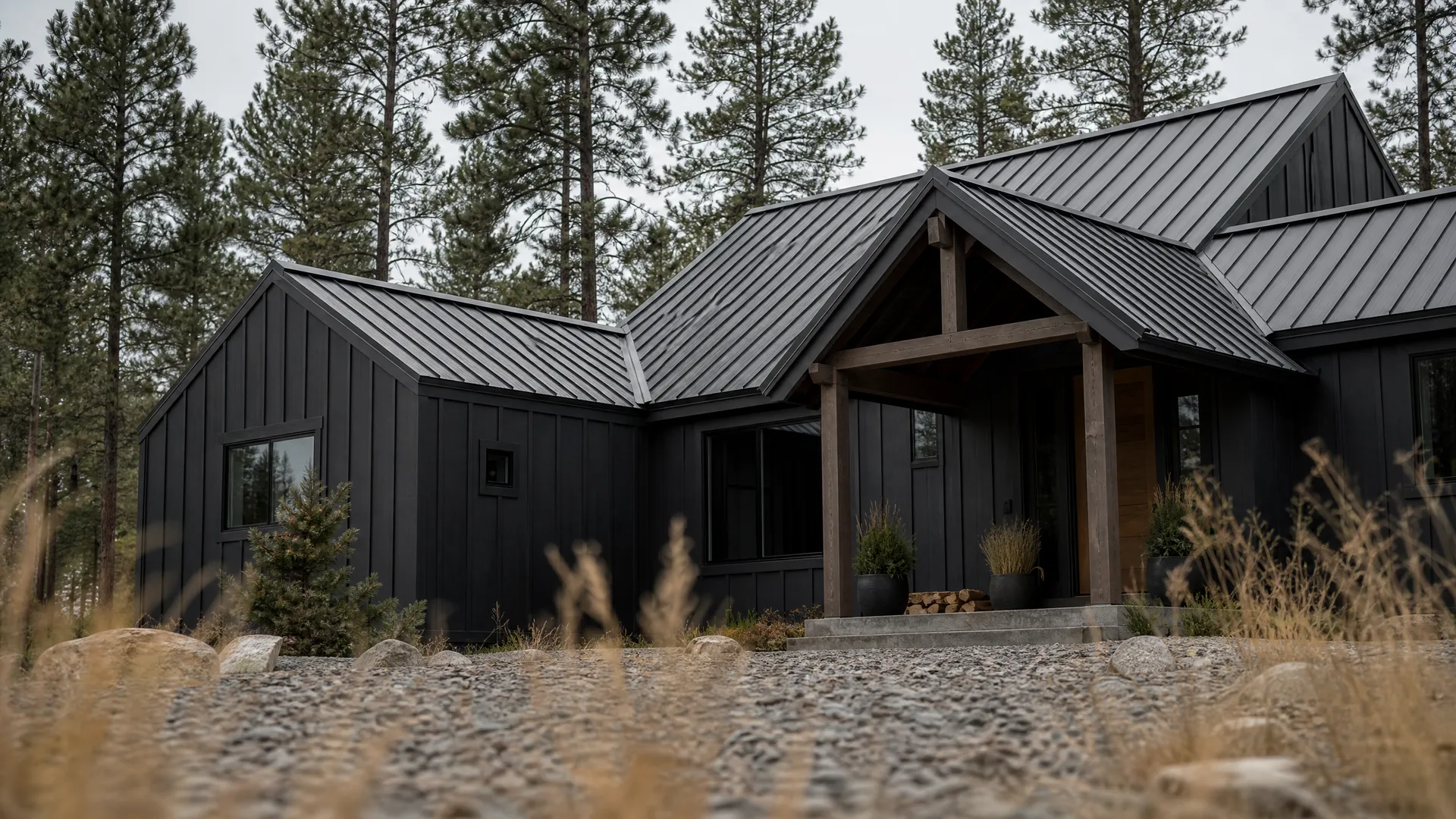
A single-story black board-and-batten house with a standing-seam metal roof and timber-post covered entry, surrounded by pine trees, dry grasses and a gravel foreground.

Furnace Maintenance in Victor, ID

Tell us about the job

Takes about a minute. No obligation.

Tune-up, service, or cleaningFurnace or heatingTeton County, ID
Step 1 of 2

What ZIP code is the job in?

Change the filter yourself

A dirty filter is the one thing that causes real damage between visits, and it's the one thing you don't need a tech for. Slide out the old one, hold the new one up to the light to check it's not caked with dust, and set it in facing the right direction. A clogged filter starves the furnace of air, and that makes the heat exchanger run hotter than it should.


Leave the burners alone

The burners, the flame sensor and the inducer motor need a trained eye and the furnace opened up safely. If you smell gas, hear a new noise, or see the flame burning yellow instead of blue, that's a reason to call, not a reason to open the panel. Between visits, the filter and a watchful eye are your job. The rest of the furnace is not.

Furnaces in Victor run from September through June, with overnight lows averaging 12°F in the dead of winter.

Ten months of work a year wears parts down faster, and a furnace that's been fine since September can start slipping in January.

September is when it starts working. August is when it gets checked.

Heat runs September through June
Winter nights average 12°F
118 winter storms from 2015 to 2024

Half the homes in Teton County were built in 2001 or later, so a lot of the furnaces here haven't put in that many winters yet. A newer furnace still wears the same way, just slower. The igniter and flame sensor pick up a film over time, the blower motor collects dust, and a yearly check catches that early instead of letting it build. Keeping a younger system tuned each year is what gets it to last as long as it's built to.

Get it checked before it has to work

Heat runs here from September through June. A tech can check the igniter, the flame sensor and the inducer motor while the furnace is sitting idle, instead of after it's been running for months with lows averaging 12°F outside.

Find a contractor
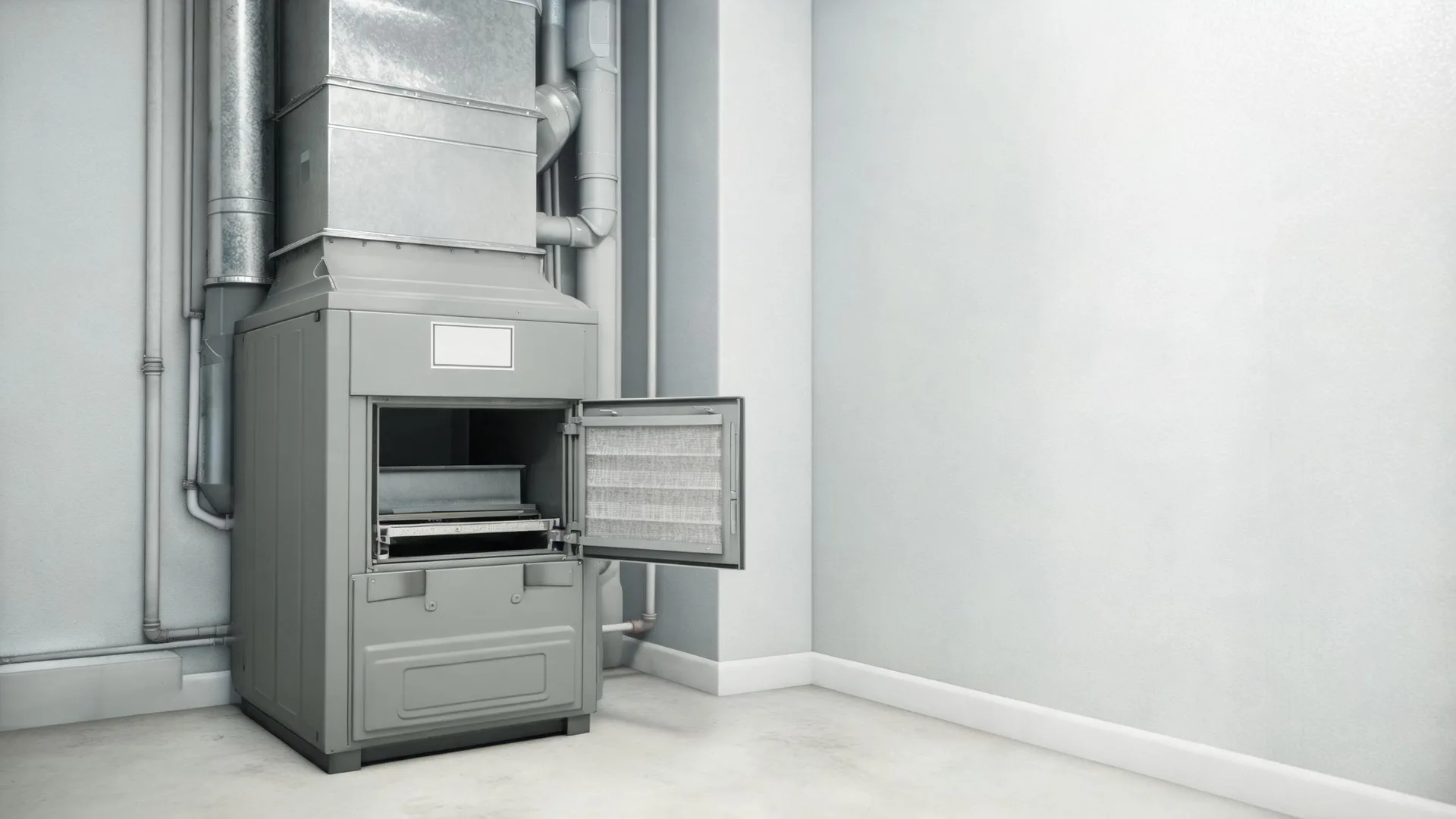
A gray residential gas furnace installed in an unfinished basement, surrounded by ductwork, a metal flue pipe, and a gas supply line.

One part keeps the rest of it honest

A furnace doesn't have a drain or coils the way a cooling system does. What it has is the filter, and the filter affects everything downstream of it. Pull air through a clogged filter long enough and the blower has to work harder to move the same amount of heat through the house. That extra load shows up in the heat exchanger, which runs hotter than it was built to and can crack sooner than it should. Dust that gets past a dirty or badly seated filter settles on the blower wheel and inside the burner compartment, where it can throw off the flame sensor's reading or coat the igniter. None of that happens overnight. It happens a little more each month the furnace runs, which is why a filter that gets changed on schedule is doing real work, not busywork.

The igniter wears out instead of getting caught

A furnace that's never checked doesn't fail all at once. The igniter weakens a little more each winter until one morning it doesn't glow hot enough to light the gas, and the furnace just stops. A yearly check catches a weak igniter while it's still working, not after it leaves the house cold.

A small gas or draft problem stays small

The flame sensor and the inducer motor keep the burners honest, making sure gas only flows when there's a flame to burn it and exhaust actually leaves the house. Skip enough visits and a problem in either one goes unnoticed, because nothing about it is loud or obvious until it's serious.

A tune-up starts with the furnace apart, not running, which is the only time some of this shows up. A tech pulls the burner compartment cover and looks at the flame itself, checking that it's burning even and blue across each burner instead of lifting or guttering at the tips. The flame sensor comes out for a wipe, since the film that builds on it over a season is often too thin to see but enough to make the furnace shut down early. Amp draw on the blower motor gets checked against what it should be, because a motor pulling too many amps is wearing out its bearings even while it still spins fine. The inducer motor gets watched for how fast it comes up to speed, since a slow start is often the first sign before it gets loud or quits. None of this shows up from the thermostat. It only shows up with the panel off.

A tune-up also checks things that have nothing to do with a part wearing out. The gas pressure going into the manifold needs to sit at the right setting, because too high or too low changes how the flame burns even if the burners themselves are fine. The heat exchanger gets inspected for cracks or separated seams, since a crack there can let exhaust mix into the air the furnace is heating. Every wire connection in the control panel gets checked for looseness, because a connection that's slightly loose can cause intermittent shutdowns that look random until someone traces them back. The condensate line, if the furnace has one, gets checked for a clear path, since a blocked line can shut the furnace down on a safety switch. None of these are wear parts. They're settings and connections that drift or loosen over a season of running, and checking them is as much a part of the visit as touching the igniter or the flame sensor.