


A gravel road lined with dark-clad cabins with metal gabled roofs, bordered by a rustic log fence in the left foreground and tall pine trees under an overcast sky.

Furnace Maintenance in Malad City, ID

Tell us about the job

Takes about a minute. No obligation.

Tune-up, service, or cleaningFurnace or heatingOneida County, ID
Step 1 of 2

What ZIP code is the job in?

Propane ran $26.48 per million Btu in Idaho last year. That is what heat costs here, and a furnace that has to work harder to push out the same warmth burns through more of it. A dirty flame sensor or a clogged filter makes the burner cycle longer and more often to hit the thermostat setting. None of that shows up as a problem you can see. It shows up on the propane bill. A yearly check on the burner, the filter and the airflow is what keeps that cost where it should be.

Propane heats most homes in Malad City, not natural gas.

A propane furnace needs its burner and venting checked each year, not just a fresh filter.

Half the furnaces in Malad City are older than the thermostat on the wall

Half the homes here were built by 1971
Heat runs September through June
Winter nights average 18°F

Furnace season starts in September here and runs through June, ten months straight of the burner cycling on and off. August is the month to get it checked, right before that start. A furnace that goes into September with a clean burner and good airflow doesn't have to work as hard once the cold settles in. Put the check off and it starts the season running hard on whatever shape it was left in the spring before.

A tune-up pays for itself here

A neglected system uses more power, and power costs more here. A tune-up pays for itself.

Find a contractor
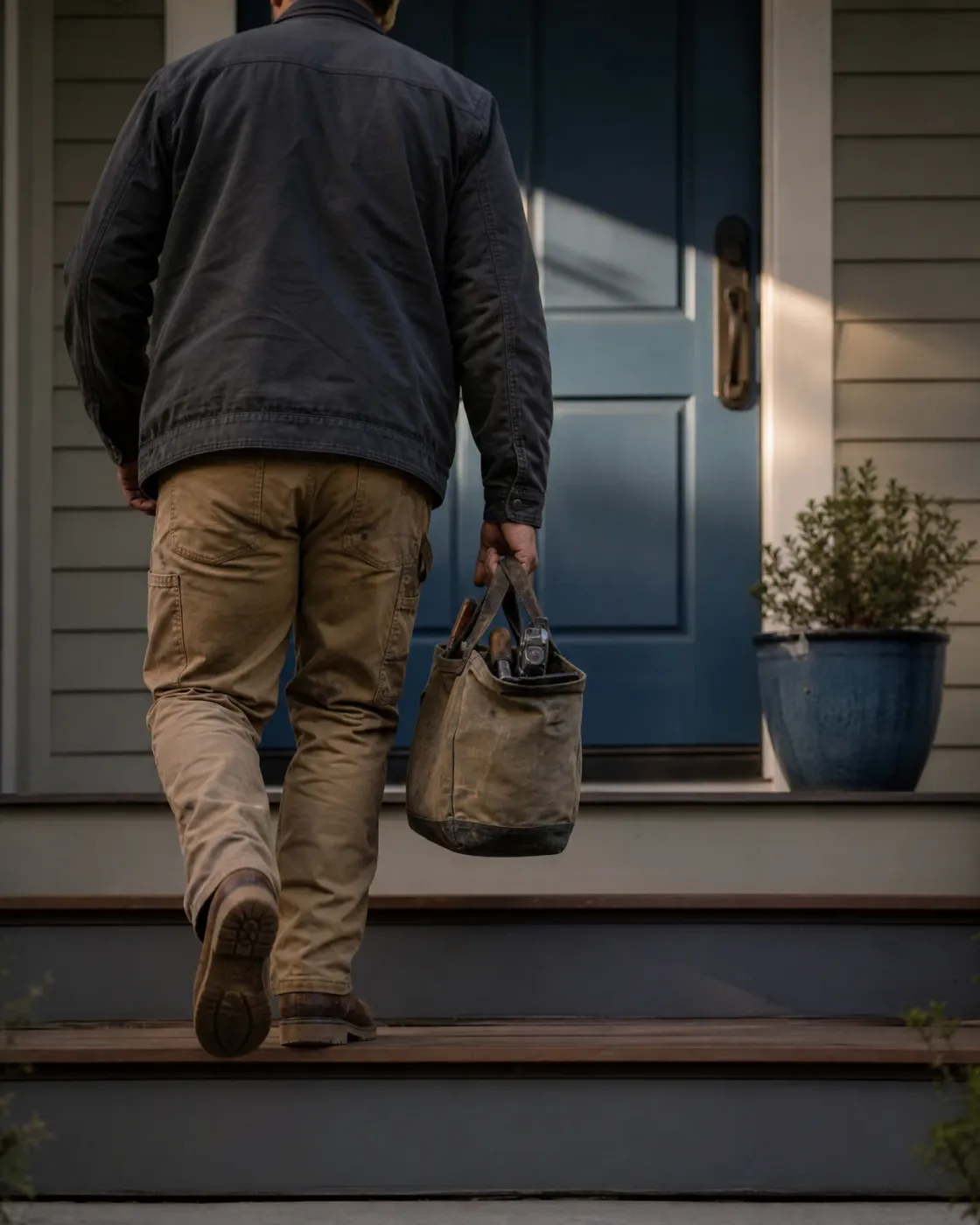
A man seen from behind in a dark jacket and tan work pants climbs wooden porch steps toward a dark blue front door, carrying a worn canvas tool bag in his right hand, with a potted shrub in a blue planter beside the entry.
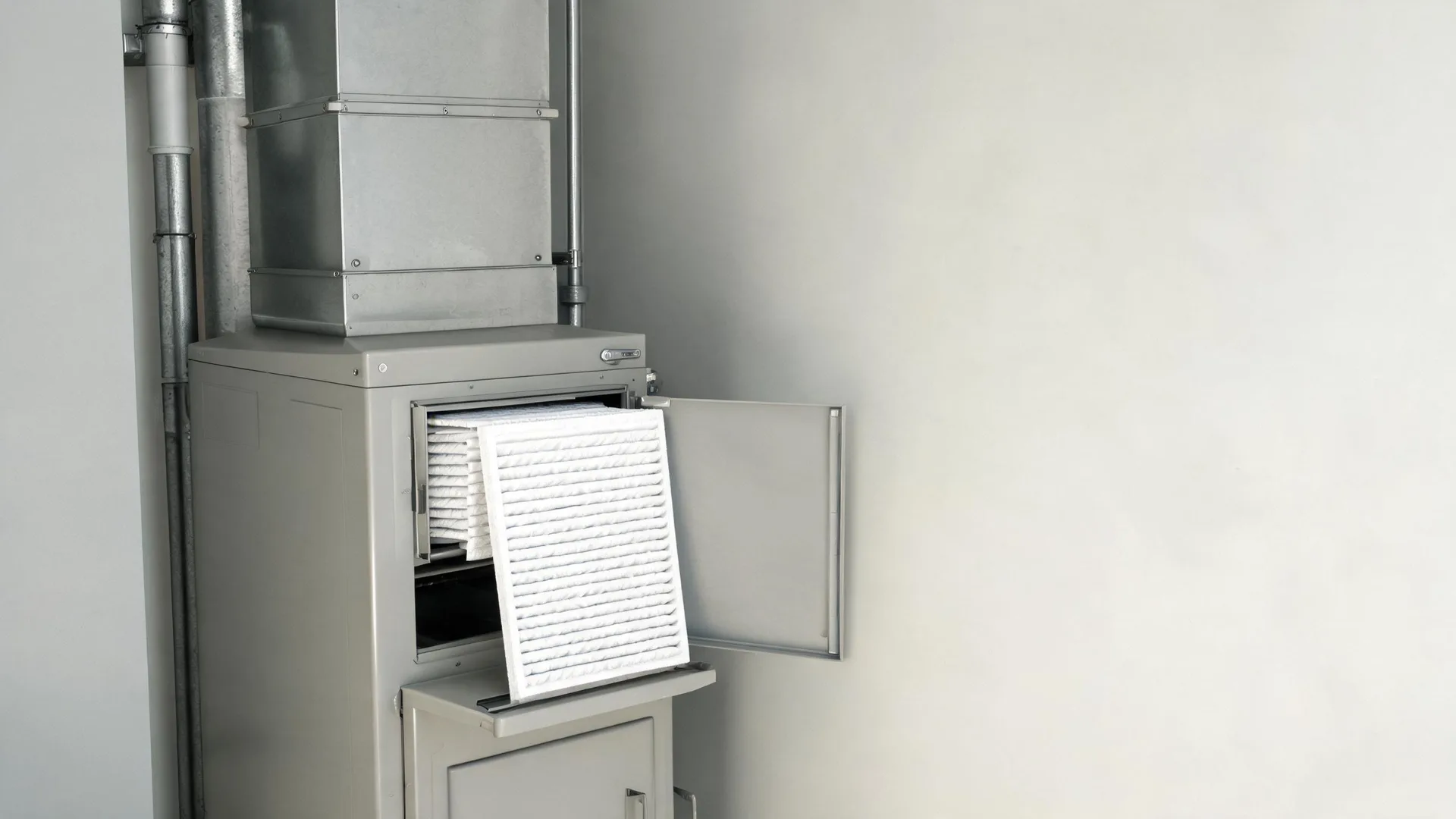
A gray gas furnace with attached ductwork and piping installed in an unfinished concrete basement.

A lot of these furnaces are as old as the house

Half the homes in Oneida County were built in 1971 or earlier. A furnace that old has had a lot of years to drift out of adjustment, even one that still lights every time and heats the house fine. An annual check is what catches a cracked heat exchanger or a weak igniter while it is still a small fix, instead of waiting for the furnace to quit in the middle of a cold stretch.

Change the filter yourself

A dirty filter chokes airflow across the heat exchanger, and that is the one thing between visits that is actually yours to manage. Hold it up to a light. If light doesn't pass through, swap it. A furnace starved for air runs longer to reach the same thermostat setting, and in bad cases it overheats and shuts itself down on a limit switch.
Know what to leave alone

The burner, the flame sensor, the igniter and the venting are not a homeowner job. Opening the cabinet to clean a sensor or adjust a burner without the right tools risks a bad reassembly, and a gas furnace put back together wrong is a safety problem, not just a comfort one. Watch for a yellow flame instead of blue, soot near the burner, or a burning smell that doesn't clear in a few minutes, and treat any of those as a reason to call, not a reason to open the cabinet.

Skip enough years of checks and the signs show up slow, not sudden. A flame sensor coated in residue starts misreading the flame and the furnace shuts off a few seconds after it lights, so it short cycles instead of running a full heat cycle. Dust builds on the igniter and it takes longer to glow hot enough to catch the gas, until one day it doesn't. A blower wheel caked in dust moves less air across the heat exchanger, and that exchanger runs hotter than it was built to. Heat exchangers don't fail all at once. They crack slowly, from years of uneven heating and cooling, and a crack is what lets combustion gas mix into the air moving through the house. None of this is sudden on its own. It's what happens when nobody looks at the burner and the airflow for a few years running.

A proper tune-up starts with the burner. The tech pulls it to look at the flame, which should burn blue and steady across every port, not yellow or lifting at the tips. The flame sensor gets cleaned of the residue that builds on it over a season, since that residue is what causes short cycling. The igniter gets checked for a steady glow and for cracks, because a hairline crack there means it fails cold the next time it's asked to light. The heat exchanger gets inspected for cracks or rust-through, since that's the one failure that turns a comfort problem into a safety one. The blower wheel gets checked for dust buildup, and the return gets checked to see it isn't choked down. Last comes the venting, making sure combustion gas has a clear path out of the house instead of back into it.