




Stacked firewood along the dark vertical-board wall of a house beside a gravel path with two outdoor condenser units, with pines, dry grass and an overcast sky beyond.

Furnace Maintenance in Homedale, ID

Tell us about the job

Takes about a minute. No obligation.

Tune-up, service, or cleaningFurnace or heatingOwyhee County, ID
Step 1 of 2

What ZIP code is the job in?

Electricity in Idaho runs $33.76 per million Btu. A furnace that has to work harder than it should burns through more of it every month. A dirty blower wheel, a clogged filter, a flame sensor coated with residue. Any of these make the furnace run longer to put out the same heat. That longer runtime is what shows up on the bill. A furnace that is cleaned and checked gets back to burning only what the house actually needs.

A quick tune-up checks that the furnace runs.

A thorough one checks why it's working as hard as it is, and finds the part that's already started to fail.

Ten months of heat a year wears a furnace down fast

Heat runs September through June
Winter nights average 21°F
72 winter storms from 2015 to 2024
Book it in AugustHeat starts in September here and doesn't let up until June.

The filter is the easiest thing to stay ahead of. When it loads up with dust, the blower has to pull harder to move the same air, and a coil sitting behind a dirty filter starts catching the dust that got past it instead of stopping at the filter where it belongs. Once that coil is coated, heat cannot move through it the way it should, and the furnace runs longer to reach the same temperature. On an electric furnace or heat pump, that coil is doing the actual work of warming the air, so keeping it clean matters more than it would on a furnace that burns gas. The drain matters too. If the system handles any condensation and that line clogs, water backs up and the unit shuts itself down rather than let water go somewhere it shouldn't.

A checked furnace costs less to run

A furnace working harder than it needs to shows up on an Idaho power bill fast. Getting the coil and filter checked now gets the furnace back to burning only what the house needs, before the cold months ahead.

Find a contractor
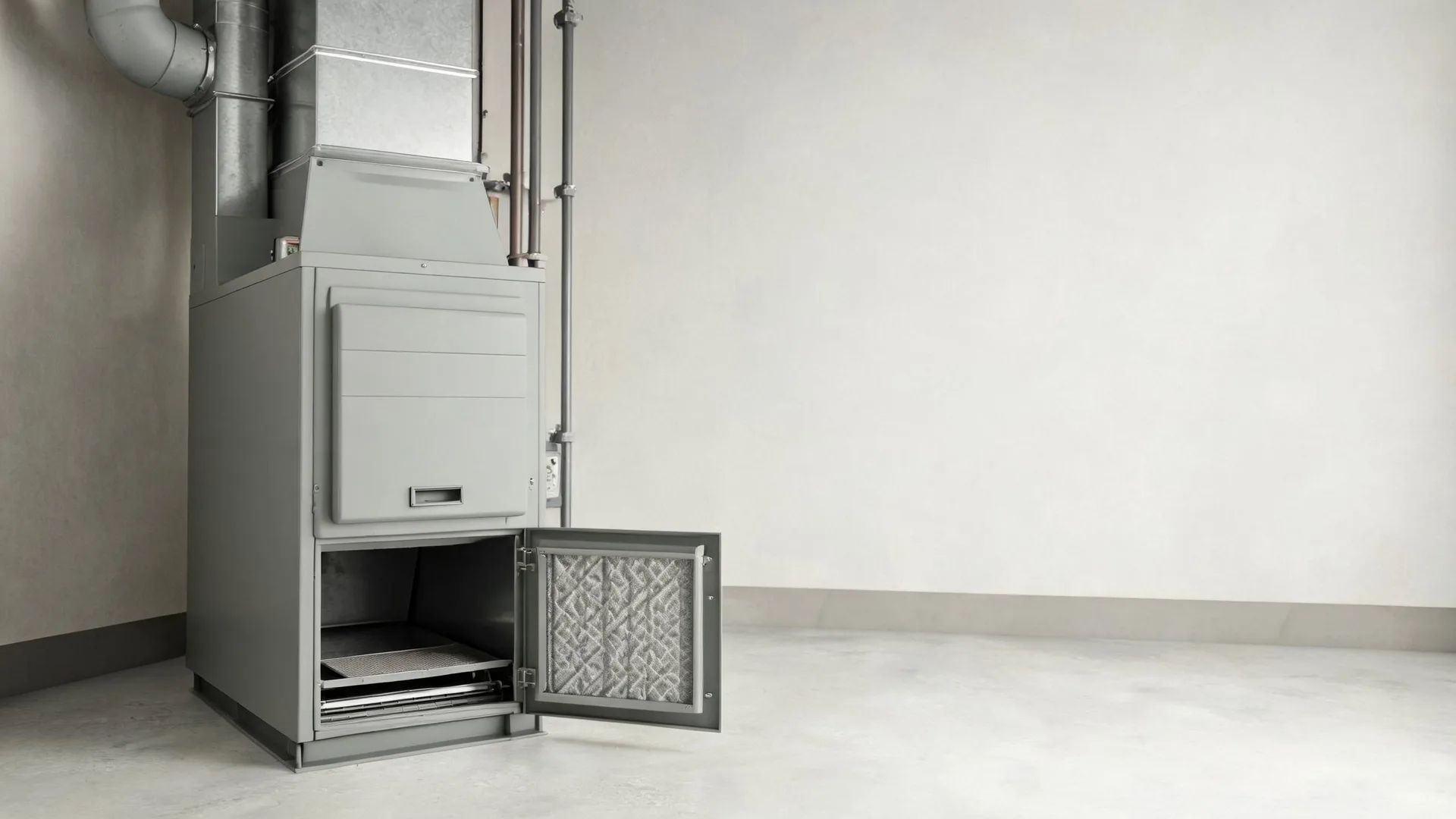
A gray high-efficiency gas furnace installed in an unfinished basement, surrounded by gas lines, a condensate drain, and sheet-metal ductwork.

Ten months of runtime a year, and little room to put off a look

Ten months of heat means ten months of runtime, and nights down near 21 degrees mean the furnace rarely idles once it starts. That kind of schedule finds a weak part fast. A flame sensor or blower motor that would hold on a few more weeks somewhere milder gives out here instead, usually once it's already needed every day. Get it looked at now, before the cold settles in, while there's still time to fix what's found instead of waiting on a no-heat call.

A smell that fades in a day isn't nothing

A furnace that's been off all summer will often put off a faint dusty smell the first few times it fires. That clears on its own within a day. What's worth a check is a burning or electrical smell that lingers, or shows up again every time the blower kicks on. That points at something sitting too close to the heat exchanger or a motor working harder than it should.
Listen for what changed

Every furnace has a sound it makes when it's running right, the same hum or whoosh each time it kicks on. A new rattle, a squeal when the blower starts, or a bang before the burners catch all mean some part has worn past where it should be. Catching that sound early means a tech can find the worn part before it fails outright and takes the furnace down with it.

A visual check only goes so far. Dust on a filter is easy to spot, but a tech pulls the blower wheel and looks at the blades themselves. Caked-on dust throws the wheel off balance and wears the motor bearing down early. Amp draw on the motor tells a story a homeowner can't see just by watching it spin. A motor pulling more current than it should is already working toward failure, even while it still runs fine today. The flame sensor gets cleaned and checked too, since a coated sensor starts a pattern of short cycling, where the furnace fires, shuts off, then fires again, long before it ever fails to light at all. None of that shows up by listening or looking. It shows up on a meter, or by pulling the part and seeing it.

A tune-up starts with the furnace apart, not just running. A tech pulls the panel, checks the wiring for a loose connection or a spot where insulation has worn thin against a sharp edge, and tightens what's come loose from vibration over a season of running. Electrical connections loosen slowly on their own, and a loose one builds heat right at the connection point. On a gas furnace, the heat exchanger gets checked for a crack, since a cracked exchanger can let exhaust mix into the air the blower pushes through the house. On an electric furnace, the heating elements get checked instead, since one element failing partway means the furnace still runs but puts out less heat than it should. The blower motor gets lubricated if it takes oil, and the belt, if it has one, gets checked for wear and proper tension. Last is a full cycle test, watching the furnace start cold, run, and shut off the way it's supposed to, since some problems only show up once the system has been running a few minutes.