Gas here runs $8.25 per million Btu
Idaho homes paid $8.25 per million Btu of natural gas in 2024. A furnace that has to work harder to put out the same heat burns through more of that gas every month it runs.
Takes about a minute. No obligation.
Idaho homes paid $8.25 per million Btu of natural gas in 2024. A furnace that has to work harder to put out the same heat burns through more of that gas every month it runs.
A clogged filter, a dirty flame sensor, or a burner that needs adjusting all make a furnace work harder for the same warmth. A tune-up catches that waste before it shows up on a bill.
Half the homes in Boundary County were built in 1991 or later.
A furnace that age still has years ahead of it, and a yearly check is what gets it there.


Boundary County sees a lot of rough weather. Between 2015 and 2024 the county logged 338 winter storms and 41 damaging wind events. That's snow load, ice and wind hitting the outside of the house, not just the roads. A furnace itself sits indoors, but the vent and intake pipes run outside, and they can get blocked by snowdrift or storm debris without anyone noticing from inside. Statewide, 11% of Idaho households lost power for 24 hours or more in 2024, and a furnace with electronic ignition won't run without it. A yearly check is a chance to make sure the vents are clear and the system is ready to start back up the moment power does.
A furnace burning more gas than it needs to runs up a bill every month it's cold, and in Bonners Ferry that's most of the year. A tune-up gets the burner and the airflow working the way they're supposed to, before another winter of heating puts it to the test.
Find a contractorThe day-and-night clip beside this shows the furnace carrying the house through a full cycle, and that cycle repeats for as long as the furnace is in the house. A newer furnace still has that ahead of it. The parts that wear, the igniter, the flame sensor, the blower bearings, wear whether the furnace is five years old or thirty. A yearly check catches that wear early, while it's still an adjustment and not a replacement. Starting that habit now is what keeps a newer system newer longer.
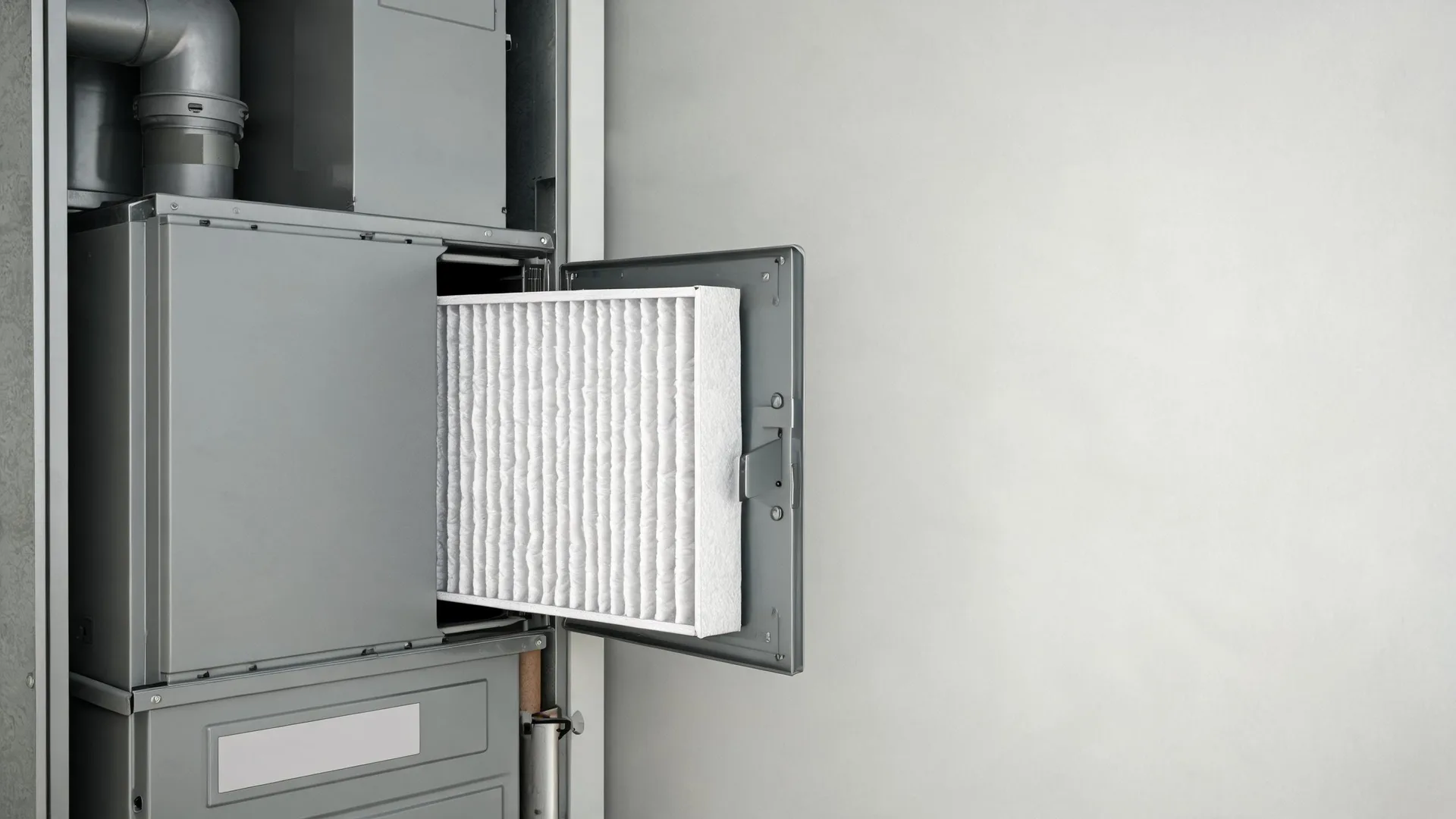
A dirty filter is the one thing worth checking between visits. Pull it, hold it up to a light, and if you can't see light through it, swap it. A clogged filter starves the blower and makes the whole system work harder than it should. Past that, leave the cabinet closed. The burner, the igniter, the flame sensor and the blower motor are jobs for a tech with the panels off and the gas line in view.
Between visits, pay attention rather than open anything up. A burner flame should look steady and blue, not yellow or flickering. Short cycling, where the furnace shuts off and restarts more than it used to, is worth noting. So is a smell of gas, a furnace that won't stay lit, or a vent pipe outside that looks blocked. None of that is a repair to try yourself. It's information to have ready when the furnace gets its next check.
A furnace can run and still be losing ground where nobody's looking. Flue gas should pull straight out through the vent pipe, and if the heat exchanger has a hairline crack, some of it can work back into the air the blower pushes through the house instead. There's no smell most people would catch and no sound either. A tech checks that exchanger with the burners firing, looking right at it, which isn't something you can do from the living room. Same with gas pressure at the manifold. Too high or too low and the burner flame changes shape, but most homeowners have never seen what a correct flame looks like to know the difference. A tune-up puts a meter and a trained eye on both before either one turns into a bigger problem.
Gas heats more homes in Boundary County than any other fuel, 38.8% by the last count, more than electricity and propane combined. That's most of the furnaces in Bonners Ferry burning fuel through a burner assembly, not just pushing air through a heat strip. A gas furnace needs its own kind of check. The burner has to be adjusted to burn clean, the vent run has to be clear along its whole length, and the flame sensor and ignition system have to be tested, not just glanced at. A filter swap doesn't touch any of that. The furnace can be pulling air through a clean filter and still be burning gas it doesn't need to, or venting exhaust somewhere it shouldn't.