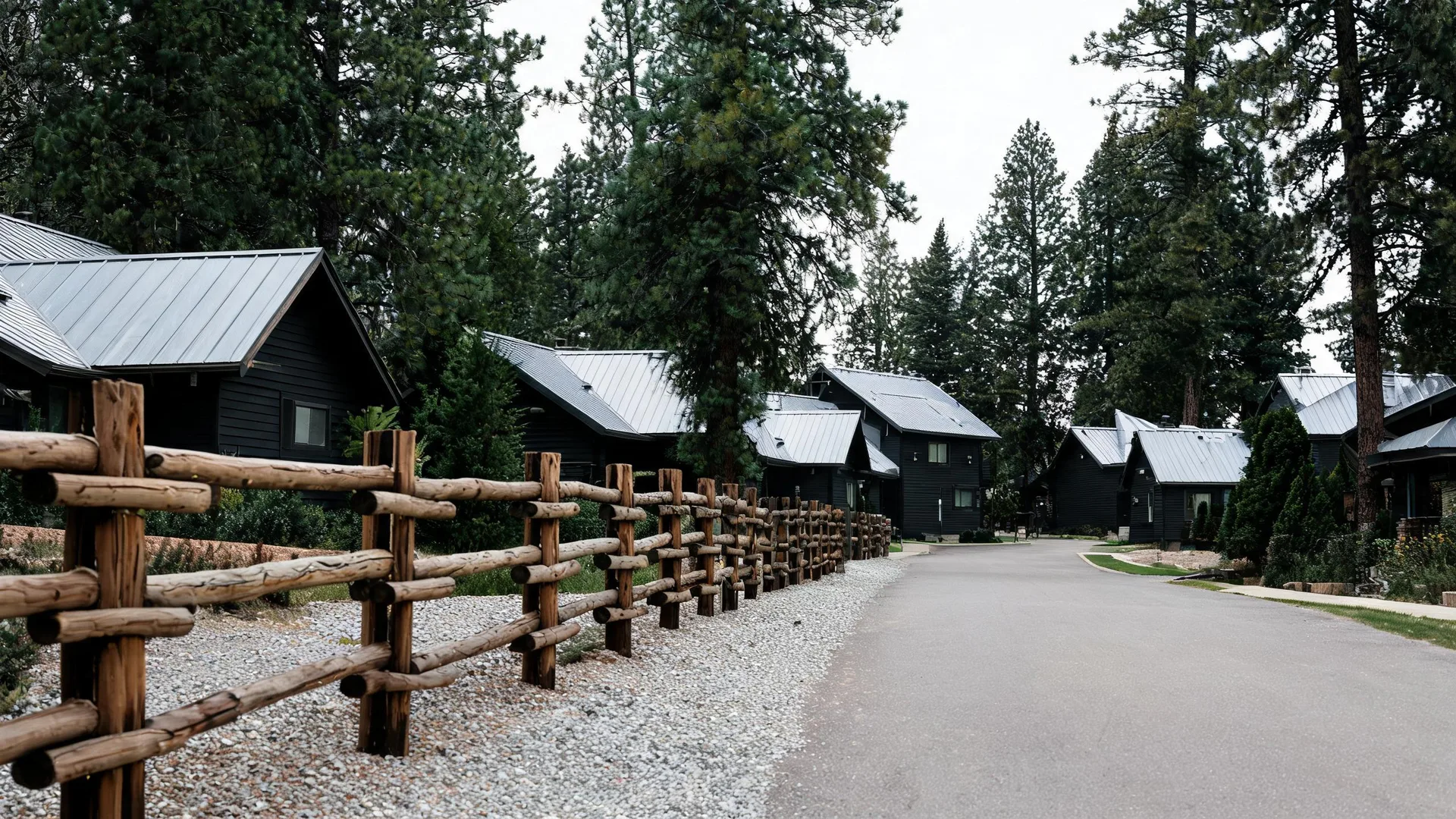





A paved road lined by a rustic wooden log fence and gravel leads past a row of dark-clad cabins with metal gable roofs among tall conifer trees under an overcast sky.

Heat Pump Repair in Mountain Home, ID

Tell us about the job

Takes about a minute. No obligation.

RepairHeat PumpElmore County, ID
Step 1 of 2

What ZIP code is the job in?

Half the homes in Elmore County were built in 1988 or later. If yours is one of them, the heat pump likely isn't old enough to be a lost cause. A repair on a system installed within the last couple decades is usually worth doing, especially if it's never given you trouble before now. The age of the house is worth checking against when the system itself was put in, since a unit can be replaced without anyone updating the rest of the house. Either way, a newer system is a strong reason to fix what's wrong rather than start over.

10 months
September through June, your system heats
2 months
July through August, it cools
21°F
the average winter night it heats against
83°F
the average summer afternoon it cools against
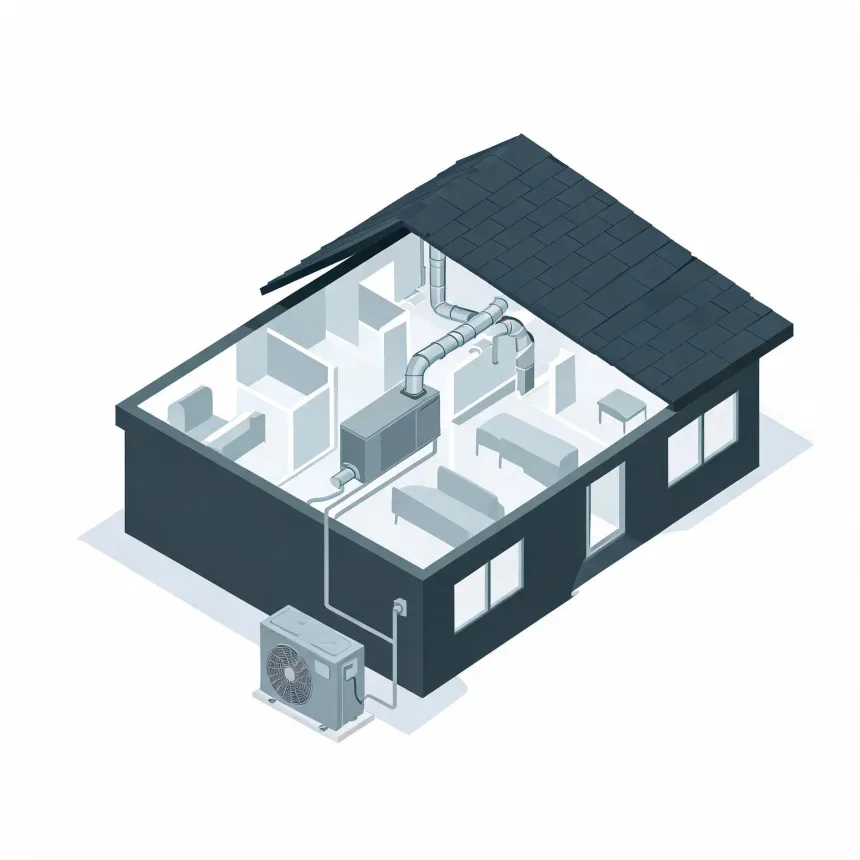
Isometric cutaway illustration of a single-story house showing interior rooms, ceiling ductwork connected to an air handler, and an outdoor condenser unit linked by a line set.
Your system heats September through June and cools July through August.

NOAA nClimDiv, 1991–2020 normals

A heat pump fails the same way whether it heats a house or just cools one.

The reversing valve, the defrost control and the outdoor coil all earn their keep twice over, so any of them can be the reason it's down.

Low wind, almost no hail, and dry summer air mean this unit isn't working against much

36 damaging wind events from 2015 to 2024
4 hail events from 2015 to 2024
84 winter storms from 2015 to 2024
The First Cold Snap Finds the Weak SpotHeat pumps here run September through June, so trouble usually starts early.

A heat pump that's struggling usually tells you before it quits outright. It might blow air that's barely warm or barely cool, like it's running but not really working. Ice building up on the outdoor unit and staying there, even after a defrost cycle should have cleared it, points to a stuck reversing valve or a defrost control that isn't switching when it should. Short cycling, where it kicks on and off every few minutes instead of running a full stretch, wears out the compressor faster and usually means a refrigerant or airflow problem underneath. A system that won't switch between heating and cooling, or gets stuck in one mode, is almost always the reversing valve. Strange noises, like clicking that doesn't lead to startup or a hum with no fan movement, are worth paying attention to rather than waiting out.

A newer system is worth fixing now, not replacing

Get the repair done and the heat pump goes back to doing what it was built for. Waiting on a stuck reversing valve or a bad defrost control just gives it more chances to take the compressor down with it.

Find a contractor
A gray outdoor HVAC unit mounted on a concrete pad beside a house with gray lap siding and a stone foundation.

What the Years Outside Have Actually Done to It

Winter storms hit this county 84 times between 2015 and 2024, heavy snow and ice mostly, and the outdoor unit sits through every one of them. That sounds like a lot until you weigh it against what it isn't dealing with. Damaging wind came through 36 times over that same stretch, and hail only 4, so the coil and the cabinet around it aren't getting battered the way they would somewhere prone to storms. A heat pump that's spent its life exposed to snow rather than wind and hail is wearing in one direction, not several, and that's a simpler thing for a repair to fix.

What you can check yourself

Look at the outdoor unit and see if the coil is caked in ice or buried in debris. Clear leaves or snow away from the cabinet so air can move through it. Check the thermostat is set to the right mode and the batteries aren't dead, since a thermostat stuck on the wrong setting can look exactly like a broken reversing valve. Go to the air handler or furnace closet and check the filter. A filter packed with dust chokes the airflow the whole system depends on, and it's the one thing in this machine you're meant to handle yourself.

What to leave alone

Don't open the outdoor unit's cabinet or touch anything inside it. The refrigerant lines, the compressor and the wiring in there aren't a homeowner job, and refrigerant itself needs to be handled by someone licensed to do it. If you've cleared debris, swapped the filter and checked the thermostat and it's still not heating or cooling right, that's the point to stop and call someone. Running a system that's short cycling or iced up while you wait only gives whatever's wrong more time to wear down the compressor with it.

A compressor is the one part that's expensive enough to matter, and it's also the part that pays for every other problem left unfixed. Low refrigerant doesn't just make the air weak, it changes the oil flow that keeps the compressor's moving parts from grinding on each other. A reversing valve stuck halfway makes the compressor work against its own pressure instead of with it. Ice on the outdoor coil blocks the airflow the whole system is built around, so the compressor keeps pulling against a unit that can't breathe. None of that shows up right away. It shows up as a compressor that draws more than it should, runs hotter than it should, and eventually just stops. A repair caught early is usually a part swap. Caught late, it's the one part nobody wants to replace.

Repair versus replacement comes down to what's actually failed and what it would take to fix it. A contactor, a capacitor, a defrost board, even a reversing valve are all parts a technician can swap without touching the rest of the system. The compressor is different. It's the one part that's expensive enough and central enough that replacing it often costs close to what a new system would run, so when it fails, that's the point where repair stops making sense on its own. Everything before that is just a part doing its job or not. A system that's been maintained, with clean coils and clear airflow, tends to fail one part at a time instead of all at once, which is what makes most calls a repair instead of a decision about the whole unit.