





A grey residential air-conditioning condenser unit mounted on a concrete pad beside a house, photographed at sunset.

Heat Pump Repair in Moscow, ID

Tell us about the job

Takes about a minute. No obligation.

RepairHeat PumpLatah County, ID
Step 1 of 2

What ZIP code is the job in?

Winter storms hit this county often. Snow, ice and blizzards were recorded 251 times between 2015 and 2024, and damaging wind another 25 times. Hail is rare here, with only 2 events in that same stretch, but the outdoor unit sits outside through all of it. Wind-driven debris can bend the fins or dent the cabinet without stopping the unit right away. If yours has been through a bad storm, it's worth having someone check it even if it still runs.

10 months
September through June, your system heats
25°F
the average winter night it heats against
79°F
the average summer afternoon it cools against
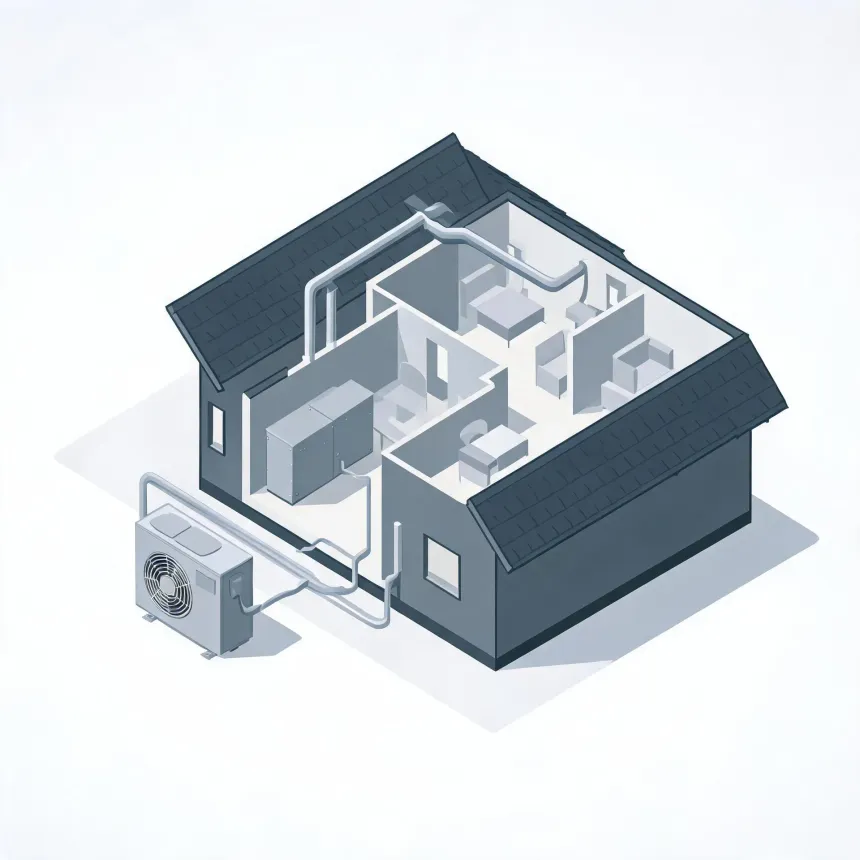
Isometric grayscale illustration of a cutaway house showing interior rooms, ductwork and an indoor air handler connected by lines to an outdoor condenser unit on the ground outside.

Check first, call second.

A tripped breaker or a frozen outdoor coil looks like a dead heat pump but isn't a repair call.

Half these homes were built in 1980 or later, and so was what's heating them

Half the homes here were built by 1980
Climate zone 5B
Power here costs 11.90 cents per kilowatt-hour
September starts it, and that's when weak parts failHomes here start running heat in September and keep it going through June.

If your heat pump came with a newer build here, calling someone out to fix it is usually worth doing. A system installed within the last couple of decades has a lot of working life left in it, and a repair now is cheaper than replacing something that still has years ahead of it. That holds for a mobile home too. Before you decide it's done for, get a straight answer on what's actually wrong with it.

After a storm, get it checked before it fails

A storm can bend the fins or dent the cabinet without knocking the unit out right away. If yours has been through wind or heavy snow, get it looked at now, before a small dent turns into a refrigerant leak or a bent fan blade.

Find a contractor
A gray heat pump outdoor unit mounted on a concrete pad next to a residential house with lap siding and stone accents.

Running heat and cooling through the same compressor wears different parts than an AC alone

A heat pump runs the compressor nearly year round, not just in summer like an air conditioner, and that's what wears it out. The reversing valve is usually the first thing to go. It's what switches the system between heating and cooling, and after years of switching back and forth the seals inside it wear down until it sticks or leaks. A stuck reversing valve shows up as the system blowing cold air when it should be heating, or not switching over at all. The defrost board and sensor fail next most often. The outdoor coil frosts up in cold weather, and the system is supposed to sense that and run a defrost cycle to clear it. When the sensor goes bad, the coil stays iced over and the unit loses its ability to pull heat from the outside air. Capacitors wear out from the compressor and fan motor cycling on and off all day. A weak capacitor makes the outdoor fan start slow or hum without turning, and the compressor can overheat trying to run without it. Low refrigerant from a slow leak shows up as a system that runs longer and longer to keep up, especially on the coldest days, since a heat pump already has to work harder to pull heat out of cold air than an air conditioner does pulling heat out of a warm house.

What you'll notice first

Warm air that isn't warm enough, ice building up on the outdoor unit that never clears, or the system running nonstop without catching up to the thermostat. Sometimes it switches to the wrong mode on its own, blowing cold air in heating mode or heat in cooling mode. A hissing or bubbling sound near the lines outside points to a refrigerant leak. Short cycling, where the unit kicks on and off every few minutes, points to an electrical fault or a dirty sensor.

Why it's worth a look now

None of these signs mean the heat pump is finished. A frozen coil, a bad capacitor, a failing sensor, these are individual parts that fail on their own and get swapped out without touching the rest of the system. What makes them worse is waiting. A compressor forced to run against a stuck valve or a low refrigerant charge takes damage it wouldn't otherwise take, and the compressor is the expensive part to replace. Catching the small failure early keeps it a small failure.

A compressor that keeps running with a problem upstream doesn't just tolerate it, it takes damage from it. Low refrigerant is the clearest case. The compressor is built to pump a specific amount of refrigerant, and when the charge is low it starts pulling in vapor instead of a proper mix, which runs it hotter than it's designed for. Keep that up for days or weeks and the windings inside can break down for good. A frozen outdoor coil does similar harm a different way. Ice blocks the airflow the system needs to pull heat from outside, so the compressor works harder for less result, and liquid refrigerant can end up where only vapor should be, which a compressor can't handle. None of these failures start in the compressor. They end there if nobody steps in first.

Not every failure is worth the same answer, and the part that's gone usually tells you which. A capacitor, a sensor, a contactor, these are cheap, quick to swap, and fixing one brings the system right back to normal. A compressor is a different question. It's the most expensive part in the unit, and if it's failed because of years of wear rather than something upstream choking it, replacing just the compressor can cost close to what a new system runs. Age matters here too, not because a number says so, but because a unit near the end of its working life tends to have a second part fail soon after the first. If the repair shop tells you what actually broke and why, that's enough to decide. If they can't say, get a second opinion before you spend on either option.