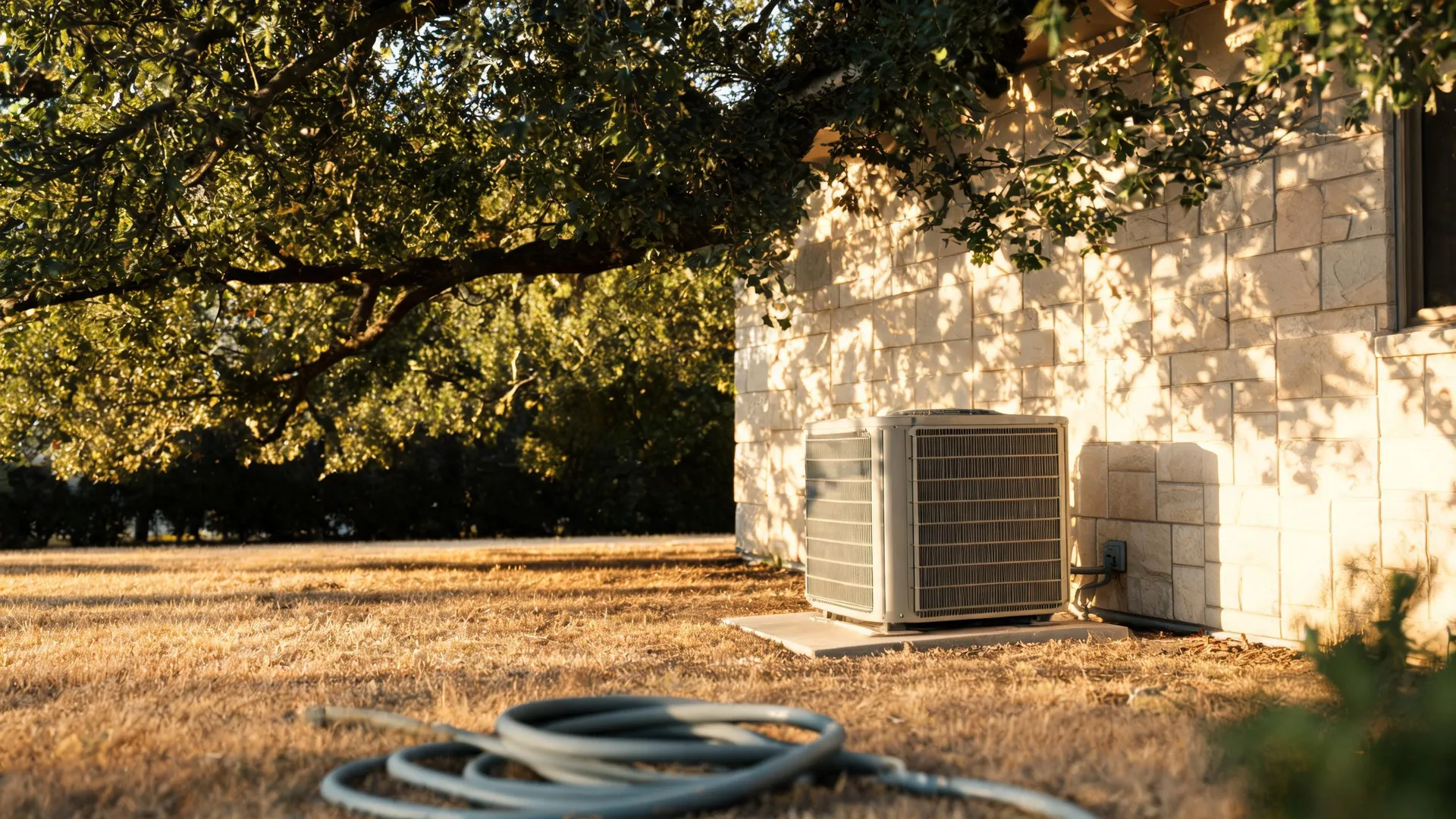
Winters here are cold, not brutal on the unit
Malad City sees overnight lows averaging 18°F through December, January and February. That's real cold, but it's steady cold, not the kind of swing that beats up a heat pump's components over time.
Takes about a minute. No obligation.
Malad City sees overnight lows averaging 18°F through December, January and February. That's real cold, but it's steady cold, not the kind of swing that beats up a heat pump's components over time.
If your heat pump is acting up, it's less likely the climate wore it out and more likely one part failed or maintenance got skipped. That's a repair worth making, since the rest of the system probably has life left in it.

NOAA nClimDiv, 1991–2020 normals
Heat runs here from September through June, close to ten months straight.
August is when a weak part gets found before the long stretch starts, not after.



A heat pump that keeps shutting off or running up the power bill is worth fixing fast here. Idaho homes paid 11.52 cents per kilowatt-hour in 2024, and a unit working harder than it should because of a failed capacitor or low refrigerant charge shows up on that bill every month it runs. A properly working heat pump doesn't need to cost more to run just because it's cold outside. If yours is cycling oddly or not keeping up, the fix is usually a specific part, not the whole system.
Get the actual cause checked before guessing at a fix. A heat pump that's been through steady cold rather than wild swings usually just needs the failed part found and replaced.
Find a contractor
Before anyone comes out, check the thermostat first. Make sure it's set to heat and the set point is actually above room temperature, since a setting bumped by accident looks exactly like a broken system. Next, go to the breaker panel and check that the breakers for both the indoor air handler and the outdoor unit are on. A tripped breaker will shut the whole thing down with no warning sign at the unit itself. Pull the air filter and hold it up to a light. If you can't see light through it, swap it, because poor airflow from a clogged filter can cause ice buildup and make a working unit act like a broken one. Walk outside and look at the outdoor unit. Clear away leaves, snow or anything piled against it, since it needs open airflow on all sides to move heat properly. If you see a heavy, solid sheet of ice covering the coil rather than a light frost, that's worth noting for whoever comes out, but don't chip at it yourself. Last, listen for a few minutes. A steady hum is normal. Clicking that repeats without the unit starting, or a loud buzz, is not something to keep running on.
A heat pump low on charge will keep running, just worse. The compressor works harder to move heat with less refrigerant doing the job, and that extra strain is what burns a compressor out early. Left alone, a small leak stays small for a while, then it doesn't.
A weak capacitor makes the compressor or fan motor struggle to start, and a motor that struggles to start runs hotter every time it does. Keep running it that way and the problem isn't staying put, it's spreading to the next part.
A few signs show up before a heat pump quits for good. Warm air that isn't as warm as it used to be, usually means it's losing ground on refrigerant or airflow. Short cycling, where it kicks on and off every few minutes instead of running a steady stretch, points to a sensor or a control board problem. Ice building up on the outdoor unit when the defrost cycle isn't keeping up is another one, especially if it's not melting off between cycles. A hissing or bubbling sound near the lines usually means refrigerant escaping somewhere it shouldn't. Any of these on its own is worth a call. Several at once means something's been struggling for a while.
A diagnostic visit starts with questions, not tools. What's it doing, when did it start, does it happen heating or cooling or both. Then the contractor checks the thermostat call, the outdoor unit, and the refrigerant charge before anything gets taken apart. Electrical readings come next, the capacitor, the contactor, the wiring at the disconnect, since a lot of heat pump trouble starts there. If the unit runs, they'll watch a full cycle, including defrost, because some problems only show up partway through. The goal is finding the one part actually causing the symptom, not replacing parts until something works.