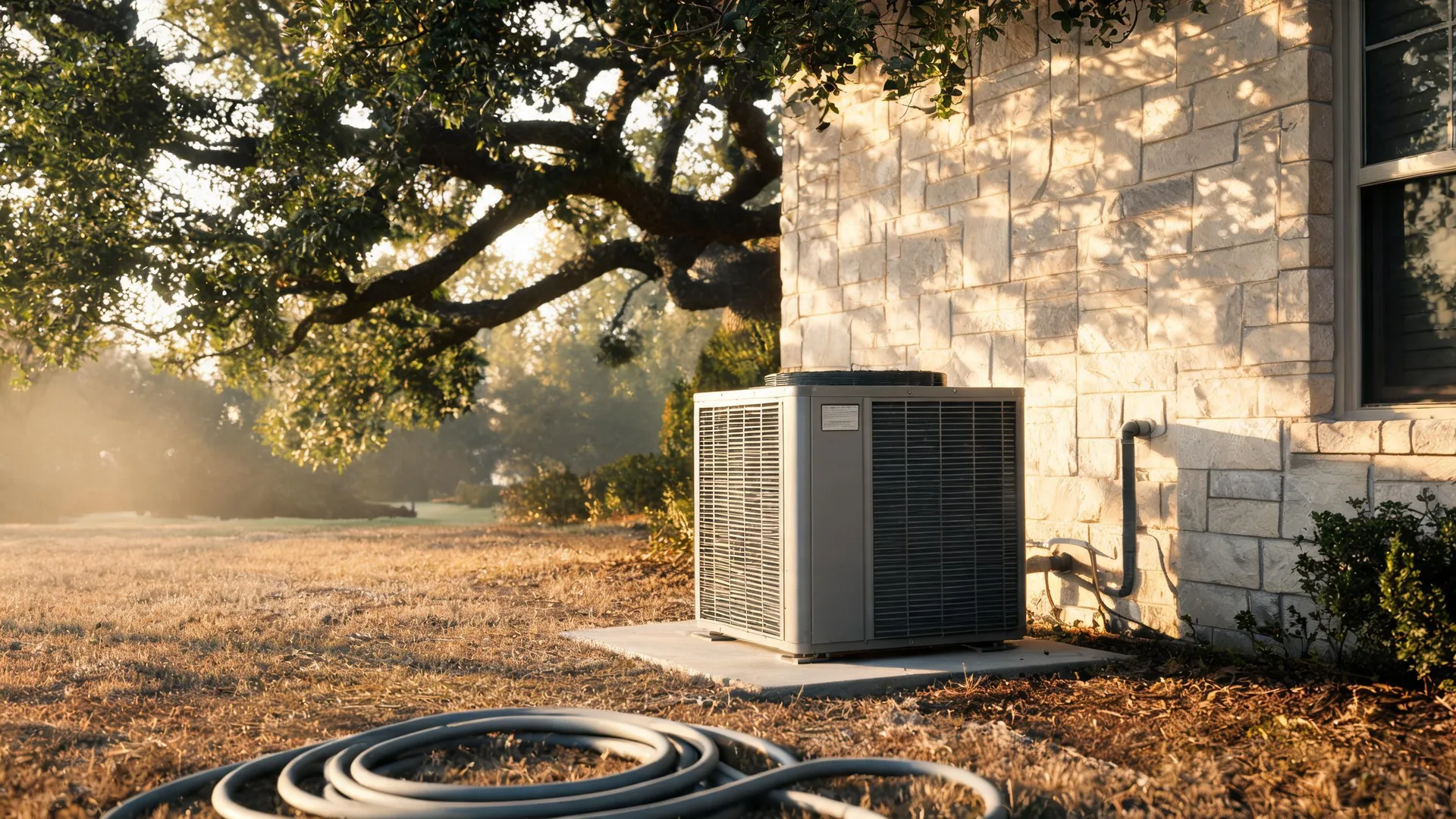
Jerome's housing is young
Half the homes in Jerome County were built in 1983 or later. A heat pump matched to a house that age is often still well within its working life.
Takes about a minute. No obligation.
Half the homes in Jerome County were built in 1983 or later. A heat pump matched to a house that age is often still well within its working life.
When the system came in with a newer house, a breakdown is more likely a single bad part than a system giving out. Worth fixing first, before anyone talks about replacing it.
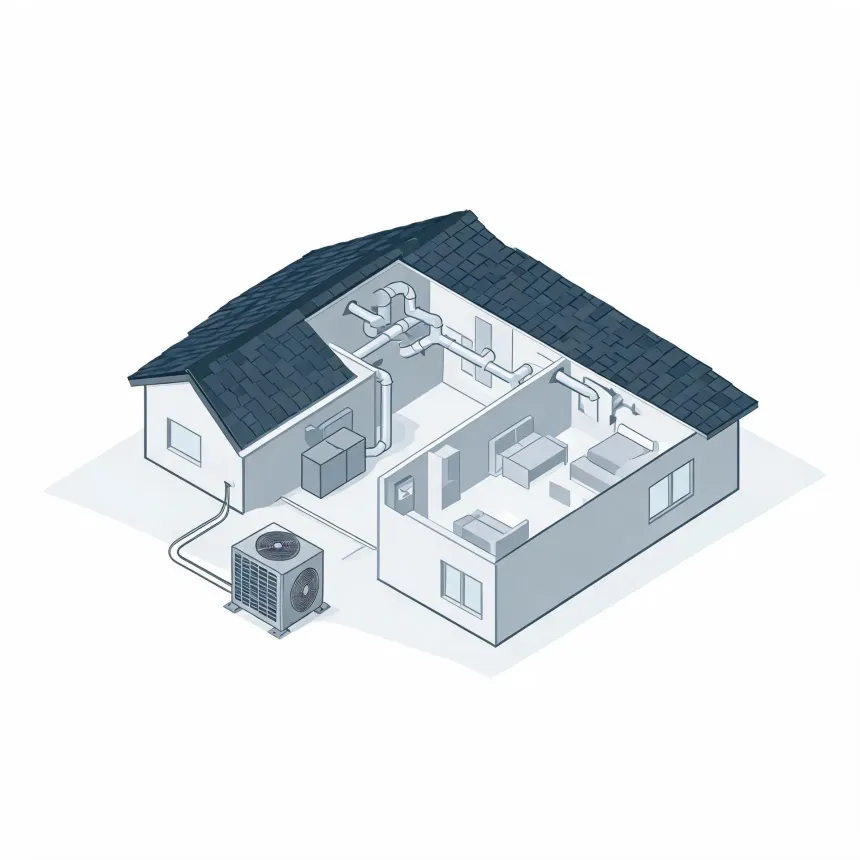
NOAA nClimDiv, 1991–2020 normals
Winter lows here average 22°F, nowhere near the extremes a heat pump has to fight through in colder states.
A heat pump that isn't straining against deep cold tends to hold up well, so a repair now is likely money well spent.

Most heat pump failures start small and electrical, not big and mechanical. A capacitor weakens over months, giving the compressor and fan motor less of a kick on every startup, until one day they don't start at all. A contactor's contacts pit and burn from years of making and breaking the circuit, so the connection gets unreliable before it fails outright. The reversing valve sticks when its coil weakens or debris gets into the valve body, leaving the system stuck heating or cooling when you need the other. Refrigerant doesn't wear out, but a slow leak at a fitting or coil will starve the compressor over time, and that's what actually kills it, not the leak itself. Airflow problems age everything else faster. A dirty coil or clogged filter makes the compressor and motors work harder for the same result, and that extra strain is what shortens their life.
If your system came with a newer house, it likely has plenty of life left. Repair is usually the right call.
Find a contractorA heat pump that's struggling doesn't fail all at once. It keeps running, because the thermostat is still calling for heat, but a weak part makes the rest of the system work harder to get there. A failing capacitor makes the compressor draw harder on every startup until it finally won't start at all. A low refrigerant charge makes the compressor run hotter than it should, every cycle, until it burns out. A dirty coil makes the whole system run longer to move the same heat, which wears every part faster, not just the dirty one. None of this shows up as a sudden stop. It shows up as a system that still runs, still keeps the house close to comfortable, while something inside it gets closer to done. The part that's already weak rarely fixes itself by resting. It fails on its own schedule, and running the system doesn't slow that down.
Look at the outdoor unit first. If the fan isn't spinning, check the breaker before anything else, a tripped breaker is the most common reason a heat pump sits dead. Walk through the house and look at every vent. A closed or blocked one can throw off how the whole system feels even when nothing is broken. Pull the air filter and hold it up to a light. If you can't see light through it, that alone can starve the system of airflow and cause a lot of the symptoms people call about.
Don't take the cover off the outdoor unit or touch anything inside it. The capacitor in there holds a charge even with the power off, and the refrigerant lines run at pressures that need the right gauges to handle safely. If the unit is iced over, don't chip at it. Switching the thermostat to emergency heat, if the system has that setting, stops the outdoor unit and lets the ice melt on its own before a contractor looks at it.
A heat pump in trouble usually tells you before it quits outright. The most common complaint is air from the vents that doesn't feel warm enough, even though the system is running. That often points to the reversing valve, the part that switches the system between heating and cooling, sticking partway. Short cycling is another sign. The system kicks on, runs a couple minutes, shuts off, then starts again soon after. That's hard on the compressor and usually traces back to a refrigerant or airflow problem rather than the thermostat. Ice on the outdoor unit that doesn't clear on its own means the defrost cycle has stopped working, not that the weather is just cold. A system that runs constantly without ever quite catching up to the thermostat is losing the fight somewhere, often a weak compressor or a charge that's down.
A diagnostic visit starts outside, with the contractor watching the outdoor unit run through a cycle before touching anything. Gauges go on the refrigerant lines to check the charge, since too little or too much both throw off how the system heats. An electrical check follows, testing the capacitor and contactor under load rather than just looking at them, because a capacitor can look fine and still be weak. The contractor checks the temperature of the air coming off the indoor coil against the air going in, which says a lot about whether the system is actually moving heat the way it should. If the complaint is weak heat or short cycling, the reversing valve gets tested directly rather than guessed at. The visit ends with a part named, not a guess. That part is what gets fixed.