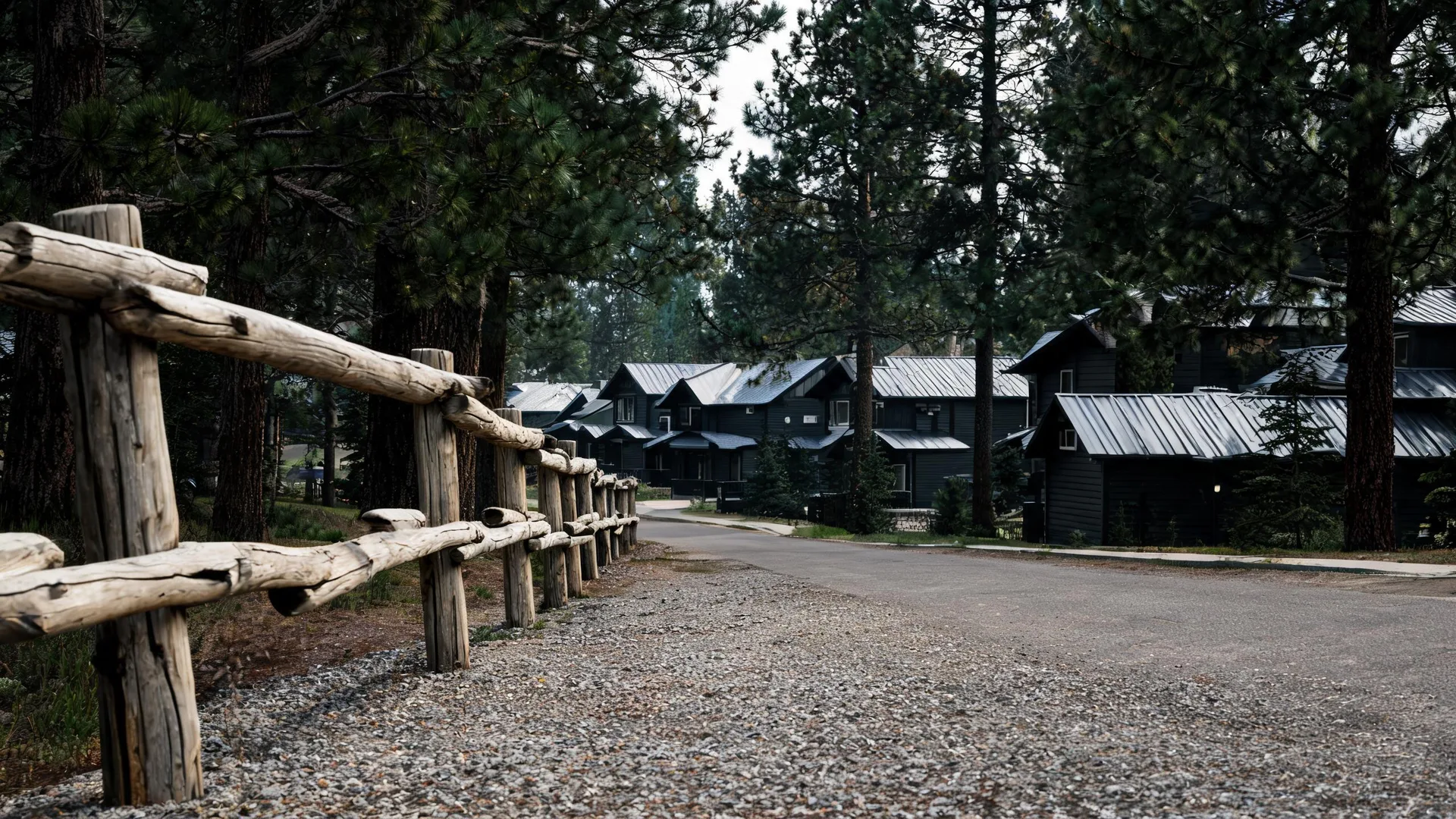






A gravel road bordered by a rustic log rail fence leads past dark-sided houses with metal roofs among tall pine trees.

Heat Pump Repair in Grangeville, ID

Tell us about the job

Takes about a minute. No obligation.

RepairHeat PumpIdaho County, ID
Step 1 of 2

What ZIP code is the job in?

Winter here is steady cold more than extreme cold. Overnight lows average 18°F through December, January and February, well within what a heat pump is built to run in. The harder things on a system are sudden shocks, wind and hail, and Idaho County doesn't see much of either. Winter storms pass through more, 66 times over the past decade, but a heat pump sitting through steady cold holds up better than one getting hammered by swings and surges. So when a heat pump here starts acting up, it's rarely the climate that wore it down. More often it's age catching up with a part, or something that got missed.

10 months
September through June, your system heats
18°F
the average winter night it heats against
75°F
the average summer afternoon it cools against
Isometric cutaway illustration of a two-room house showing an indoor air handler with ductwork connected by lines to an outdoor condenser unit on a pad.

Heat pumps here start the season in September.

The first cold snap finds whatever part was already weak.

Grangeville doesn't stress a heat pump. A worn part does.

Power costs 11.52 cents a kWh statewide
Climate zone 5B
Heat runs September through June

Half the homes in Idaho County were built in 1977 or earlier, so plenty of heat pumps here are tied into older ductwork and older electrical panels. That doesn't make the heat pump itself more likely to fail, but it does mean a repair sometimes turns up a second issue nearby, like a breaker that's undersized for the unit it's protecting. Mobile homes make up a real share of the housing stock here too, and those often run a different kind of heat pump setup than a house with central ducts. None of this is the climate's doing. It's just worth checking what's actually installed before assuming the heat pump is the only thing at fault.

Get the real cause found, then decide

A heat pump that's held up fine against steady cold is usually worth repairing rather than replacing. If yours is acting up, get the actual part identified before deciding anything else.

Find a contractor
A man in a gray T-shirt and tan work pants, seen from behind, carries a worn canvas tool bag up concrete steps toward a blue front door of a house with gray siding and a potted shrub.
A dark gray heat pump unit mounted on a concrete pad next to a house with gray siding and a stone veneer wall.

Running it longer doesn't buy you anything

A heat pump that's struggling still tries to meet the thermostat setting, and that's what causes the damage. A failing capacitor makes the compressor draw harder to start each cycle, and that extra strain shortens its life. A low refrigerant charge lets the compressor run hot, and heat is what kills compressor windings over time. A dirty outdoor coil makes the system work harder to move the same heat, so every part downstream from the coil runs under more load than it should. None of this fixes itself by running longer. The cycle just repeats, and whatever is weak gets weaker, until the part that was struggling is the part that fails.

It won't switch over cleanly

A heat pump in heating mode should blow warm air, not room-temperature air that never quite feels right. If it's running most of the time and still losing ground to the thermostat, the reversing valve may not be shifting all the way, or the charge is low. Either way the system is working to produce less heat than it should.

Ice is normal, too much ice isn't

Some frost on the outdoor unit during a cold snap is expected, and the defrost cycle should clear it on its own every so often. If the coil stays coated in thick ice, or you see ice building on the refrigerant lines running into the house, the defrost control or a sensor isn't doing its job. Left alone, that ice blocks airflow across the coil and the compressor ends up working against it.

Most heat pump failures trace back to a handful of parts that do the hardest work. The compressor usually fails because something upstream let it run hot or strained for too long, not on its own. Capacitors weaken with age and heat cycles, and once one is weak the compressor or fan motor it starts has to fight to get moving every time. The reversing valve is what switches a heat pump between heating and cooling, and after years of shifting back and forth it can stick or start leaking internally. When that happens the system stops delivering the mode you asked for. Contactors pit and burn from the arcing that happens every time they open and close, until one day they stop making contact at all. A weak capacitor or a stuck contactor is a straightforward repair. A compressor on its way out changes the conversation.

A compressor failure late in a heat pump's life is the clearest case for replacing instead of repairing. The compressor is the most expensive part in the system, and if it failed because of years of strain, a new one is sitting inside a cabinet that's aged the same amount. Everything else sits on the other side of that line. A reversing valve, a capacitor, a contactor, these are parts that fail on their own schedule, separate from how old the rest of the unit is, and swapping one out brings the system back to normal without touching anything that was working fine. The real question is whether the part that broke was the cause or just the first thing to give out. A capacitor that failed from age is its own problem. A capacitor that failed because the compressor was already drawing too hard is a symptom, and fixing it alone just buys time before something else goes.