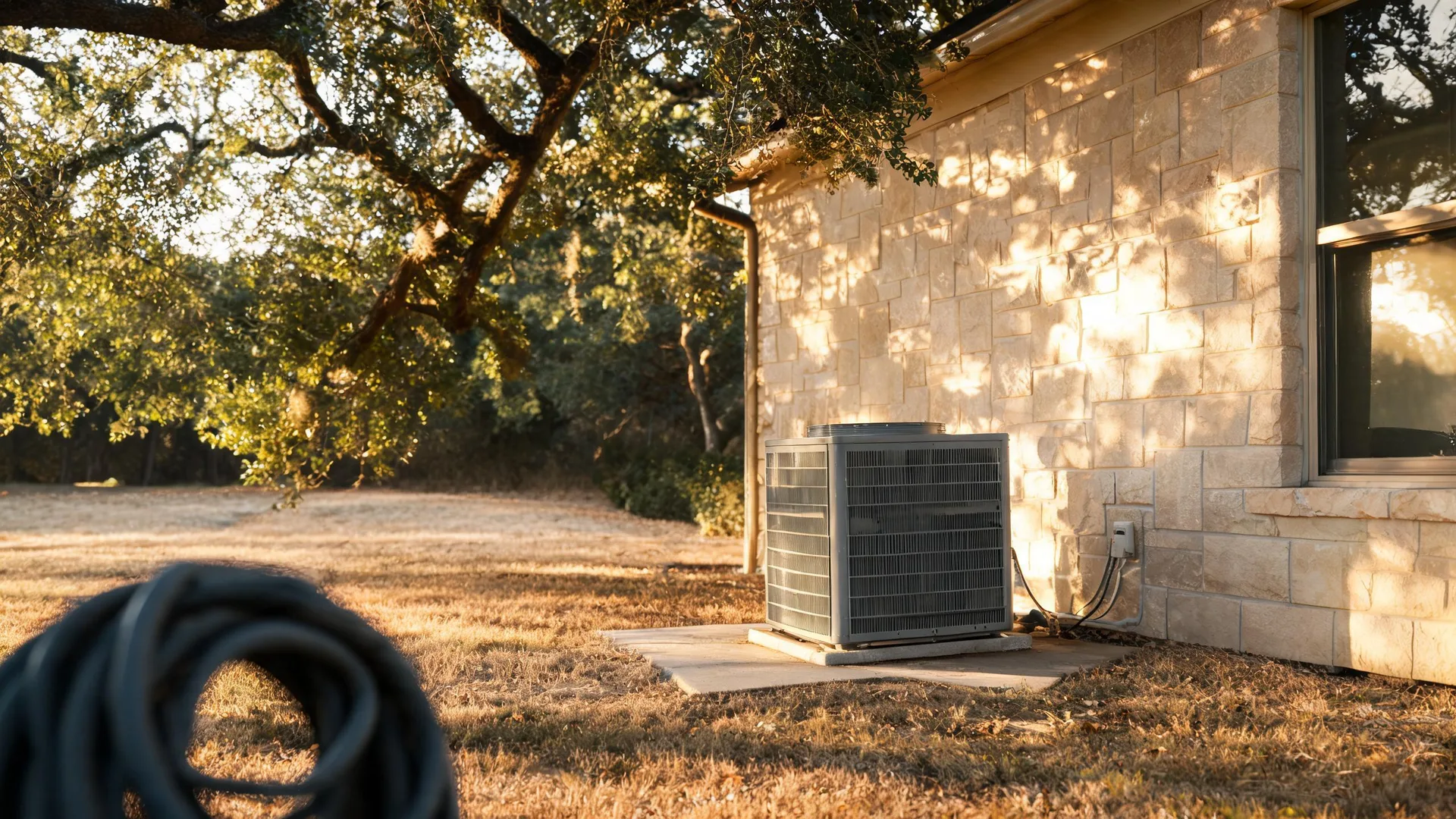
The outdoor unit takes a beating here
Damaging wind hit Butte County 144 times between 2015 and 2024. Winter storms with heavy snow and ice came through 92 times in that same span. The outdoor unit sits through all of it, running the whole time.
Takes about a minute. No obligation.
Damaging wind hit Butte County 144 times between 2015 and 2024. Winter storms with heavy snow and ice came through 92 times in that same span. The outdoor unit sits through all of it, running the whole time.
A heat pump that runs through wind and ice year after year wears differently than one in a calm climate. When a part fails here, the cause is worth finding before anything gets replaced, since whatever wore out that part is likely still there.

NOAA nClimDiv, 1991–2020 normals
Half the homes in Butte County were built in 1971 or earlier.
A heat pump in a house that old is likely not the first one it's had, and yours may already be closer to the end than you think.



Electricity here runs 12.44 cents per kilowatt-hour, cheaper than most of the country. That's the one break homeowners in Butte County get. A heat pump that's lost its charge or is fighting a bad component doesn't care about cheap power. It draws more to do the same job, and with a heat pump running most months of the year, that difference lands on every bill you get. A unit working the way it's supposed to is the only way to keep that low rate meaning something.
A repair can tell you what's wrong today. It won't tell you how many years are left in the unit. Before you pay for the fix, ask the contractor what shape the rest of the system is in. If it's original to the house, that answer matters as much as the repair itself.
Find a contractorA heat pump does not have an off season. Furnaces and straight air conditioners work half the year and rest the other half, but a heat pump switches from cooling to heating and back without a break between. The compressor that ran all summer is the same compressor working the coldest nights of winter, with no stretch of months to sit idle. Parts wear by two measures, how many hours they run and how many times they start and stop. A heat pump running nearly year round accumulates both faster than equipment that only works part of the year. That is not a flaw in the machine. It is just more hours on the same parts, and more hours is what shortens the time before something needs attention.
A heat pump low on charge will keep running, and it will keep heating or cooling the house after a fashion. But the compressor is built to pump a specific amount of refrigerant, and running it short makes it work harder to move heat. Oil travels through the system mixed in with the refrigerant, so a low charge also means the compressor is getting less lubrication than it needs. Keep running it that way and the small leak that caused the problem turns into a compressor that has to be replaced.
When a component is failing, something else in the system usually picks up the slack for a while. A weak capacitor makes the motor strain to start. A dirty coil makes the compressor run longer to move the same heat. That compensation hides the problem, but it does not fix it, and it puts wear on parts that were working fine before. The part that fails next is often not the one that was going bad in the first place.
Before anyone comes out, there are a few things worth checking yourself. Look at the outdoor unit first. If it is caked in ice, ice that does not clear during the defrost cycle, or packed in with snow, clear what you can reach and see if that alone changes anything. Check that nothing is blocking airflow around it, no branches, no drifted snow against the side. Inside, check your thermostat batteries and make sure it is set to the mode you think it is in, since a heat pump stuck in the wrong mode can look like a bigger problem than it is. Check your air filter. A filter clogged with dust restricts airflow across the indoor coil, and that alone can make a heat pump run constantly without heating or cooling the way it should. Look at your breaker panel too. A tripped breaker will shut the whole system down and reset it yourself if you find one, but if it trips again, stop and leave that to a contractor. None of this fixes a refrigerant leak or a failed compressor, but it rules out the simple stuff before you pay someone to find it.
A repair bill is a one-time number. Running a struggling heat pump every day until you get to replacement is not. Cheap power here only pays off if the unit is actually efficient, and one that's lost charge or is straining on a bad part draws more to do the same job. That cost shows up on every bill, not just the next one. If this heat pump is old enough that the repair is really a stopgap, what it costs to run while you wait is part of the decision, not separate from it. Weigh the fix against replacement now, before another season of paying for a machine working harder than it should.