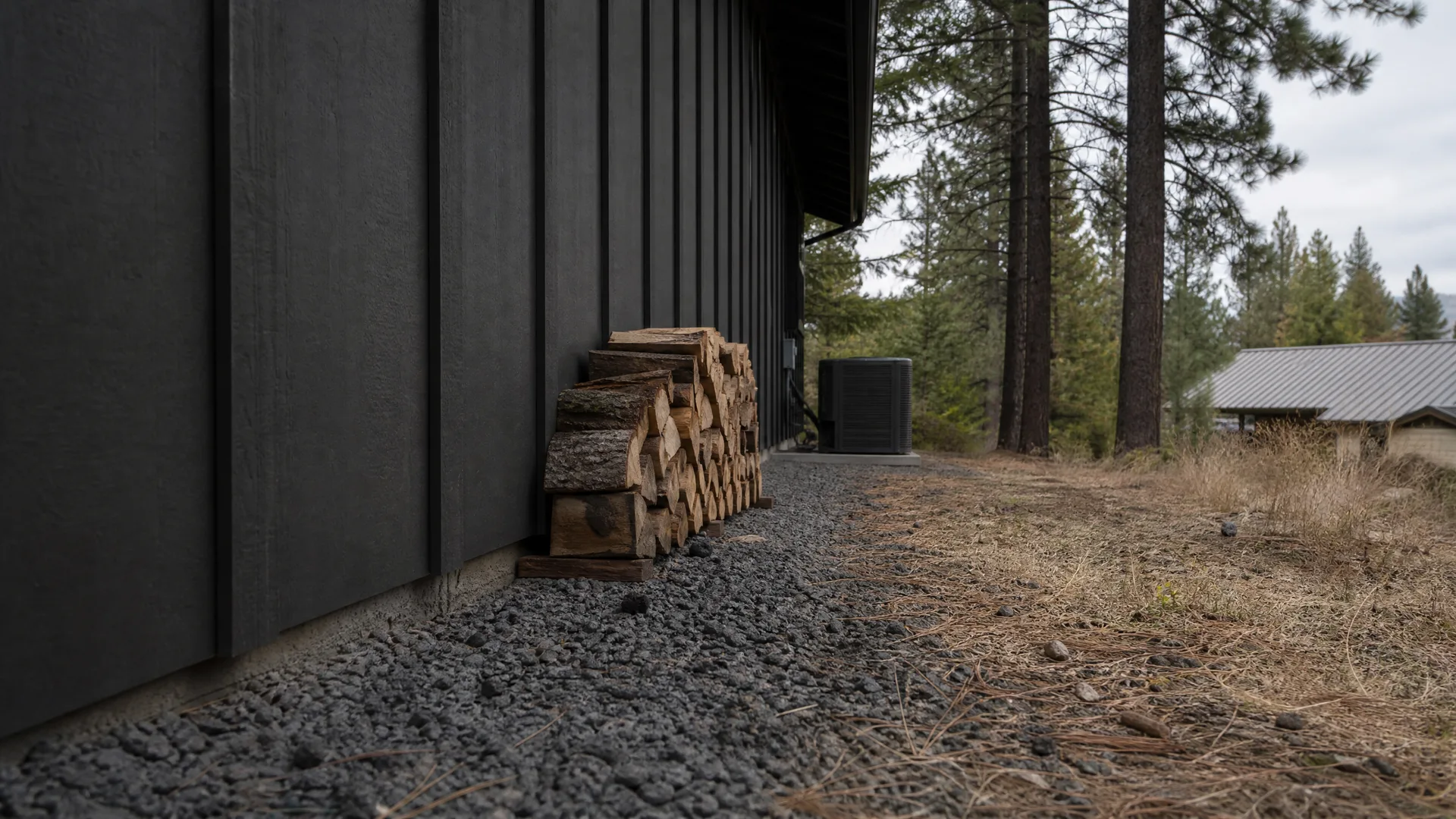





Dark vertical wood siding along the side of a house with a stack of split firewood and an outdoor condenser unit on a gravel strip, with pine trees, dry grass and a metal-roofed outbuilding in the background.

Heat Pump Installation in Weiser, ID

Tell us about the job

Takes about a minute. No obligation.

New system or replacementHeat PumpWashington County, ID
Step 1 of 2

What ZIP code is the job in?

Electricity heats 46.2% of homes in Washington County, more than any other fuel. Gas is second at 31.7%, with LP gas a distant third at 6.1%. A heat pump fits naturally where electric heat is already common, since the wiring and setup homeowners expect are already in place. Replacing an electric furnace or baseboard heat with a heat pump keeps the same fuel type while adding cooling for summer.

9 months
September through May, your system heats
2 months
July through August, it cools
22°F
the average winter night it heats against
83°F
the average summer afternoon it cools against
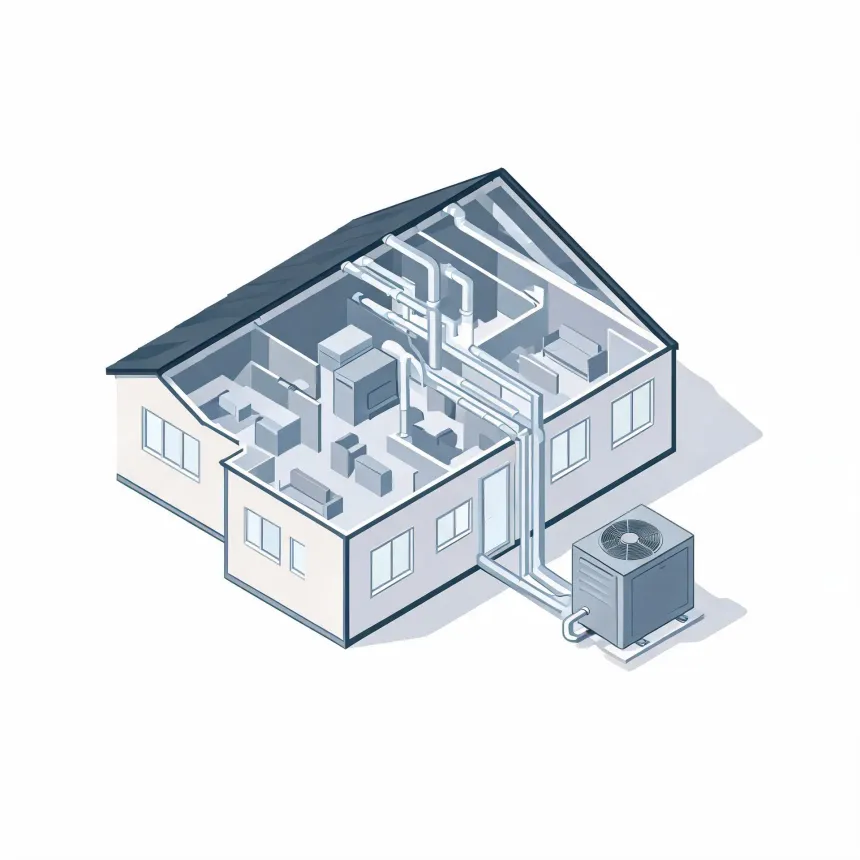
Isometric illustration of a cutaway single-story house showing interior ductwork and vents connected to an outdoor condenser unit beside the building, on a white background.
Your system heats September through May and cools July through August.

NOAA nClimDiv, 1991–2020 normals

Half the homes in Washington County were built in 1975 or earlier, half in 1975 or later.

A heat pump sized to the house handles either age fine, no special equipment needed.

August is the month to get it installed, before heat season starts in September

Cooling runs July through August
Heat runs September through May
85 winter storms from 2015 to 2024

A heat pump here has to meet zone 5B's efficiency minimums, and the federal credit can help offset it

Weiser sits in climate zone 5B, where winters drive the heating bill more than summers drive cooling. Any split-system heat pump installed here has to meet the federal minimum of 14.3 SEER2 and 7.5 HSPF2, so the equipment going in is already built for a heating-first climate. A federal tax credit is available on qualifying heat pump installations, worth checking against whatever system you're considering.

Find a contractor
A man in a cap, work jacket and tan trousers carries a canvas tool bag up wooden porch steps toward a blue front door of a house with lap siding.
A white mini-split heat pump outdoor unit mounted on a concrete pad beside a gray-sided house, surrounded by gravel and green shrubs.

Sized to the house, not the house it replaced

A heat pump that's too big cools the house fast, shuts off, and starts again a few minutes later. That short cycle never runs long enough to pull moisture out of the air or settle into a steady rhythm. One that's too small runs constantly during the coldest or hottest stretches and still can't keep the house where you set the thermostat, leaning hard on backup heat strips to make up the difference. Getting it right starts with a load calculation, not a swap of whatever tonnage was there before. A contractor works through the square footage, the insulation, the windows, the duct layout, and which way the house faces, then sizes the equipment to what the house actually loses and gains. The compressor outside and the air handler inside have to be matched to each other too. Mismatched equipment won't hit its rated output no matter how well either piece is built on its own.

Ask for the heating output at the coldest expected temperature

Every heat pump loses capacity as the outdoor air gets colder, and the rate of loss varies by model. A rating on the showroom sheet is measured under mild conditions and does not tell you what the unit puts out on the coldest night. Ask the contractor for that number specifically, and ask where backup heat is set to kick in when the unit can't keep up on its own.
Ask what happens to the ductwork, not just the equipment

A heat pump moves air differently than the furnace or baseboard setup it replaces. It runs longer at a lower output rather than short blasts of high heat, and ducts sized for the old system can end up too small or too leaky for that. When that happens, some rooms never quite reach the thermostat setting no matter how good the new equipment is. Ask whether the ductwork was checked against the new system's airflow, not just reused as is.

The equipment itself is only part of what you're paying for. Labor is the other part. That means running new line sets between the outdoor unit and the air handler, modifying ductwork, setting a condensate line, and wiring a dedicated circuit if the old system didn't need one. A straight swap, where the new unit goes where the old one sat and uses the same connections, costs less in labor than a heat pump going somewhere a furnace or baseboard never was. Electrical work adds to the job too. A heat pump draws differently than what it replaces, so the panel may need a new breaker or the wiring may need to be upsized to carry the load. Backup heat strips, if the system uses them, bring their own wiring requirements. None of this shows up on the price tag of the unit, but all of it shows up on the invoice.

Installation day starts with the old equipment coming out, not the new equipment going in. If there's a furnace or air handler being replaced, that gets disconnected and hauled out first, along with the old outdoor unit. The line set gets run between where the outdoor unit sits and where the air handler goes, and that line gets pressure tested before any refrigerant goes in. A bad connection here shows up as a slow leak months later. Electrical work usually happens alongside this. A new circuit gets run, a disconnect box gets set next to the outdoor unit, and backup heat strips get wired in if the system uses them. Once everything is connected, the system gets charged to the manufacturer's spec and run through its paces. The contractor checks airflow at the vents, checks the temperature split between the air going in and the air coming out, and confirms the thermostat is talking to the equipment the way it should. A system that looks finished but was never checked this way can run fine for a while before a problem shows itself.