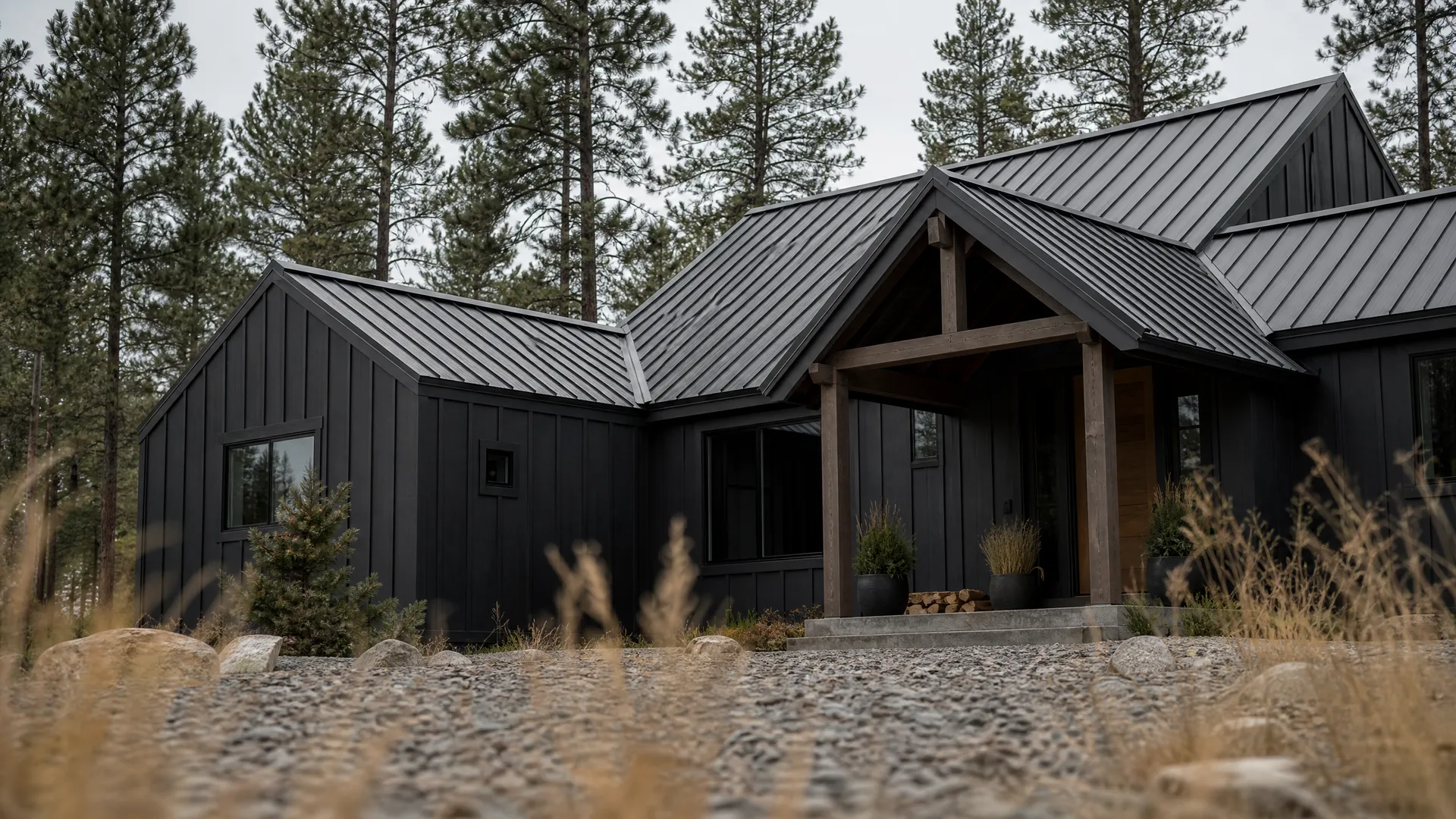






A single-story black board-and-batten house with a standing-seam metal roof and timber-post covered entry, surrounded by pine trees, dry grasses and a gravel foreground.

Heat Pump Installation in Victor, ID

Tell us about the job

Takes about a minute. No obligation.

New system or replacementHeat PumpTeton County, ID
Step 1 of 2

What ZIP code is the job in?

A standard heat pump sized to your house is the right call here. There's nothing about Victor that calls for oversizing a system or stepping up to a premium tier. Idaho homes paid 11.52 cents per kilowatthour in 2024, well under what most of the country pays, so running cost shouldn't push you toward a pricier unit either. A contractor will size the system to your square footage and your home's heat loss, not to the climate being unusual, because it isn't. Spend on the size and installation quality. The rest is marketing.

10 months
September through June, your system heats
12°F
the average winter night it heats against
75°F
the average summer afternoon it cools against
Isometric cutaway illustration of a single-story house showing interior ductwork, an air handler and rooms, with an outdoor condenser unit connected by refrigerant lines on a plain white background.

Heat in Victor starts up in September and runs clear through June.

Get a heat pump installed in August and it's ready before the first cold morning, not scrambled in behind it.

Wind, snow and 12 degree nights, same system that works everywhere else

45 damaging wind events from 2015 to 2024
118 winter storms from 2015 to 2024
Winter nights average 12°F

Teton County is zone 6B, cold with winters that run long. Any split-system heat pump installed here, if it was built from 2023 on, has to hit federal minimums of 14.3 SEER2 for cooling and 7.5 HSPF2 for heating. That floor applies everywhere, not just in Victor, but it already rules out the weaker units some warmer parts of the country can still get away with. A contractor sizing your system will land on equipment that clears those numbers as a matter of course. There's also a federal tax credit for qualifying heat pumps, worth checking into when you're comparing units.

Go with the standard fit

A standard size and efficiency fit fine here. There's no local reason to go bigger or pricier.

Find a contractor
A man in a cap, dark shirt and tan work pants, seen from behind, carries a canvas tool bag up steps toward a blue front door beside a potted shrub.
A gray air-source heat pump mounted on a concrete pad next to a house with gray vinyl siding, surrounded by gravel and flanked by green shrubs and white hydrangea flowers.

What moves the number besides the equipment

The unit itself is only part of the bill. What it sits on, how far the line set has to run, whether the electrical panel can take the new circuit as is or needs upgrading, and how much duct or line hiding the installer has to do all move the number. A straightforward swap, same spot, same power, goes faster than a setup that needs a new disconnect or a longer run between the outdoor unit and the air handler. Ask what your site needs before you compare quotes, because quotes that look close on paper can be pricing different jobs underneath.

Ask for the heat loss number, not just a square footage guess

Square footage alone does not size a heat pump. A contractor should walk the house, check the windows and insulation, and run a load calculation that tells them how much heat the place actually loses on a cold day. Homes the same size can need different size units depending on how they're built. If nobody mentions doing this math, ask why not.

Ask what happens on the coldest nights

Every heat pump has a point where it can't pull enough heat from the outside air and needs backup, usually electric resistance heat, to carry the rest of the load. Ask what that backup is, when it switches on, and whether it's built into the air handler or added separately. A system sized and set up well leans on backup heat rarely, not constantly.

A heat pump too big for the house short cycles. It blasts heat fast, hits the thermostat setting, shuts off, then kicks back on a few minutes later because the house cooled off again before the system wrung the moisture and evened out the air. That's harder on the compressor than a longer, steadier run, and it leaves rooms feeling clammy or uneven. Too small, and it runs constantly on the coldest days, leaning on backup heat more than it should. The right size does neither. It runs long, steady cycles that match what the house is actually losing to the cold outside, which is the whole point of the load calculation.

If you're replacing a furnace or an old heat pump, the installer still has to deal with what's coming out, not just what's going in. An old gas furnace gets disconnected from the gas line, and that line gets capped off properly, not just shut at the valve. An old heat pump or AC unit has refrigerant in the lines, and that has to be recovered with the right equipment before anything gets cut apart or hauled off, not vented into the air. Ductwork usually stays and just gets connected to the new equipment, unless it's undersized or leaky enough that the contractor flags it during the walkthrough. The old equipment itself gets hauled away as part of the job. If your old system used a fuel the new heat pump won't, like oil or propane, ask what happens to that tank or line, since that's a separate piece of work from the heat pump install itself.