Gas heats most homes here
Utility gas heats 61.8% of occupied homes in Caribou County. Electricity accounts for 15.7%, and propane another 14.5%. A furnace is still the most common piece of equipment in houses around Soda Springs.
Takes about a minute. No obligation.
Utility gas heats 61.8% of occupied homes in Caribou County. Electricity accounts for 15.7%, and propane another 14.5%. A furnace is still the most common piece of equipment in houses around Soda Springs.
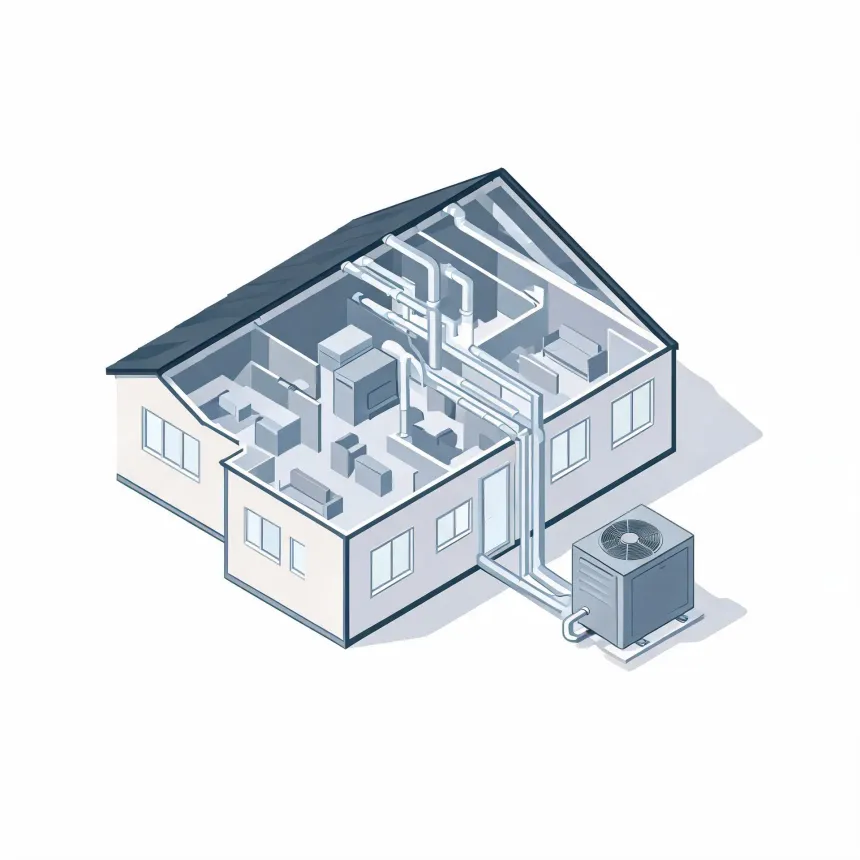
Installing a heat pump in a home built around gas heat means adding a system that handles both heating and cooling from one unit. The ductwork and electrical panel need to work for a heat pump's demands, not just a furnace's, so that part of the job is worth asking about up front.
Heat here starts in September and runs through June.
Get the heat pump in before August ends, so the install happens on your schedule, not during the first cold week.




Half the homes in Caribou County were built in 1972 or earlier. A house that old wasn't built with a heat pump in mind, and the ductwork or panel sized for a gas furnace may not be sized for one. Heat pumps move a different amount of air than a furnace does, and they draw more from the electrical panel. Before anything gets installed, both need a look to see what they can handle. A system that doesn't fit the house it's going into will struggle to keep up, no matter how good the equipment is.
A standard-size heat pump, properly matched to your home's ductwork and panel, is what this job calls for. Nothing about Soda Springs pushes you toward bigger equipment or a higher efficiency tier than usual. Idaho homes paid 11.52 cents per kilowatthour in 2024, and sizing the system right is what keeps that number working in your favor.
Find a contractorHave the ductwork and panel checked before the quote, not after. A contractor can look at both in the same visit they come out to size the system. If the panel's too small for a heat pump, that's a conversation to have before equipment gets ordered, not once it's sitting in your driveway.
The number on the label gets measured across a whole winter and a whole summer, mild days blended in with the harshest ones. A unit can carry a high rating and still draw hard on the coldest night, because that one number is smoothing all of it together. It tells you how the system behaves over months, not what it will do on any single day.
Heat pumps earn a higher rating by adding stages of compression, a variable-speed motor, or a larger coil, not by some trick of design. More parts moving means more that can eventually need service, and more for the installer to size correctly from the start. The number on the tag doesn't say whether the ductwork or panel behind it can actually support a unit built that way.
If the old furnace or heat pump is on its way out, the contractor will disconnect it once the new system is ready to take over, so there's no gap in heat or power. The gas line gets capped off if nothing else in the house still runs on it. Old refrigerant lines get reclaimed rather than opened to the air, since the refrigerant inside isn't something that's allowed to just vent out. The outdoor unit and any ductwork being replaced get hauled off with the rest of the equipment. None of this is something the homeowner needs to arrange separately. It's part of the same visit that puts the new system in.
Bigger isn't better when it comes to sizing a heat pump. An oversized unit cools or heats the house fast, shuts off, then kicks back on a few minutes later. That short cycling wears on the compressor. It also leaves rooms clammy in summer, because the unit never runs long enough to pull moisture out of the air. An undersized unit has the opposite problem. It runs constantly and still never quite catches up on the coldest or hottest days. Getting it right means a contractor works out how much heat the house loses in winter and gains in summer, room by room, not just a guess based on square footage. A unit matched to the house runs in long, steady cycles. That's how a heat pump is meant to operate.