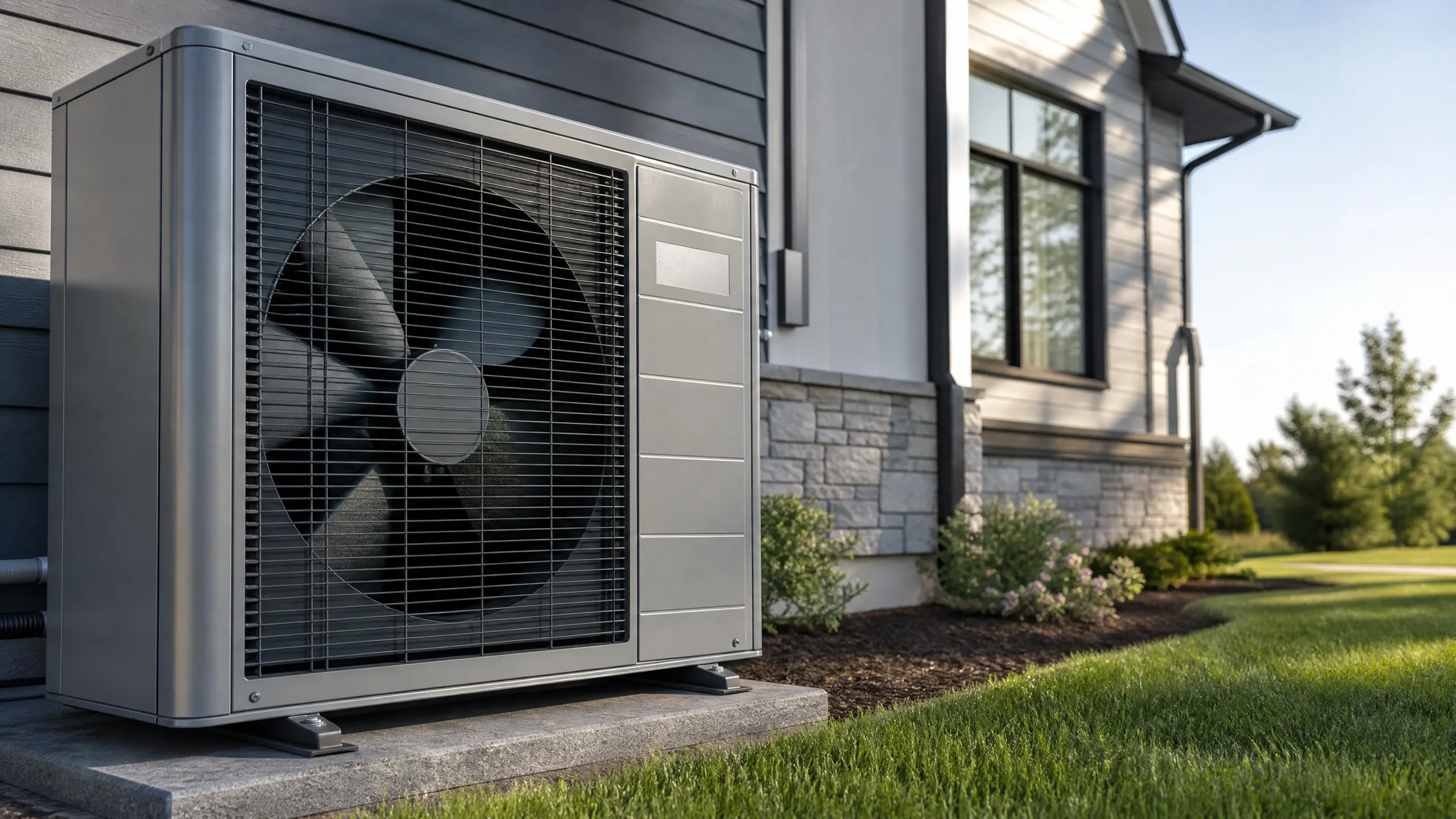





A grey heat pump outdoor unit mounted on a concrete pad against the exterior wall of a house with grey siding and stone veneer.

Heat Pump Installation in Sandpoint, ID

Tell us about the job

Takes about a minute. No obligation.

New system or replacementHeat PumpBonner County, ID
Step 1 of 2

What ZIP code is the job in?

Electricity heats more homes in Bonner County than any other fuel, 35.8 percent, with gas making up a smaller share at 22.2 percent and propane at 11.6. A heat pump fits into that electric majority without asking for a new fuel line or a propane tank. If your home already heats with electric baseboards or an older electric furnace, swapping in a heat pump gives you the same power hookup but adds cooling you didn't have before. Homes on propane or gas can still make the switch, it just means checking what's feeding your current system before a contractor sizes the new one.

10 months
September through June, your system heats
22°F
the average winter night it heats against
75°F
the average summer afternoon it cools against
Isometric cutaway illustration of a small house showing interior ductwork and an air handler connected by lines to an outdoor condenser unit on a pad beside the building.

A standard heat pump sized to your home works fine in Sandpoint.

No special equipment or oversizing needed here, just a correct load calculation.

Winter storms and outages here don't change what size heat pump you need

392 severe weather events from 2015 to 2024
11% of homes statewide lost power a day or more in 2024
43 damaging wind events from 2015 to 2024

Heat runs here from September through June, about ten months a year. That long a season is worth planning around instead of reacting to. August is the month to get a new heat pump installed and running before the house needs it. Installing in August also gives a contractor time to check the ductwork or line set without you waiting on heat, and it gives you time to learn the thermostat and settings before the cold sets in. Wait until the house is already cold and you're choosing a system in a hurry, with less room to compare options.

Meet the standard here

A new system here has to meet this region's minimum efficiency, which limits what can go in.

Find a contractor
A residential heat pump outdoor unit mounted on a concrete pad next to a house with gray vinyl siding.

What you're actually paying for

Installation cost mostly comes down to how much has to change to get the new system in. A straight swap, same spot, same line set, same ductwork, costs less because the crew is connecting new equipment to what's already there. The price climbs when the ductwork needs rework, when the electrical panel needs more capacity, or when the line set has to be replaced instead of reused. Sizing matters too. A unit matched to your home's actual heat loss costs what it costs, but an oversized one cycles on and off more than it should, and an undersized one runs constantly without keeping up. Ductless systems skip ducts entirely but price out per zone, so a home needing several indoor heads pays for each one. The backup heat source factors in as well. Electric resistance strips are simpler to install than tying into an existing furnace for dual fuel, though that choice shapes how the system runs for years, not just what it costs to put in. Labor is a real share of the bill too, since proper installation means brazing the line set, pulling a vacuum to clear out moisture and air, and charging the system to the amount the manufacturer specifies. Skipping that work costs nothing today and shortens the compressor's life later.

Ask for the heat loss number, not just a model name

A contractor should walk the house, measure windows, walls and insulation, and come back with a load calculation in actual numbers. If someone quotes a system size off the old equipment or a square footage guess, ask why they skipped the calculation. The load number is what every other decision depends on.
Ask what happens below the balance point

Every heat pump has a temperature where it can no longer pull enough heat from the outside air to keep up on its own. Below that point, backup heat has to take over. Ask what the backup source is, how the system decides to switch over, and whether that switch happens automatically or needs a manual setting changed.

Sizing a heat pump starts with a room by room heat loss calculation, not a guess based on the old unit or the square footage of the house. A contractor measures the windows, the wall construction, the insulation and the ceiling height, then works out how much heat the house actually loses on the coldest day. That number drives everything else. Too big and the system short cycles, reaching the thermostat setting fast and shutting off before it's pulled moisture out of the air or warmed the place evenly. Too small and it runs constantly, leaning on backup heat more than it should and wearing down parts meant to carry the load, not fight it. The right size is the one matched to the house in front of it, not a model picked off a chart.

Install day starts with the outdoor unit and the indoor coil or air handler, set in place and connected by a line set that carries refrigerant between them. That line set gets brazed, not just fitted together, since any joint that isn't sealed tight will leak refrigerant over time. Once it's connected, a contractor pulls a vacuum on the whole system to draw out moisture and air, because either one left behind damages the compressor down the road. Only after the vacuum holds does the system get charged with refrigerant to the exact amount the equipment calls for. Electrical work runs alongside this, tying the outdoor unit and any backup heat into the panel on its own circuit. The thermostat gets wired last and set up to run the heat pump and backup heat the way they're meant to work together, not against each other.