




A gravel road lined by a split-rail log fence on the left and dark-sided cabins with metal roofs on the right, surrounded by tall conifers under an overcast sky.

Heat Pump Installation in Mountain Home, ID

Tell us about the job

Takes about a minute. No obligation.

New system or replacementHeat PumpElmore County, ID
Step 1 of 2

What ZIP code is the job in?

Most homes in Elmore County heat with utility gas, at 53.4 percent. Electricity is next at 33.5 percent, with a smaller share on bottled or LP gas. A heat pump runs on electricity, but it moves heat instead of burning fuel for it, so it works differently than the gas furnace most homes here already have. If your home is on gas now, a contractor can tell you whether a heat pump fits alongside that system or in place of it, since that depends on your ductwork and what's already run to the house.

10 months
September through June, your system heats
2 months
July through August, it cools
21°F
the average winter night it heats against
83°F
the average summer afternoon it cools against
Isometric line illustration of a cutaway single-story house showing interior rooms, ceiling ductwork, an indoor air handler unit, and an outdoor condenser connected by a line set.
Your system heats September through June and cools July through August.

NOAA nClimDiv, 1991–2020 normals

Idaho homes paid 11.52 cents per kilowatt-hour in 2024, and that rate is what a heat pump here has to run against.

A standard size and efficiency tier covers that fine. There's no local reason to pay more for a bigger or higher-tier unit.

84 winter storms and 21°F nights, nothing here to work a heat pump hard

36 damaging wind events from 2015 to 2024
84 winter storms from 2015 to 2024
Winter nights average 21°F

Mountain Home sits in zone 5B, a cool, dry climate where heating carries most of the load. Any split-system heat pump installed here now has to meet 14.3 SEER2 for cooling and 7.5 HSPF2 for heating, the federal minimum for units built since January 2023. That floor applies everywhere, so it isn't a local upgrade, it's what a contractor can legally install. Ask what tier a quote is built around, since going above that floor is a choice about your utility bill, not a requirement of the climate here.

Install before August, so it's running before you need the heat

Heat runs here from September through June. August is the month before that starts, the better time to install a heat pump than waiting until the heat is already needed.

Find a contractor
A residential heat pump outdoor unit mounted on a concrete pad next to a house with gray vinyl siding.

Ask about the install, not just the rating

Comparing heat pumps on the efficiency sticker alone misses most of what makes one install better than another. Ask what refrigerant line size and length the contractor is planning, since a line set that's too long or too narrow for the unit cuts into the capacity the rating promises. Ask whether the ductwork gets tested or adjusted, since a heat pump moves a different volume of air than a furnace does, and ducts sized for one don't always suit the other. Ask how the contractor is sizing the unit, since a load calculation based on the actual walls, windows and insulation gives a different answer than a rule of thumb based on square footage alone, and the wrong size costs you comfort no matter what the badge says. Ask what happens at the coldest outdoor temperatures, since every heat pump loses capacity as it gets colder, and the real difference between systems is how gracefully each one hands off to backup heat when it can't keep up alone. The install matters as much as the equipment. A unit charged correctly, with the right airflow across the coil, will outperform a higher-rated system put in carelessly.

The old furnace usually stays

A heat pump handles most of the heating load on its own, but many installs keep the old gas furnace in place as backup for the coldest stretches, wired to take over when the heat pump can't keep up alone. The contractor sets the point where one hands off to the other. If your ductwork and gas line already work with the furnace you have, there's often no reason to pull it.
A removed system leaves a few things behind

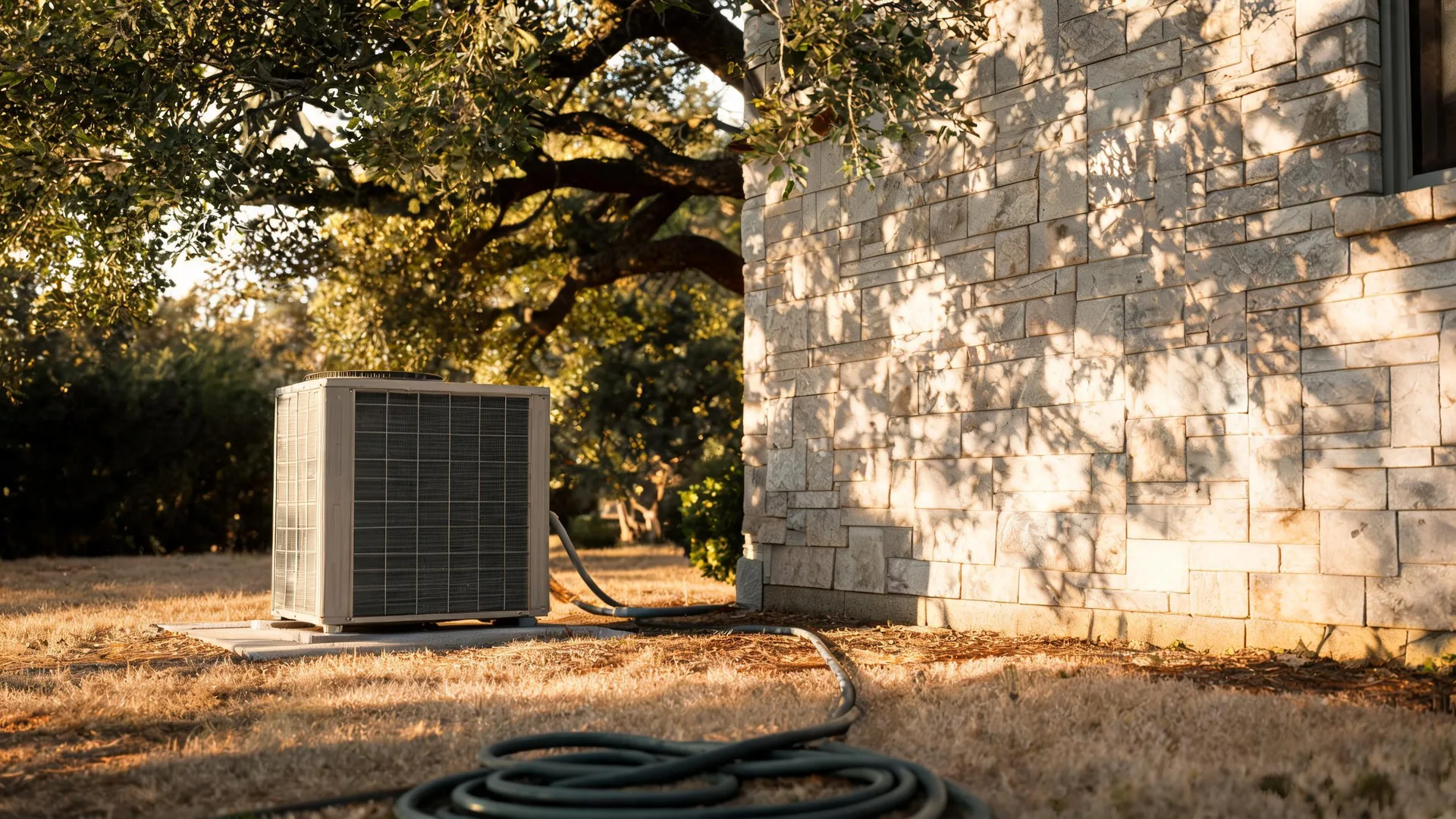
If the old equipment comes out instead, the outdoor pad or slab usually stays unless you ask for it removed. Old refrigerant lines or electrical whips may need to be capped or reused rather than pulled out entirely. A contractor hauls away the old condenser and air handler as part of the job, but what happens to the line set and disconnect box is worth asking about before the install starts, not after.

Sizing a heat pump comes down to a load calculation, not the square footage of the house. A contractor measures the walls, windows, ceiling height and insulation, then works out how much heat the house actually loses on a cold day and how much it gains on a hot one. That number, not a rule of thumb, sets the size of the unit. Too small and it runs constantly without catching up. Too large and it blasts the house to temperature fast, then shuts off before it's pulled any moisture out of the air, so the house ends up warm and clammy in summer. The unit that matches the load runs longer, steadier cycles, which is also what keeps the compressor from wearing out early.

Install day starts outside. The contractor sets the outdoor unit on a pad or slab, runs the line set and electrical whip to it, and checks that the spot has clearance on all sides for airflow. Inside, the air handler or existing furnace gets tied into the ductwork, and if the heat pump is replacing a straight AC, some of that ductwork may need adjusting since a heat pump moves air differently than a furnace does. The lines get connected, pressure tested for leaks, then evacuated to pull out moisture and air before refrigerant goes in. Electrical work follows, tying the unit to its own breaker and running the low-voltage wiring to the thermostat. Once it's charged and powered, the contractor runs the system in both heating and cooling, checks the temperature split at the vents, and sets the controls so it hands off to any backup heat at the right point. Most of the day is testing, not installing, because a unit that's wired and charged wrong fails quietly, months later, not on the spot.