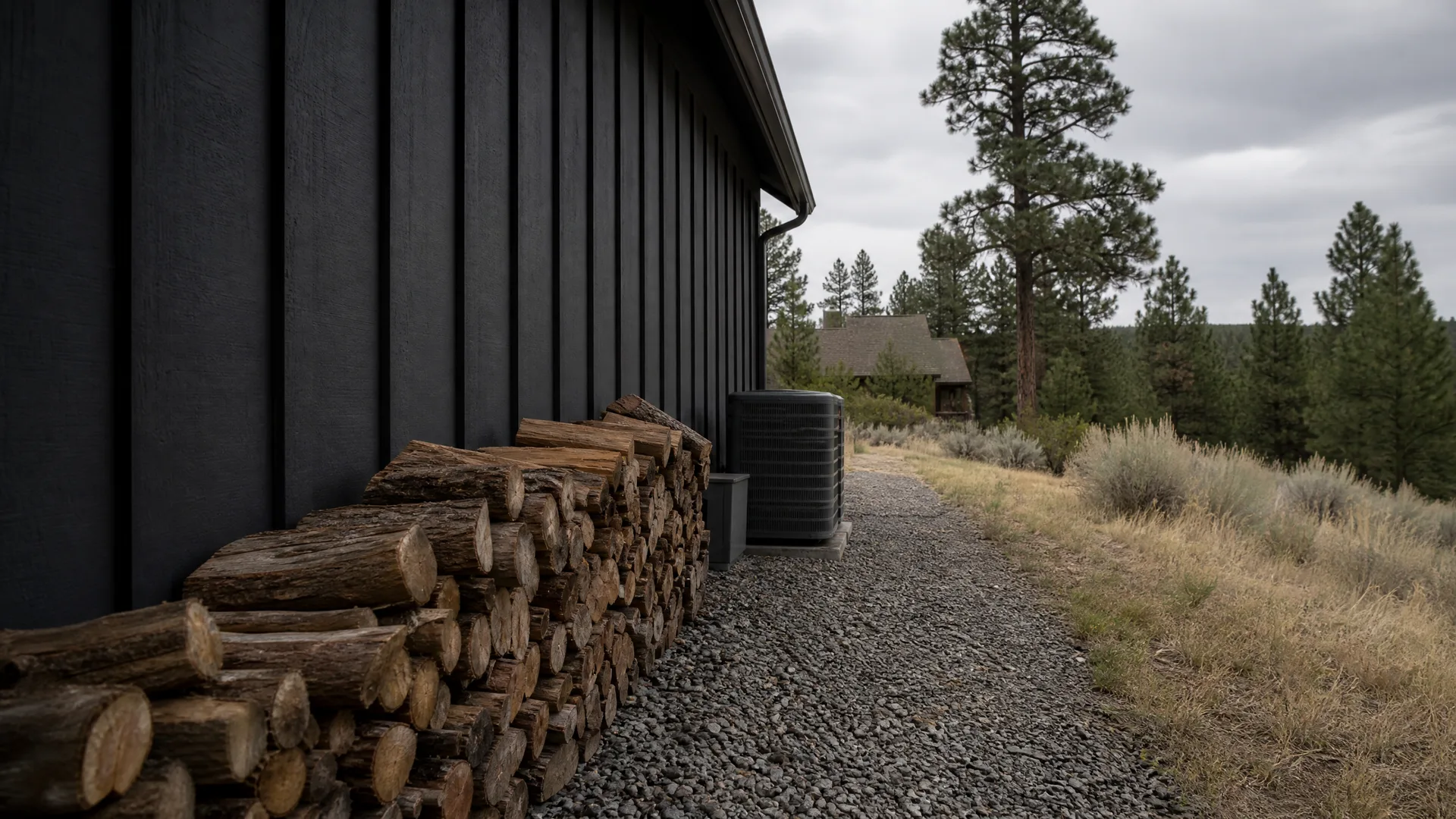





Stacked firewood along the dark vertical-board wall of a house beside a gravel path with two outdoor condenser units, with pines, dry grass and an overcast sky beyond.

Heat Pump Installation in Moscow, ID

Tell us about the job

Takes about a minute. No obligation.

New system or replacementHeat PumpLatah County, ID
Step 1 of 2

What ZIP code is the job in?

Just over half the homes in Latah County heat with electricity, more than any other fuel. Gas comes next. That matters for a heat pump, because the wiring and panel capacity to run one are often already in place in a home that heats electric. A heat pump replaces that kind of system directly, using the same kind of power the house already has. Propane and oil cover a much smaller share of homes here, usually ones further out from the gas line.

10 months
September through June, your system heats
25°F
the average winter night it heats against
79°F
the average summer afternoon it cools against
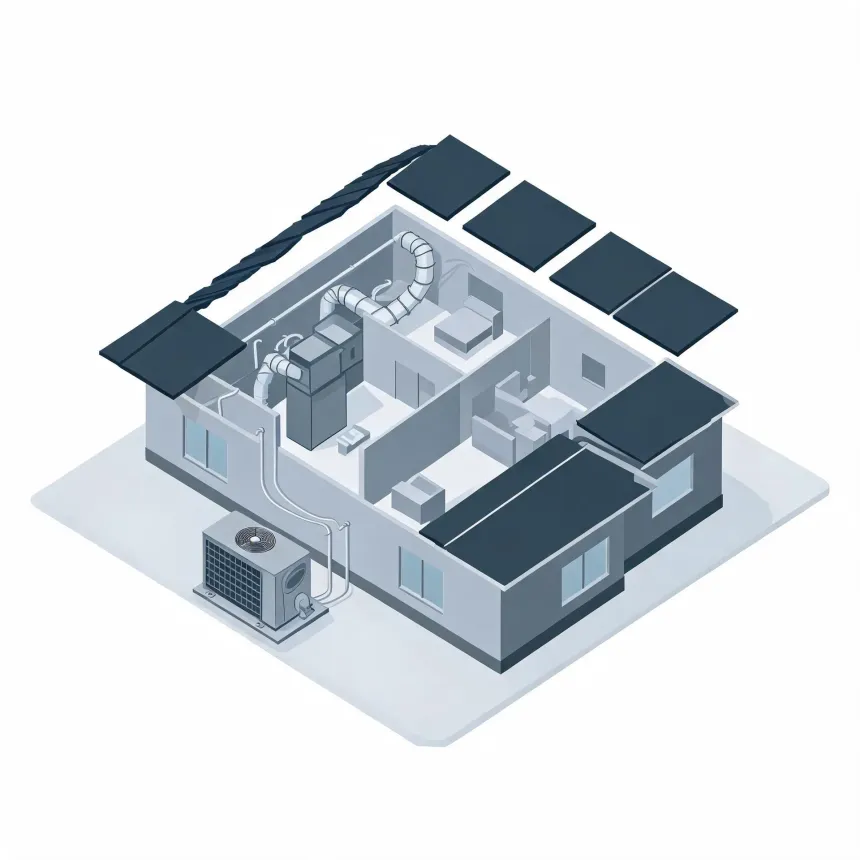
Isometric grayscale illustration of a cutaway single-story house showing interior rooms, ductwork and an air handler, an exterior condenser unit connected by lines, and dark solar panels on the roof.

Winter here brings heavy snow and ice, not sustained cold that keeps a heat pump working for months straight.

A unit sized for steady reliability will hold up better in Moscow than one picked for raw output.

Moscow doesn't need an oversized heat pump, just a reliable one

278 severe weather events from 2015 to 2024
11% of homes statewide lost power a day or more in 2024
25 damaging wind events from 2015 to 2024

Idaho electricity ran 11.52 cents per kilowatthour in 2024, well below the national average. That changes what's worth paying for upfront. A heat pump at the top of the efficiency charts costs more to install, and with power this cheap, it takes a lot longer to earn that difference back in lower bills. Here, the better money goes toward a unit that's sized right and installed correctly, one that will keep running through an ice storm without a breakdown. Fit and reliability do more for you over the life of the system than a higher efficiency number.

Put it in this August, before you need it

Heat runs here from September through June, about ten months of the year. August is the one month it doesn't, which makes it the month to get a heat pump installed. Done then, it's tested and running right before the house needs it, instead of getting chosen in a hurry once it's already cold.

Find a contractor
A man in a cap, work jacket and tan trousers carries a canvas tool bag up wooden porch steps toward a blue front door of a house with lap siding.
A gray heat pump condenser unit mounted on a concrete pad against the gray lap-siding exterior wall of a house.

Sized to the house, not the old equipment

Sizing a heat pump isn't about matching the old furnace's output or picking the next size up for safety. It comes from a room-by-room load calculation that looks at square footage, window area, insulation and how the house is laid out, then adds up how much heat actually escapes on a cold day. Too big and the unit short cycles, running in bursts that never let it settle into a steady, efficient stretch, which wears on the compressor and leaves rooms uneven. Too small and it runs flat out all the time, leaning on backup heat strips more than it should and still struggling to keep up. The right size runs long, steady cycles, which is exactly what a compressor is built for. A unit sized off a formula instead of the house itself is a guess wearing the shape of a calculation.

The old system gets disconnected, not just unplugged

A furnace or AC comes with gas lines, refrigerant lines, condensate drains and electrical whips that all have to be properly capped or removed, not just unhooked. If the old system uses refrigerant, it has to be recovered into a tank rather than vented, that's the law. None of this is optional work tacked onto the job, it's part of putting a new system in correctly.

The ductwork and electrical usually stay

A heat pump swap keeps the existing ducts and, in a home already heating electric, the existing wiring and breaker in most cases. What gets evaluated is whether that ductwork is sized right for the new system's airflow and whether the disconnect and breaker match its amp draw. Reusing what's already there is normal. Reusing it without checking it first is how a new system ends up running worse than the old one did.

When you're comparing quotes, ask what the rated heat output is at a low outdoor temperature, not just at mild conditions. Every heat pump loses capacity as it gets colder outside, but the rate of that drop varies a lot between models. Some hold most of their output down to low temperatures, others fall off fast and lean hard on backup heat strips to make up the difference. Ask too about the minimum temperature the compressor can still run at all, since below that point you're heating entirely on backup, which costs more to run. A contractor who can answer both questions from the equipment specs, not a guess, is one who actually ran the sizing math for the house instead of swapping in whatever was on the truck.

Install day starts with the load calculation already done, not something figured out on site. The crew shows up knowing what size unit goes in and where the lines run. The old equipment comes out first, disconnected and capped properly, then the outdoor unit gets set on a pad or bracket and the indoor coil goes in place. Refrigerant lines get run and connected, then the system gets pressure tested before anything is charged, which is how a contractor catches a bad joint before it turns into a slow leak down the road. Electrical gets tied in last, breaker and disconnect matched to the new equipment's draw. Once it's powered up, it runs through a check against the manufacturer's charge and airflow numbers, not just a glance to see if air is blowing, before anyone calls it finished.