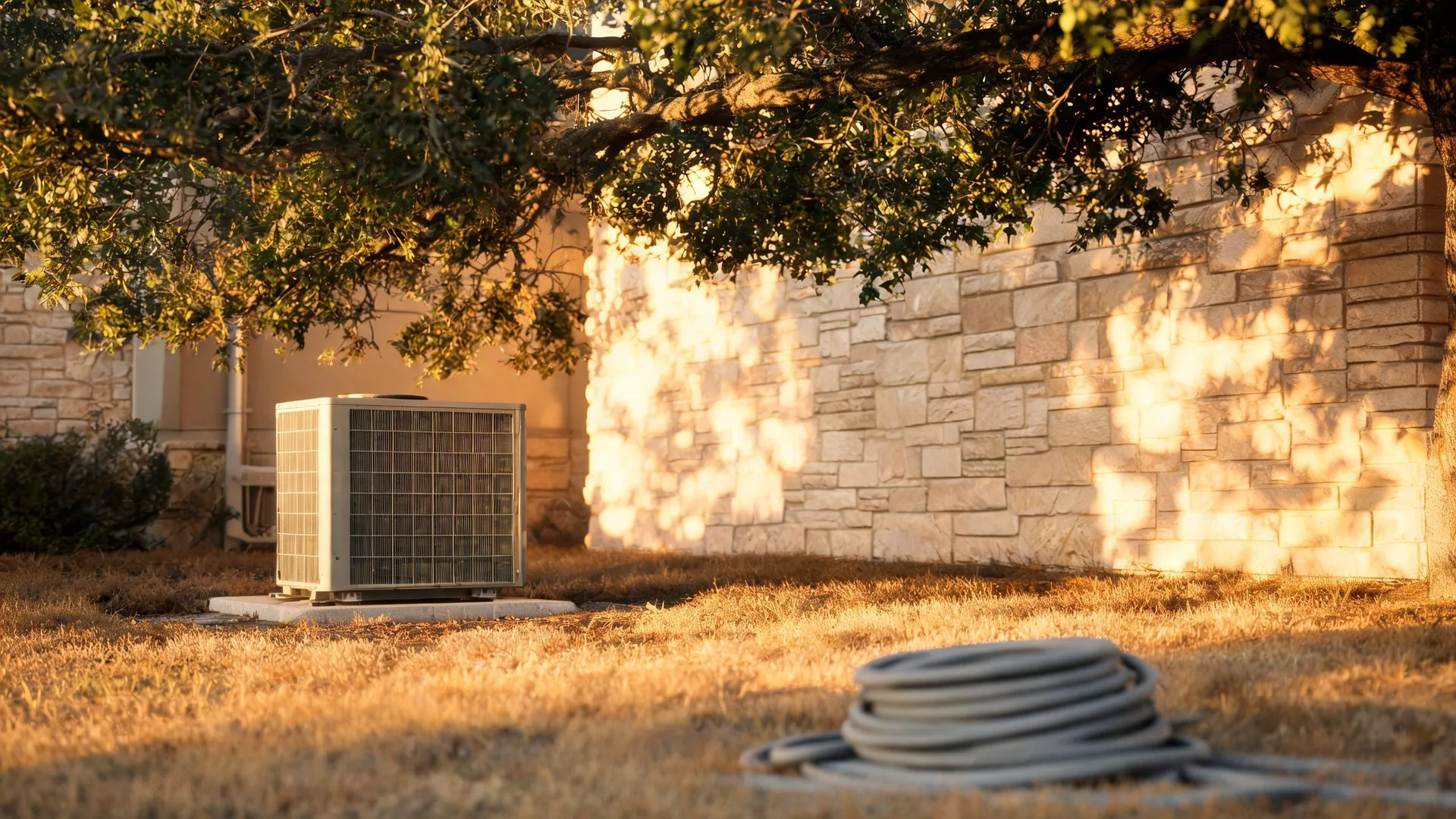
Most homes here run on propane
Propane heats 59.4 percent of occupied homes in Oneida County, more than any other fuel. Electricity comes in second at 22.3 percent. A tank of propane out back is the normal setup here, not the exception.
Takes about a minute. No obligation.
Propane heats 59.4 percent of occupied homes in Oneida County, more than any other fuel. Electricity comes in second at 22.3 percent. A tank of propane out back is the normal setup here, not the exception.
Installing a heat pump here usually means taking a home off propane heat and onto an electric system instead. That changes what runs to the house and what the contractor has to size and wire, not just what sits in the yard.

NOAA nClimDiv, 1991–2020 normals
The size on the nameplate means nothing if the contractor didn't run a load calculation on your house.
Ask for the room by room numbers, not a guess based on square footage.



Get this done in June or August, ahead of whichever season is about to turn. June gets you ahead of July, when cooling starts. August gets you ahead of September, when heat does. Either way the old system is out and the new one is running before the house needs it, not during the first hot week or the first cold snap. Heat runs here from September clear through June, ten months of the year, with cooling riding along on top of it for July and August. A contractor working in June or August has the time to size the system to your house instead of hooking up whatever is on hand that day.
If you're replacing a system in an older house, the new one has to fit the house you have.
Find a contractorWhat a system costs comes down to what the job actually requires, not the box on the truck. A load calculation tells the contractor what size unit the house needs. That number drives the size of the outdoor unit, the size of the air handler, and whether the ductwork already there can handle the air a heat pump moves. Ducts sized for a furnace sometimes need rework to carry it well. A heat pump runs on electric power, so the panel has to have the capacity and the right circuit, and that work happens before the unit goes in. Putting the new unit where the old one sat, using the same line set, is a simpler job than relocating equipment or running new refrigerant lines. Leaky or undersized ductwork adds work too, beyond just swapping the equipment. None of that shows up on a nameplate or a quote that only lists a model number.
An oversized heat pump blasts the house to temperature fast, then shuts off before it finishes pulling moisture out of the air. It cycles on and off all day instead of running long, steady stretches. An undersized one runs constantly and still can't keep up on the coldest or hottest days, because it was never matched to the heat the house actually loses or gains.
A proper load calculation looks at the walls, the windows, the insulation, and the floor plan of each room, not just the house as a whole. Houses that look alike from the street can need different size equipment depending on how much glass they have and which way the rooms face. That room by room number is what sizes the outdoor unit and the air handler together, so the whole system works as one piece instead of guesswork at each end.
The old furnace or AC doesn't sit there as a backup once the heat pump goes in. A contractor pulls the equipment out, caps or removes the old line set, and if there was a propane furnace, that gas line gets capped off too. Ductwork gets inspected while it's opened up, since that's the easier time to fix a bad connection or a crushed run, not after everything's sealed back up. A working furnace sometimes gets kept as backup heat alongside the heat pump, running only on the coldest days when the heat pump needs help. That's a choice to make with the contractor before install day, not after the old unit's already gone.
Setting the outdoor unit means a level pad, with clearance on all sides so air can move through the coil, and a spot away from where snow or roof runoff piles up. Inside, the air handler or coil goes in, the electrical circuit gets run and tied into the panel, and the line set gets connected and tested for leaks before the system is allowed to run. Every joint gets checked under pressure, because a slow leak that takes a year to show up is worse than one caught that afternoon. If a furnace is staying on as backup heat, the contractor wires it to work alongside the heat pump rather than against it, so only one of them is ever calling for heat at a time. Once everything's sealed and tied in, the system gets charged, powered up, and run through its paces, heating and cooling both, so nothing gets left for the first cold morning to find.