Most houses here run on electric heat
Electricity heats 42.0% of occupied homes in Idaho County, more than gas, propane and fuel oil combined. A heat pump fits into that same electric setup without any new fuel line or tank to deal with.
Takes about a minute. No obligation.
Electricity heats 42.0% of occupied homes in Idaho County, more than gas, propane and fuel oil combined. A heat pump fits into that same electric setup without any new fuel line or tank to deal with.
Bottled or LP gas heats 13.9% of homes here and fuel oil another 9.0%. If your house is one of those, swapping to a heat pump changes what the system runs on, so that's worth sorting out before install day.

Heat in Grangeville starts up again in September.
Get the new heat pump installed in August, before the first cold morning asks something of it.




Half the homes in Idaho County were built in 1977 or earlier, half later. That split doesn't change what a heat pump needs to do. A unit sized to the house and matched to a correct load calculation works the same whether the place is new or old. Mobile homes make up 12.7% of the housing here, and that kind of home does call for equipment rated for that installation, so say so up front if yours is one. Otherwise, a standard unit at standard efficiency is what most homes here need.
Idaho County is zone 5B, a cool zone where heating carries most of the load. Any split-system heat pump installed here has to meet 14.3 SEER2 and 7.5 HSPF2 at minimum. That's the federal floor for units made from 2023 on, and it narrows the field before you even start comparing brands. A federal tax credit is available on qualifying installs, worth sorting out alongside the equipment choice.
Find a contractor
Whatever is getting replaced doesn't just disappear from the job. If it's a furnace paired with a separate AC unit, both come out, and so does the old thermostat if it isn't compatible with the new system. If it's an older heat pump, the outdoor unit and the indoor coil get swapped as a pair, because mismatched parts from different systems don't perform right together and most manufacturers won't warranty that pairing anyway. The refrigerant in the old unit has to be recovered properly, not vented, and that's a licensed step, not an optional one. Line sets sometimes get reused and sometimes don't, depending on their condition and whether they're sized right for the new equipment. Old ductwork stays unless it's undersized or leaking badly enough to undercut the new system's output, in which case that gets flagged separately. None of this is work you do yourself alongside the install. It gets hauled off as part of the same job.
A load calculation measures how much heat the house loses in winter and gains in summer, and that number drives everything after it. A bigger house or one with a lot of window area needs a larger outdoor unit and a bigger air handler. Go too small and the system runs constantly without keeping up. Go too big and it short-cycles, which wears parts faster and leaves rooms uneven. The equipment gets chosen to match the house, not the other way around.
The outdoor unit and indoor coil are only part of the job. If the ductwork is undersized or leaking, that gets addressed before the new system goes in, because a heat pump moves a different volume of air than what was there before. The electrical panel sometimes needs a new circuit to handle the unit's draw. A thermostat that isn't compatible gets replaced too. None of that shows up in the price of the equipment, but it shows up in the price of the install.
A load calculation looks at floor area, window area, insulation and ceiling height, then works out how fast the house loses heat in winter and picks up heat in summer. That loss rate sets the size of the unit, not the size of the old one coming out. A heat pump sized off the wrong number causes trouble either way it's wrong. Oversized, it blasts the house to temperature and shuts off before it's pulled any moisture out of the air, so rooms feel clammy even when the thermostat says they're done. Undersized, it runs nonstop on the coldest days and still can't keep up, leaning hard on backup heat strips the compressor was never meant to need. Getting the number right is what makes the rest of the install, the ductwork, the electrical, the thermostat, worth doing correctly too.
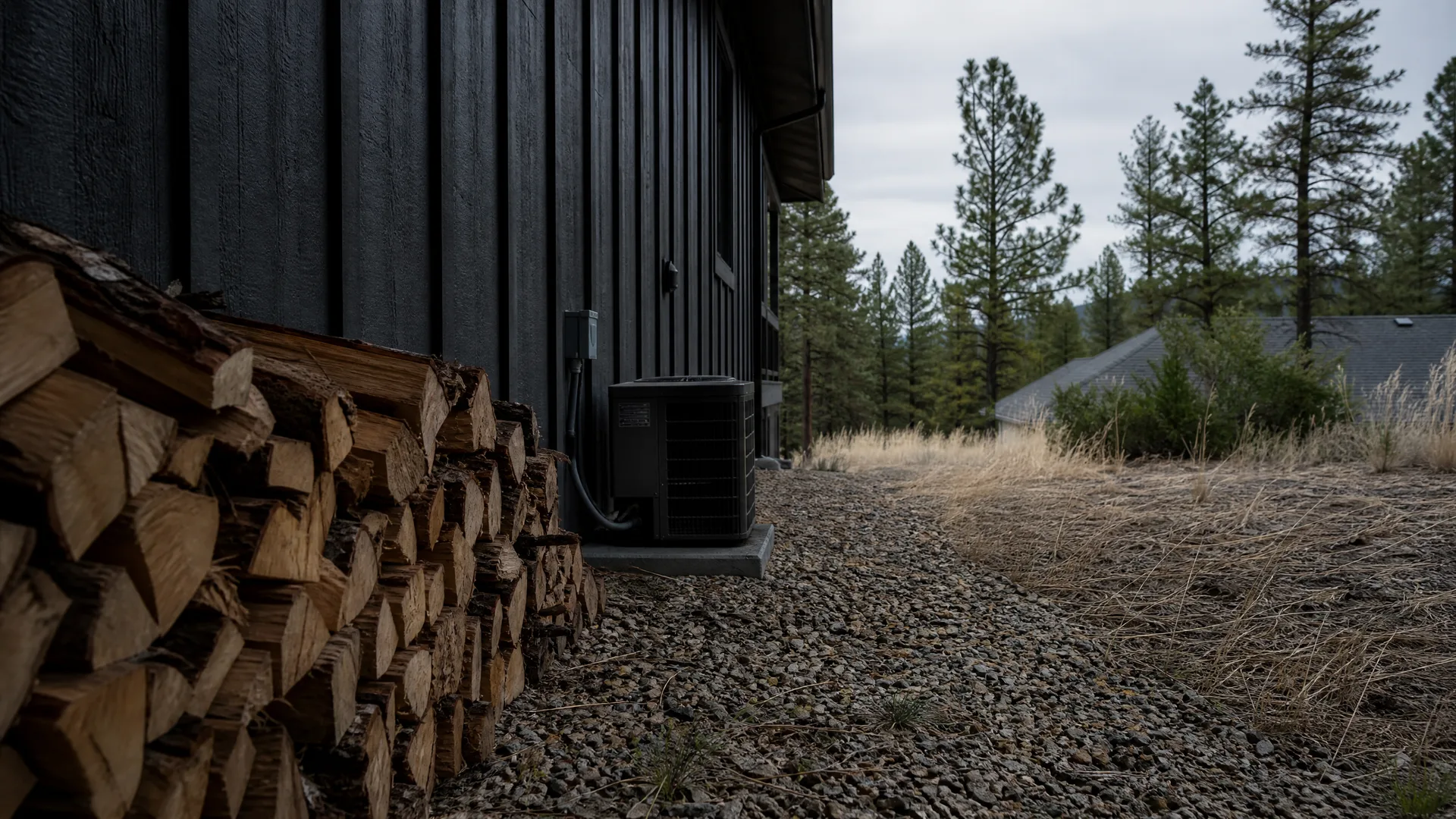
Wind and hail are what Idaho County's weather throws at an outdoor unit, and a heat pump sits outside through all of it. The cold is the steadier load, with winter nights averaging 18°F, and that's what actually decides how hard the compressor works. Neither one asks for the top efficiency model. A reliable unit sized right to the house, built to handle a cold night and shrug off a hailstorm, does the job without needing to be the highest-rated thing on the lot. Put the money into getting the size and the install right instead.