



A rustic log rail fence beside a gravel verge and paved road, with dark-sided cabins with metal roofs among tall pine trees under an overcast sky.

Heat Pump Installation in Gooding, ID

Tell us about the job

Takes about a minute. No obligation.

New system or replacementHeat PumpGooding County, ID
Step 1 of 2

What ZIP code is the job in?

Electricity heats 63.7% of homes in Gooding County, more than every other fuel combined. Utility gas comes in at 20.4%, and propane covers another 4.8%. With that much of the county already on electric heat, a heat pump installation usually means working with wiring and a setup that is already there instead of adding a fuel source that was not. That makes a heat pump a straightforward swap for most homes here, not a change in how the house is set up to begin with.

8 months
October through May, your system heats
2 months
July through August, it cools
21°F
the average winter night it heats against
86°F
the average summer afternoon it cools against
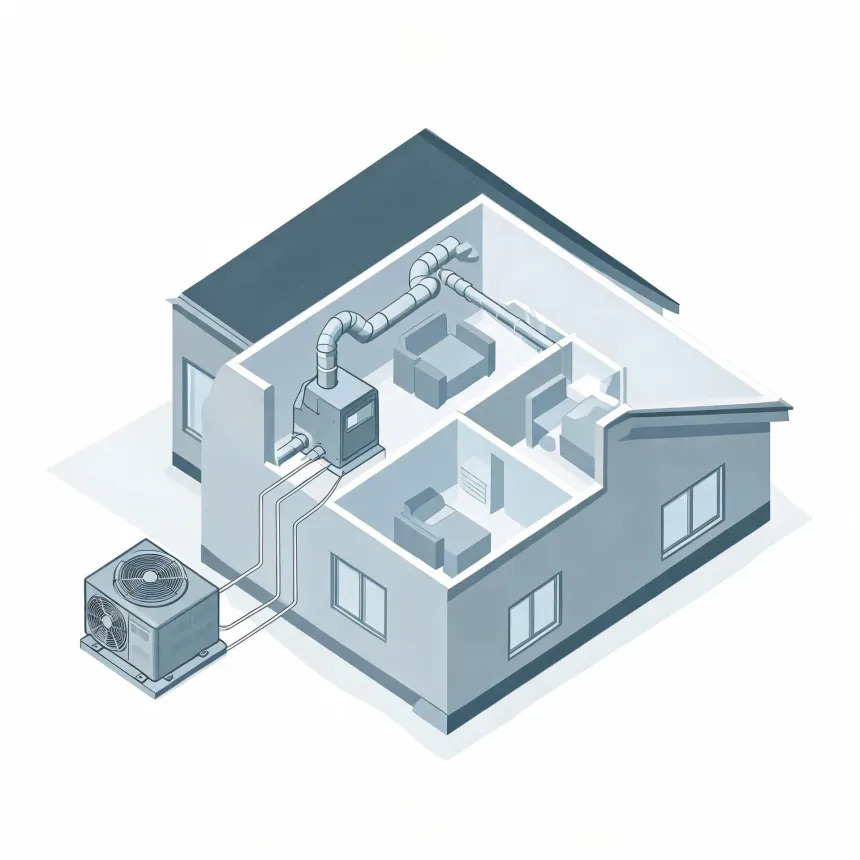
Isometric cutaway illustration of a two-room house showing an indoor air handler with ductwork connected by lines to an outdoor condenser unit on a pad.
Your system heats October through May and cools July through August.

NOAA nClimDiv, 1991–2020 normals

Heat here runs from October through May, eight months out of the year.

Get the heat pump installed before September ends, and it's ready before the cold is.

Cheap power here means payback takes longer, so pick the system that holds up on cold nights

Power costs 11.52 cents a kWh statewide
12 winter storms from 2015 to 2024
Winter nights average 21°F

Gooding County sits in zone 5B, a cool zone where winter is the bigger job for any system. A split-system heat pump installed here has to meet 14.3 SEER2 for cooling and 7.5 HSPF2 for heating. That's a federal minimum, so it applies the same way in every state, not just here. It rules out older, less efficient equipment still sitting in some warehouses. A contractor quoting a system below those numbers isn't quoting something legal to install new.

A right-sized heat pump is the job here, not a bigger one

A standard-size heat pump at the code-minimum efficiency fits most houses in Gooding County. Half the homes here were built in 1976 or earlier, half later, and mobile homes make up 15.7% of the county's housing. None of that calls for anything other than a correctly sized system matched to the house it's going into.

Find a contractor
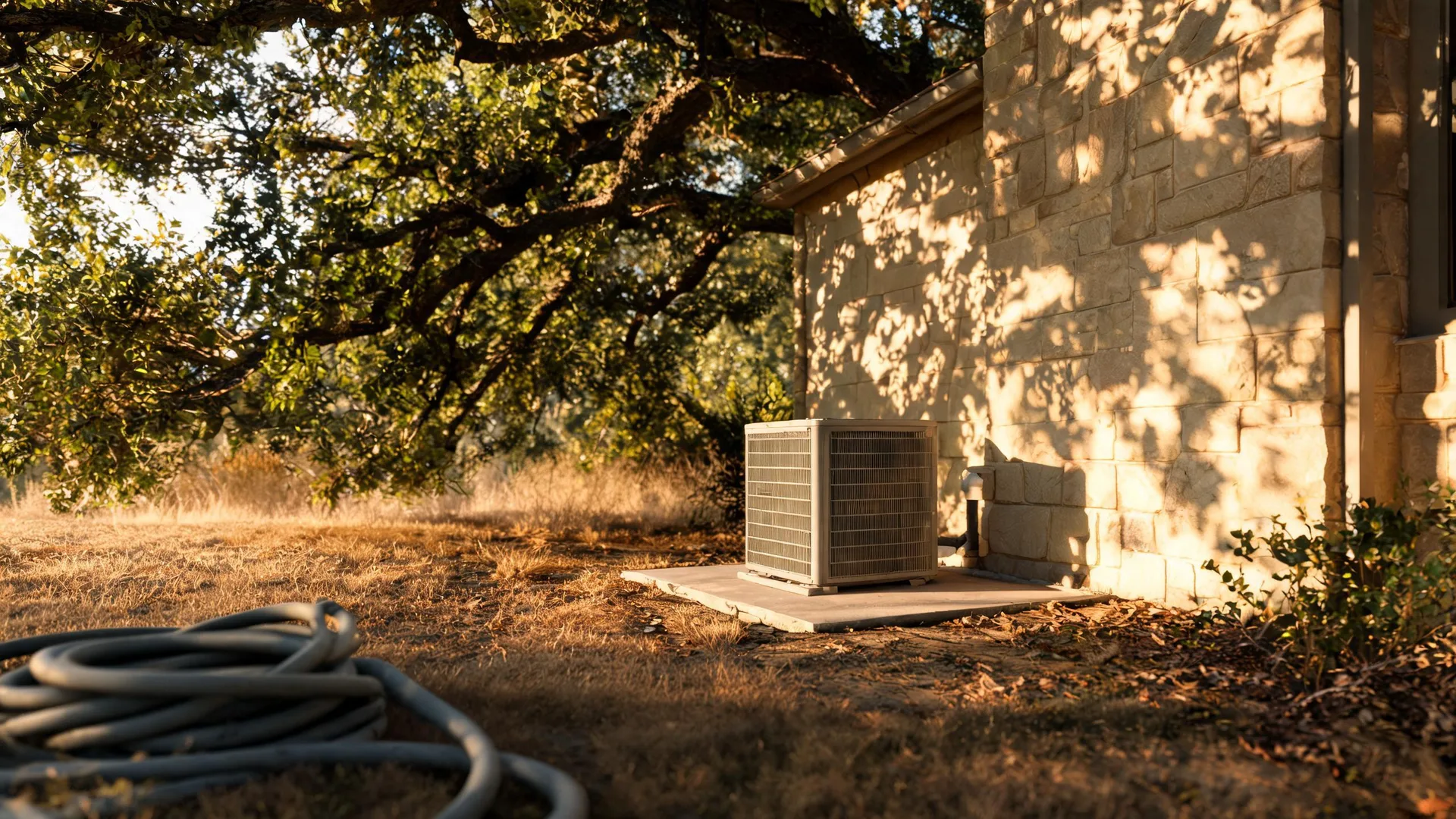
A gray heat pump outdoor unit mounted on a concrete pad next to the stone-accented exterior wall of a house.

The old system doesn't always go away, it just stops being the main job

Whatever heated the house before usually doesn't leave right away. If it was a furnace, most installers leave it in place and wire the heat pump to work alongside it, switching over to the furnace once the outdoor temperature drops low enough that the heat pump can't keep up on its own. That setup is called dual fuel, and it gives the old system a real job even after the new one goes in. If the old system was electric strip heat or a baseboard setup, that often stays too, wired as backup for the coldest stretches. A straight electric furnace sometimes gets pulled out entirely once the heat pump is sized to cover the load by itself. What almost never happens is the old equipment getting hauled off with nothing to replace its role. Either it's doing backup duty or it's gone, and which one depends on what it was to begin with.

Sizing comes from a load calculation, not the old system's label

A contractor works out heat pump size room by room, from wall and ceiling insulation, window area, and duct layout, not by matching whatever is being replaced. The unit already in place may have been wrong from the start, so copying its size just copies the mistake.
Oversized trips off before it dries the air

A heat pump that's too big satisfies the thermostat fast, then shuts off before it finishes pulling moisture out of the house. You get a house that cools quickly but feels damp. Undersized runs the other way. It never stops, and it still can't hold the temperature on the coldest nights.

The SEER2 and HSPF2 numbers on the label aren't a grade for the whole unit, they're a ratio. Cooling output divided by the electricity it takes to produce it, measured over a full season rather than at one moment. A higher number means the compressor is moving more heat per unit of power it draws, usually because of a variable-speed compressor or a bigger coil, not because of any one part working harder. That rating also assumes a properly sized system in a properly sealed duct run. A heat pump with a high number on the label can still perform worse than its rating if the ducts leak or the charge is off at installation. So the label tells you what the equipment is capable of, not what it will actually deliver in the house it ends up in.

Install day starts with the old equipment coming out, then the line set, wiring, and pad or bracket work for the new outdoor unit. The refrigerant lines get run between outdoor and indoor units, and that connection has to be clean and properly flared or brazed, because a bad joint there is where a charge leaks out months later. Once the indoor coil and outdoor unit are both set, the system gets evacuated to pull moisture and air out of the lines before refrigerant goes in. Charging comes last, weighed in or measured against the manufacturer's chart rather than guessed. After that, the installer runs the system in both heating and cooling, checks the temperature split across the indoor coil, and confirms the thermostat is talking to the equipment the way it should. None of that happens fast, and skipping steps to finish early is usually where a new heat pump's problems start.