Electricity already leads here
Electricity heats 46.5% of homes in Gem County, more than any other fuel. A heat pump fits into that pattern instead of fighting it.
Takes about a minute. No obligation.
Electricity heats 46.5% of homes in Gem County, more than any other fuel. A heat pump fits into that pattern instead of fighting it.
A home already wired for electric heat has an easier path to a heat pump than one set up for gas. Worth checking what your current system runs on before comparing quotes.
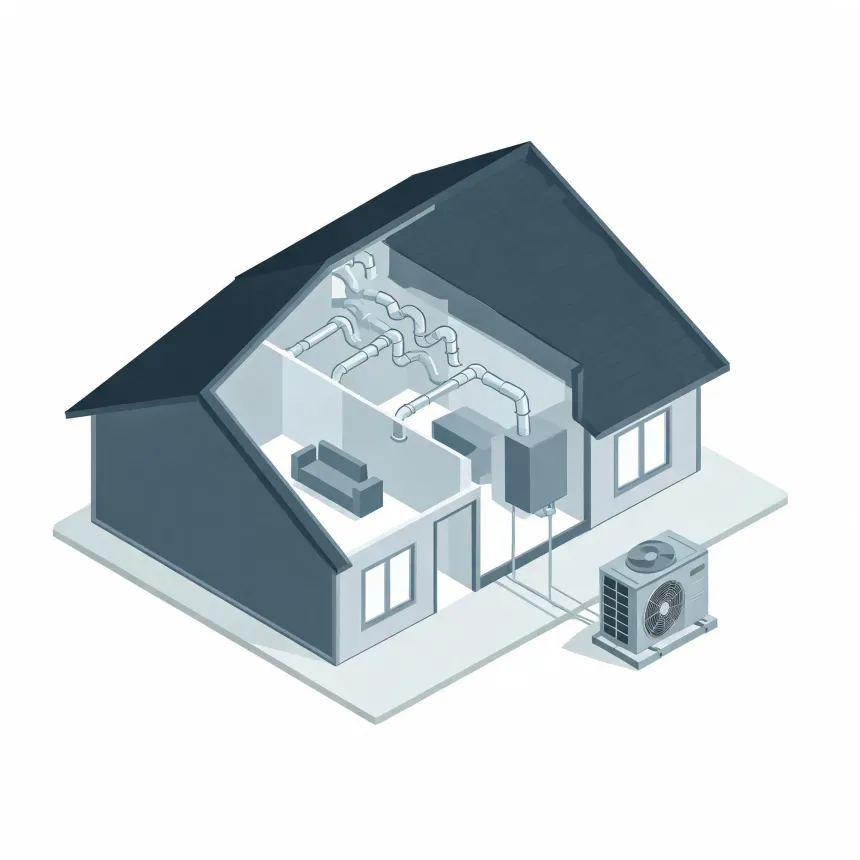
NOAA nClimDiv, 1991–2020 normals
Heat pump installs in Emmett book up through June, right before cooling starts in July.
Get the install done in June and the new system is already broken in when heat season starts in October.



At 11.52 cents a kilowatt-hour, Idaho power costs less than most of the country pays. That changes what to expect from the payback math on a new heat pump. The high-SEER2 model will cost more up front and take longer to earn that back in lower bills than it would somewhere with expensive electricity. So pick the system on how well it heats and cools this house, how it holds up, and how it's sized for the place, not on the efficiency number alone. A contractor can walk through sizing and brand options with that in mind.
Gem County falls in climate zone 5B, where heating carries the bigger load. Any split-system heat pump installed here has to clear federal minimums of 14.3 SEER2 and 7.5 HSPF2. That narrows the field before you compare a single brand. A federal tax credit is available on qualifying equipment, which is worth weighing alongside those minimums when you look at what a contractor quotes.
Find a contractorAsk what happens at the coldest point of the night, not the mild afternoons. Every heat pump loses capacity as the outdoor air gets colder, and the spec sheet should show output at low temperatures, not just at a mild rating point. Ask how the system handles frost on the outdoor coil. It will form one, and the unit needs to run a defrost cycle to clear it, pulling warm air from inside for a few minutes at a time. Ask what backup heat kicks in when the heat pump alone can't keep up, and how that switchover is controlled. A thermostat that manages that handoff well keeps the backup heat from running more than it needs to. Ask about the sound rating of the outdoor unit, since it runs through the night in a way an AC never has to. And ask how the contractor sizes the system for this house rather than just matching the old equipment's rated output, because a unit sized off a room-by-room load calculation performs differently than one sized by guesswork.
A contractor works out the right size by going room by room, adding up window area, insulation, ceiling height and air leakage, then totaling the heating and cooling load for the whole house. That number, not whatever the last system happened to be rated for, is what the new heat pump should match. Houses that look alike from the street can still need different sized equipment depending on how they're built.
A heat pump sized too big satisfies the thermostat fast and shuts off before it's pulled moisture out of the air, so rooms feel clammy even at the right temperature. It also cycles on and off more, which wears the compressor harder over time. One sized too small runs constantly on the coldest nights and leans on backup heat more than it should. The right size runs longer, steadier cycles and holds the house evenly.
The old furnace or AC doesn't just get unplugged and left in the garage. A contractor disconnects the refrigerant lines, the ductwork connection and the power or gas line, then hauls the unit out whole. If it's a gas furnace, that gas line gets capped off properly, not just shut at the valve. Refrigerant in an old AC or heat pump has to be recovered into a tank before the unit can be cut loose, that's a legal requirement, not an option. From there the metal gets scrapped rather than landfilled, since the cabinet, coil and compressor are mostly steel, copper and aluminum. The whole removal usually happens the same day as the new install, so there's no gap with no heat or cooling running.
The SEER2 and HSPF2 numbers on the label are both ratios, cooling or heating output divided by the electricity it takes to produce it. Higher means more output per unit of power, nothing more than that. It isn't a measure of how big a system is or how much heat it can put out on the coldest night, that's a separate spec entirely. A pair of heat pumps can carry the same rating and still behave differently in the same house, because the rating comes from lab testing at set conditions, not from your ductwork or your walls. Treat it as one factor in the decision, not the deciding one. How the system is sized and installed for this house matters more to comfort than the number on the sticker.