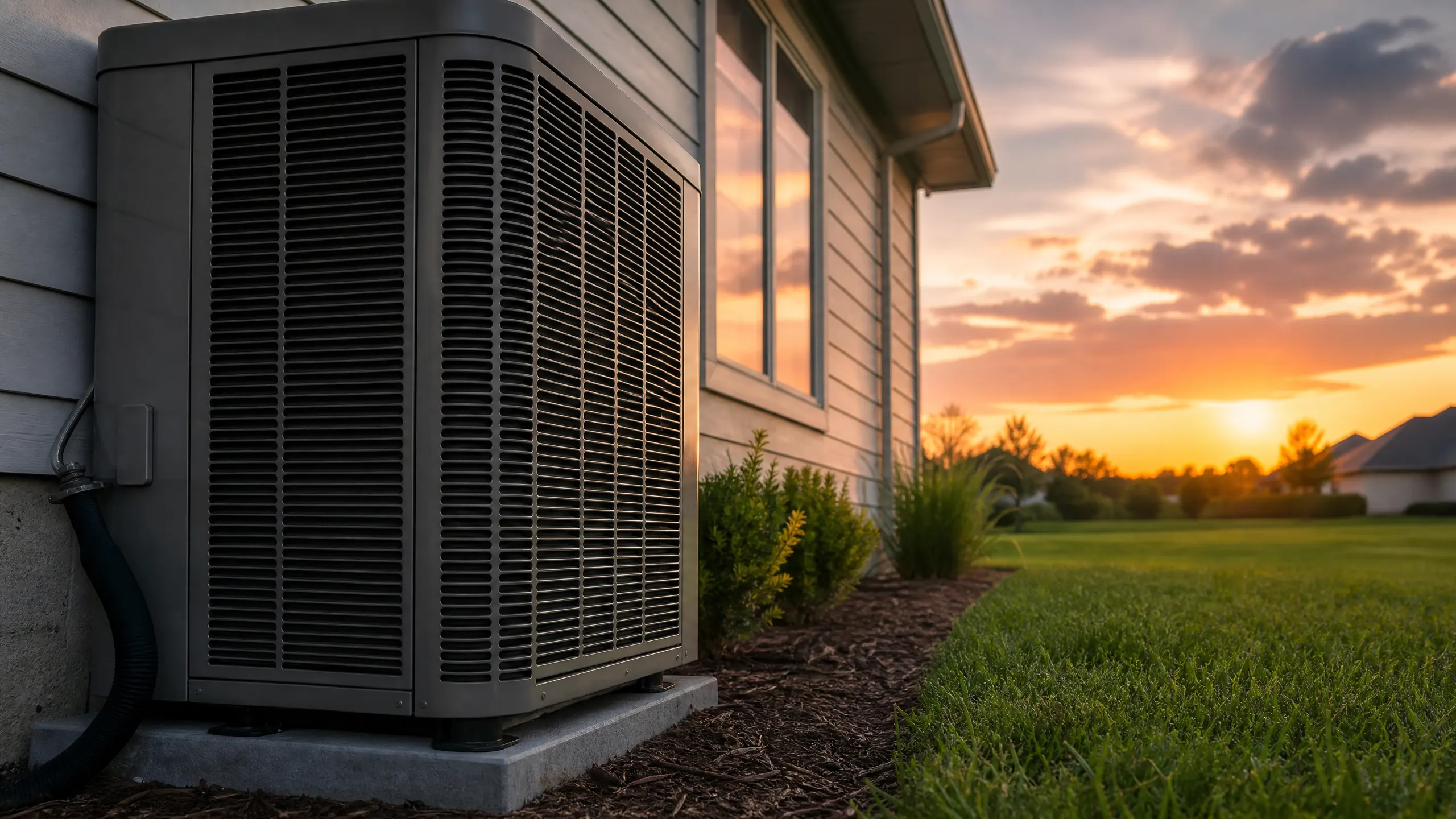





An outdoor air conditioning condenser unit mounted on a concrete pad beside a house at sunset.

Heat Pump Installation in Arco, ID

Tell us about the job

Takes about a minute. No obligation.

New system or replacementHeat PumpButte County, ID
Step 1 of 2

What ZIP code is the job in?

Electricity in Butte County runs 12.44 cents per kilowatt-hour, which is lower than most US counties pay. That sounds like good news for a heat pump, and it is, but it only goes so far. Most homes here already heat with electricity, and a heat pump run during an Arco winter puts in long hours to keep up. Cheap power still adds up when a system is drawing on it morning and night for months. How efficiently that heat pump turns electricity into heat matters as much here as the rate on the bill, maybe more.

10 months
September through June, your system heats
1 months
July through July, it cools
11°F
the average winter night it heats against
79°F
the average summer afternoon it cools against
Isometric grayscale illustration of a cutaway single-story house showing interior rooms, ductwork and an air handler, an exterior condenser unit connected by lines, and dark solar panels on the roof.
Your system heats September through June and cools July through July.

NOAA nClimDiv, 1991–2020 normals

Electricity already heats 40.5% of homes in Butte County, more than any other fuel.

A heat pump replacing an electric furnace or baseboard heat is swapping one electric system for another, not changing how the house gets its power.

Half the homes here were built by 1971, and that changes what fits

Half the homes here were built by 1971
Climate zone 6B
Power here costs 12.44 cents per kilowatt-hour

Butte County falls under zone 6B in the 2021 energy code, a cold, dry climate classification with a long heating season. Any split-system heat pump installed here has to meet the federal minimums that came into effect for units built on or after January 1, 2023: at least 14.3 Btu of heat moved per watt-hour of electricity over summer, and at least 7.5 Btu per watt-hour over winter. Those numbers set the floor, not a target, so the units that qualify for installation already clear that bar before a contractor ever sets foot in the house. A heat pump bought today also carries a federal tax credit for qualifying equipment. Zone 6B is one of the harder climate zones in the country to heat efficiently, which is part of why the standard exists.

The right rating pays you back every month it runs

When a heat pump runs this many hours a year, the efficiency rating on the unit matters more than the price tag on the label. Ask what SEER2 and HSPF2 numbers a contractor is quoting, not just what the installation costs.

Find a contractor
A gray heat pump condenser unit mounted on a concrete pad against the gray lap-siding exterior wall of a house.

This machine earns its keep through some rough weather

Damaging wind has hit this county 144 times between 2015 and 2024. Winter storms, heavy snow, ice, blizzards, added another 92. A heat pump here sits outside through all of that, running rather than waiting out a mild stretch somewhere else. Summer works in its favor some: the dew point averages 37°F across June, July and August, lower than most of the country, so the unit isn't fighting heavy, moisture-laden air the way one in a humid state would. But wind and snow load are still working against it most months, and that shows up first in the parts that move and sit exposed, the outdoor fan, the coil, the defrost cycle. Size the unit for what this place throws at it, not for an average house somewhere calmer.

Ask for the heating output at low temperature, not just the rating on the label

Every heat pump loses capacity as the outdoor air gets colder, and the rate of that loss is different from one model to the next. A contractor can pull the manufacturer's performance data and show you what the unit actually puts out at low outdoor temperatures, not just the number stamped on it at mild conditions. Two systems with the same sticker rating can perform very differently once the temperature drops, because that number is measured under one set condition, not the range the unit will actually run in.
Ask what happens when the heat pump can't keep up on its own

Every heat pump has a point where it needs backup heat to carry the house the rest of the way, usually electric resistance coils built into the air handler. Ask at what outdoor temperature the system is set to bring that backup on, because that setting is adjustable and gets decided at installation, not baked into the equipment. Set too high, the backup heat kicks in more than it needs to. Set right, the compressor does most of the work and the backup only fills in the gap.

What a heat pump costs to install comes down to more than the equipment sitting in the box. Sizing takes real work: a contractor has to calculate the heat loss and heat gain for the specific house, not just measure the square footage, and that calculation decides what size compressor and air handler go in. Ductwork matters just as much. If the existing ducts are undersized, leaky, or routed poorly, a straight swap won't deliver the comfort a new system is capable of, and resizing or sealing them adds to the job. The electrical panel has to support the new equipment too, and older panels sometimes need upgrading before the heat pump can be wired in at all. Where the outdoor unit sits, how far the line set has to run, and whether backup heat strips need adding to the air handler all shape the labor and materials that go into the install. None of that shows up on the price tag of the unit itself.

July is the only month cooling runs here, but heat runs from September through June, about ten months straight. That's most of the year this system has to carry. Getting a heat pump installed before September means it's sized, wired, and running before the first cold night, not mid-emergency when the old system quits and the overnight low is already dropping toward zero. A rushed install in January leaves less room to get the sizing and the ductwork right, and those decisions matter more here than in a place where the system only works a few months a year. June, the month before cooling starts, is slow season for contractors too, which tends to mean more time to do the job carefully instead of around a backlog.