 Get matched
Furnace leaking water in Idaho Falls, ID
Your request goes to a Bonneville County pro who takes furnace jobs.
Water pooling at the base of your furnace or dripping from the ductwork means something is condensing or draining where it shouldn't. On a high-efficiency furnace that usually points to the condensate line, either clogged or cracked. On an older furnace, water showing up nearby is more often a sign the problem isn't the furnace at all, it's a flue pipe or a humidifier attached to it. Either way, it's worth having someone look before you run it again.
Winters in Bonneville County don't leave much room for a furnace to be down. When it's below freezing outside, a leak that seems minor today can mean no heat in a day or two, and a furnace that shuts itself off on a safety switch picks a bad time to do it.
That's where a local contractor matters more than it might seem. Someone who services furnaces around Idaho Falls all winter has already seen this particular leak a dozen times this season. They know which models clog their condensate trap first, which flue setups sweat in cold weather, and what a cracked heat exchanger looks like versus a loose drain fitting. That's not guesswork from a manual, it's from being out on these calls week after week.
When you put in a request here, it goes to one contractor, not a handful. That contractor is licensed to work in Idaho, and they're the one who calls you back, not five companies competing for your number. You explain the leak once, to someone who's going to be the one looking at it.
From there, it's between you and them: what they find, what it takes to fix it, when they can get to it. The next step is just getting you in front of someone who already knows this furnace, this county, and this kind of problem.
A furnace leaking water almost always comes down to one of two things. If your furnace is a high-efficiency model, which is common in Idaho Falls homes built or upgraded in the last couple of decades, it produces condensate as a normal part of running, and that water drains out through a plastic line. That line clogs with algae and sediment over time, or cracks, and the water backs up and spills out at the base of the unit instead. If your furnace is older and vents through a metal flue, water around it usually means exhaust gas is cooling and condensing inside the flue instead of venting out, which is a combustion problem, not a drainage one. Either way, the furnace shouldn't keep running like this. Left alone, the clog or crack gets worse, and a flue condensation problem can mean the furnace isn't venting safely.
Why does a leaking furnace matter so much in Bonneville County winters?
Winter nights average 15°F
Nights average 15°F here in winter, so a furnace that quits while a leak gets sorted out leaves a house cold fast.
Heat runs September through June
Your furnace runs nearly ten months a year, from September through June, which means a leak isn't a one-time fluke, it will show up again.
56% of homes heat with gas
Most homes here heat with gas, 56%, and a gas furnace leaking water needs a look before you run it again.
NOAA nClimDiv 1991-2020 · ACS 2020-2024
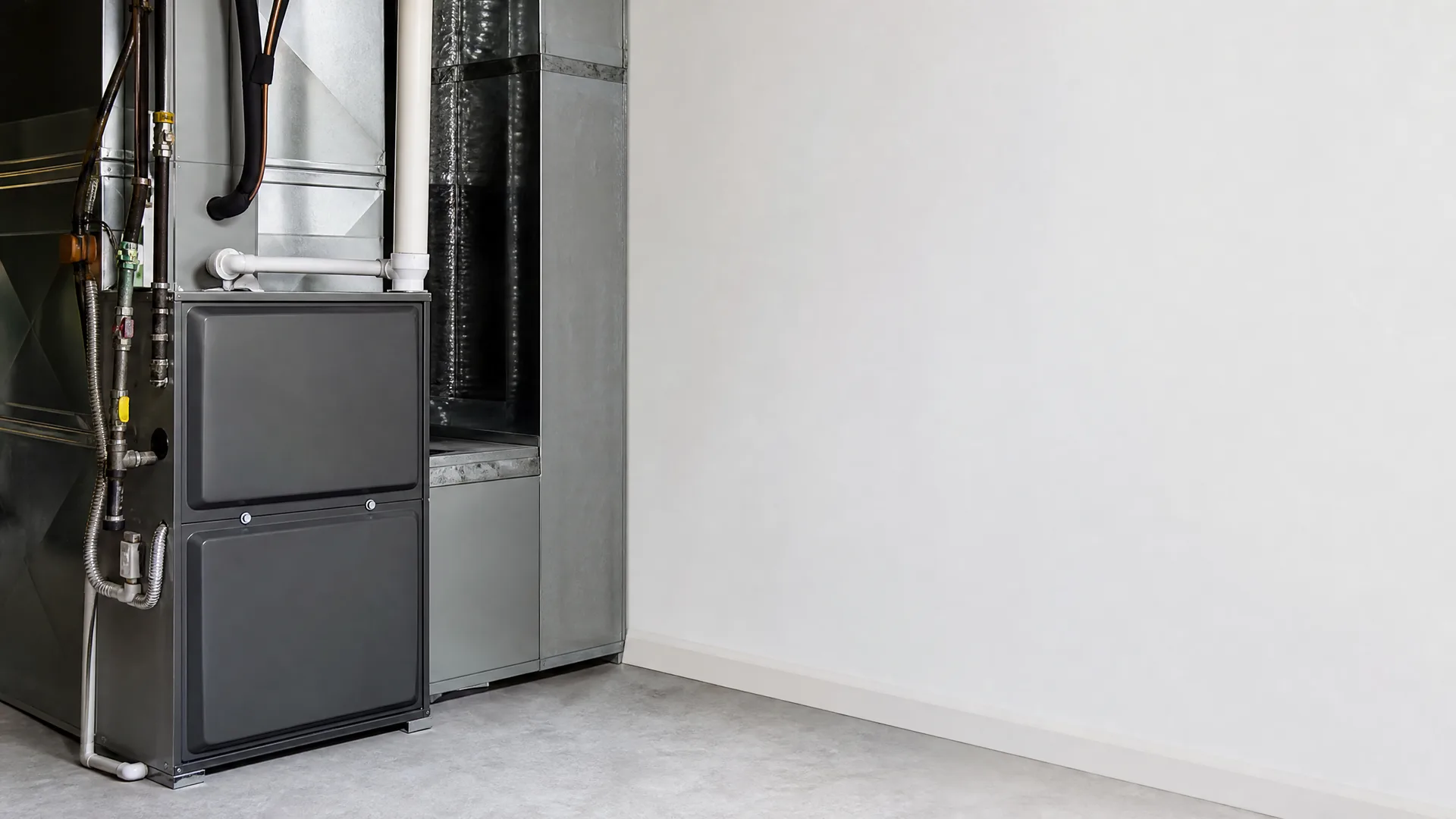
High-efficiency furnace leak
A high-efficiency furnace vents through PVC pipe instead of a metal flue, and that process makes condensate on purpose. That water travels through a plastic line to a drain or condensate pump. When you see a puddle, the line is usually clogged with sludge or algae, or it cracked somewhere along its run. The trap that holds a small amount of water can also crack or sit crooked after years of vibration, and once it does, water goes to the floor instead of the drain.
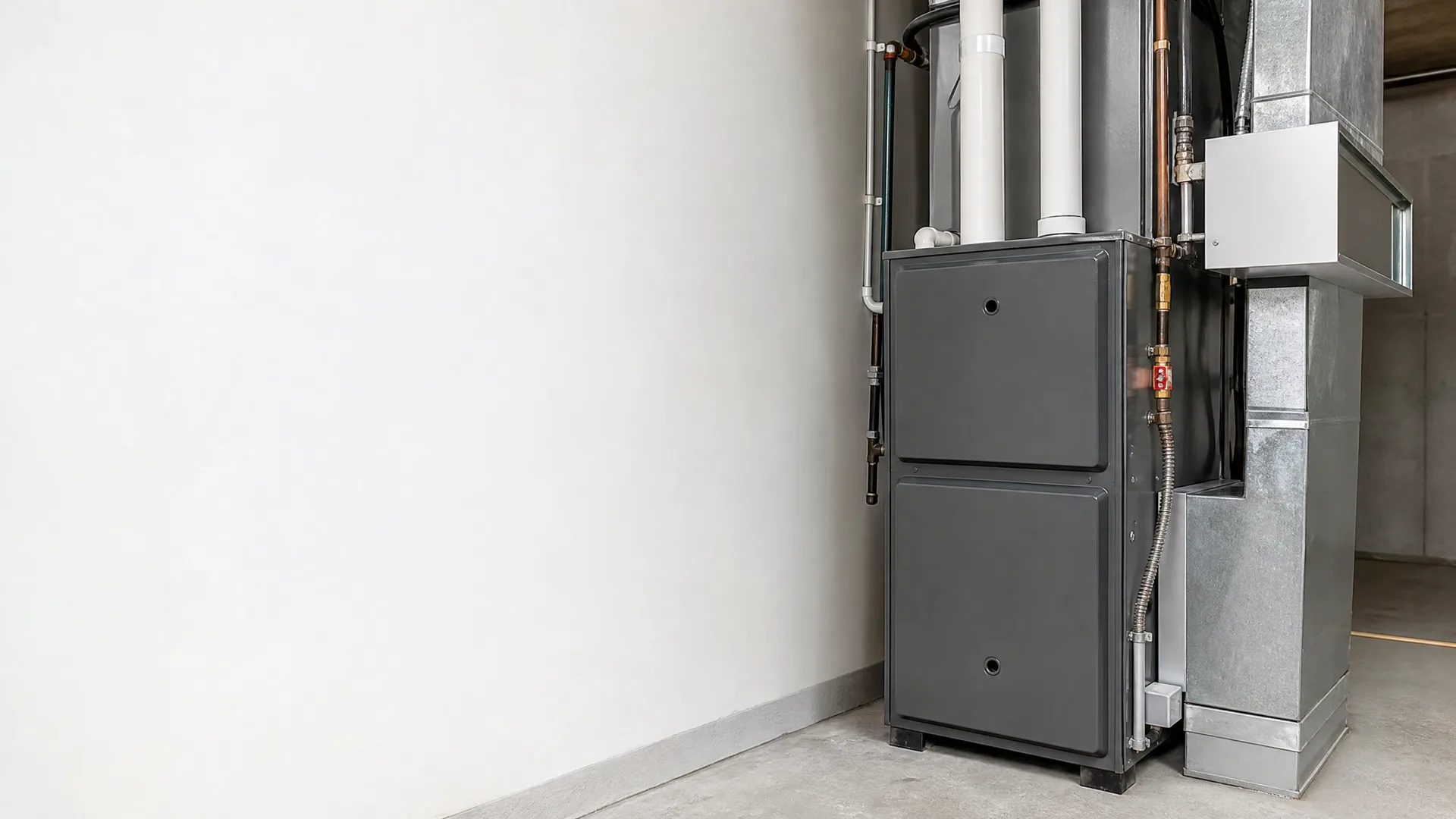
Standard furnace leak
An older standard furnace with a metal flue was never built to handle condensate, so water showing up there means something else is going on. Flue gases can condense inside an old or wrong-sized flue pipe, especially on cold nights, and that moisture can drip back down into the cabinet. A humidifier attached to the ductwork can also overflow or leak into the furnace. Either way, water near this kind of furnace is a sign something upstream needs attention, not routine drainage.
Winter nights average 15°F
At 15°F overnight, a furnace that shuts itself down over a clogged condensate line isn't a minor nuisance. A house can lose its heat fast at that temperature, and pipes are at risk the longer it sits off.
NOAA nClimDiv 1991-2020




Matched to your furnace job
A leak like this is a judgment call. Is it a full condensate line clog, a cracked trap, or a cracked heat exchanger letting flue gas mix with water? Those look similar from where you're standing but call for different work, and the wrong guess means a furnace that's still down tomorrow. Someone who services furnaces around Idaho Falls all winter has seen both kinds often enough to know what to check first on your model, and that's worth more than a guess at 15°F outside. Your request goes to one contractor who works this area, not a handful competing for the job, so you're dealing with someone who can actually get to your house and knows what tends to fail on the furnaces common here. With your heat down this time of year, getting the right person looking at it sooner rather than later is what keeps a wet floor from turning into a cold house.
A furnace that keeps running while it leaks is still burning gas and still putting moisture where it doesn't belong, under the cabinet, into the subfloor, toward the wiring nearby.
Left alone, that water finds the nearest low point, and in a lot of furnace closets that's the floor your furnace sits on, not a drain.



A leak like this is worth sorting out now
Water at the base of your furnace has one of two causes, and both are worth catching before a cold night in Idaho Falls turns into a furnace that won't run at all. A clogged or cracked condensate line is a straightforward fix. A cracked heat exchanger is not, and telling the two apart takes someone who's looked at a lot of furnaces do exactly this.
That's what you get matched with here: a licensed contractor working in Bonneville County, who sees this kind of leak every winter and knows which one it usually is before the panel even comes off. You'll hear from one contractor, not a handful calling at once, so you can explain what you're seeing and get a straight answer about what it is and what happens next.


Furnace Repair
A furnace pro near you

- Get matched with a pro who works on furnaces in Bonneville County.
- A Bonneville County pro who repairs furnaces gets your request.

- Send the request today and let a furnace pro reach out to you.
- Get the furnace repair search off your mind today.

- Explain the furnace problem once instead of to every shop in Bonneville County.
- Fill out one short form instead of calling around.

- A licensed pro who repairs furnaces in Bonneville County gets your request.
- Your request goes to one pro, not a list of companies.